



Condition ›
Stroke
Stroke care, recovery and rehabilitation.
 Stroke18 Nov
When Mark Fricker suffered a stroke aged just 32, the lack of access to dedicated rehabilitation inspired him to retrain as a stroke rehab specialist. Here, he shares his inspirational story
Mark Fricker is very matter-of-fact about the impact of his stroke.
“I view it as a positive moment in my life,” he says.
 Stroke17 Nov
Stroke is a leading cause of death and severe long-term disability with limited treatment available. A research team led by Prof. Gong Chen at Jinan University, Guangzhou, China recently reported the first non-human primate study demonstrating successful in vivo neural regeneration from brain internal glial cells for stroke repair.
Ms. Long-Jiao Ge, the first author of the work and a PhD student in the Institute of Zoology, Chinese Academy of Sciences, said: "Current treatment of ischemic stroke mainly aims at restoring blood flow and neuroprotection, typically with a narrow time window of several hours. Stroke17 Nov
Preventing heart attacks and strokes in type 2 diabetes patients managed in primary care should be an urgent priority, concludes a new study.
"The most striking result of our study was that the vast majority of patients (93%) had a high or very high risk of fatal events within a decade. Half of patients in the very high-risk group had no history of heart disease, meaning they would not be receiving medications to prevent heart attacks and strokes," said study author Dr. Manel Mata-Cases, a general practitioner for the Catalan Institute of Health. Stroke14 Nov
Detailed results from a prespecified exploratory analysis of the positive THALES Phase III trial showed Brilinta (ticagrelor) 90mg, used twice daily and taken with daily aspirin for 30 days, reduced the rate of the composite of disabling stroke or death by 17% compared to aspirin alone; in patients who had an acute ischaemic stroke or transient ischaemic attack (TIA).
The rate of the composite of non-disabling stroke or death at 30 days was 1.3% in the aspirin plus ticagrelor group and 1.6% in the aspirin only group (HR 0.79 [95% CI 0.57, 1.08], p=0.140). Stroke1 Nov
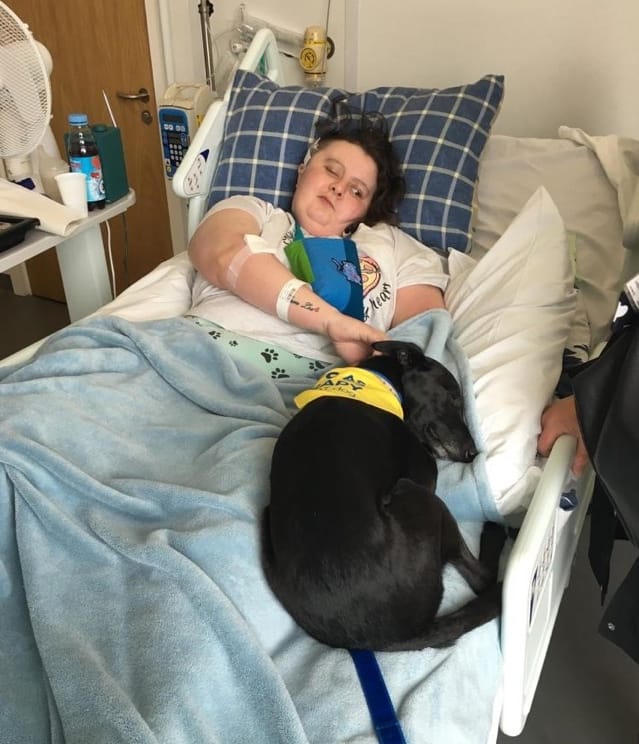
Eye research charity Fight for Sight is partnering with the Stroke Association to test the effectiveness of a treatment for ‘retraining’ the eyes for people who experience a loss of vision after stroke. The study hopes to establish a new standard of care for stroke survivors and save the NHS money.
Hemianopia – the loss of vision or blindness in half the visual field on the right or left side - occurs suddenly in 30% of stroke survivors and can have a devastating impact on their quality of life. Currently, there is no cure and treatment to help those with hemianopia compensate for their sight loss is variable and not standardised in the NHS. This is due to uncertainty about what works best and when is the best time to offer treatment, resulting in unfair differences in the care people receive. Stroke1 Nov
Rehab technology firm GripAble has appointed stroke survivor Kate Allatt as an ambassador.
Kate suffered a rare, massive brain stem stroke at the age of 39, and then went on to develop locked-in syndrome. Doctors said she’d never walk, talk or be able to use her arms again.
But the mother of three defied all predictions, and today, she is a credible and trusted peer mentor, global influencer, and voice for stroke and locked-in syndrome survivors.
The internationally published author of three books, including the acclaimed ‘Running Free – Breaking Out from Locked-in Syndrome’, says that her role as GripAble ambassador is founded in partnership and collaboration.
 Stroke31 Oct
People with multiple depressive symptoms have an increased risk for stroke, according to findings recently published in Neurology: Clinical Practice.
The collaborative study led by investigators at the University of Alabama at Birmingham and the University of Alabamashowed that individuals who scored higher on a test designed to measure depressive symptoms had a higher stroke risk than those with lower scores. The study involved 9,529 black and 14,516 white stroke-free participants, age 45 and older, enrolled in the UAB-led REGARDS study. REGARDS is a national, population-based longitudinal study designed to examine risk factors associated with racial and regional disparities in stroke incidence and mortality.


