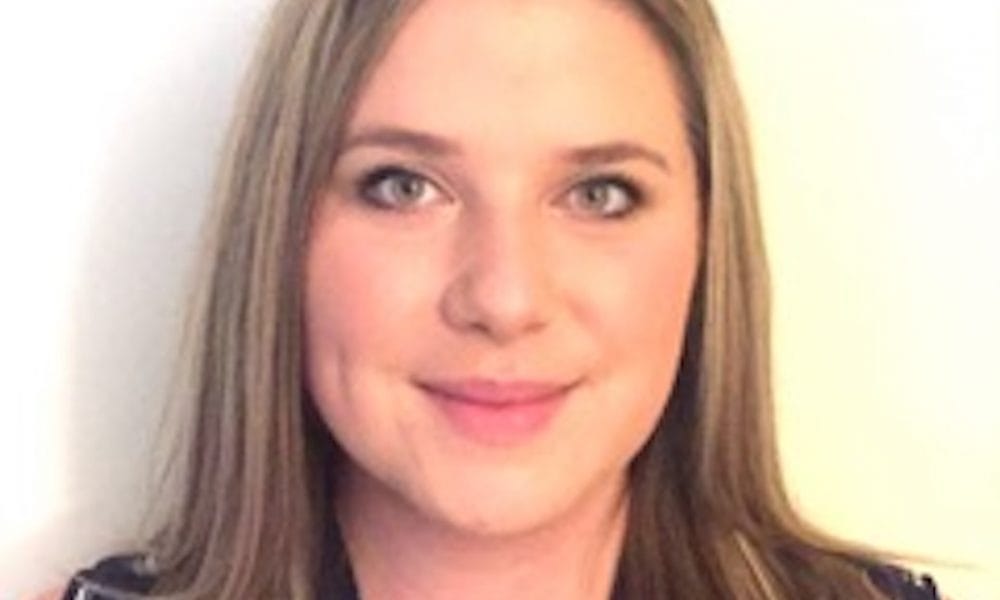
An experienced case manager has set up her own business, building on her existing reputation and expertise in complex neurological work.
Caroline Phelps has established Phelps Case Management Consultants, which will specialise in psychologically complex work, including working with clients with dual diagnoses, as well as offering vocational rehabilitation.
Both areas are said to be under-represented in the case management field – with Caroline saying vocational rehab provision is “shockingly sparse” in brain injury work – which is where her business will help to provide a solution.
Caroline, who has worked in case management since 2016, has 15 years of experience working in the field of rehabilitation prior to that time.

As well as working as a behaviour therapist with people with brain injuries, she worked in the United States for seven years for Northeast Arc, developing programmes and leading clinical teams supporting individuals with varying disabilities, including individuals with brain injuries, developmental disabilities and mental health challenges.
Her wide-ranging experience has won her national acclaim within case management, and Caroline was shortlisted in both the CMSUK and VRA Awards in 2019.
“Case management was an ideal career for me as it used my experience in my previous work in rehabilitation while also enabling me to have more impact on people’s lives,” she says.
“My strength is in neurological work, particularly with psychological symptoms and dual diagnoses. Typically, case managers will deal with mental health or developmental disorder or brain injury, but there aren’t a lot of people who do the dual diagnoses.
“Vocational rehabilitation in the brain injury arena is shockingly sparse, so that is another area in which my experience will be able to make a positive difference.”
For Caroline, her reason for moving into case management continue to be what motivates her – her clients.
“For me, the significant thing is not just about achieving goals, it’s about improving a person’s quality of life,” she says.
“Pre-injury, someone may have been a scaffolder, a lawyer. Now, we don’t just want them to be an injured person. When they say ‘I am’, we want them to have something positive to say at the end of that sentence.
“I want to work with them through that process and support them in achieving that.”
While establishing her own case management company during a pandemic may be seen as a challenge, Caroline is keen to embrace some of the new resultant ways of working.
“Prior to the pandemic, I could be in Inverness then in Devon two days later, as remote working wasn’t something that was really done. But the pandemic has really pushed the envelope on this, and I think that will be of great benefit to us all,” she says.
“Now, it’s not frowned upon that someone can’t be there in person, as we have seen through the circumstances of the past year that some things can be done remotely. It saves a lot of travel time and has made people realise that a huge commute is not always something that needs to be done.
“I think it is helping a lot of people to achieve a better work/life balance, while doing their job just as effectively, so I think that has been a positive change.”