


The specialist team at PhysioFunction looks at how to optimise outcomes through neurophysiotherapy after spinal cord injury
Following a spinal cord injury (SCI), individuals experience a loss or limitation of function in their body. The parts of the body affected are determined by where in the spinal cord the injury occurs (the higher the injury the more of the body affected), and how severely the spinal cord is damaged.
People with an SCI suffer from various symptoms including reduced/loss of muscle power, reduced/loss of sensation, altered muscle tone and spasticity, neuropathic pain and impaired bodily functions. This often reduces the amount of physical activity they are able to perform, placing them at risk of developing complications such as obesity, Type 2 diabetes, coronary heart disease, pressure sores, muscle contractures and osteoporosis, as well as depression and anxiety.
Members of the team at PhysioFunction have a passion and specialist interest for working with clients with SCI and have developed a specific Spinal Cord Injury Service, consisting of an Intensive Rehabilitation Programme, a Discharge Continuity Service, and SCIFit.
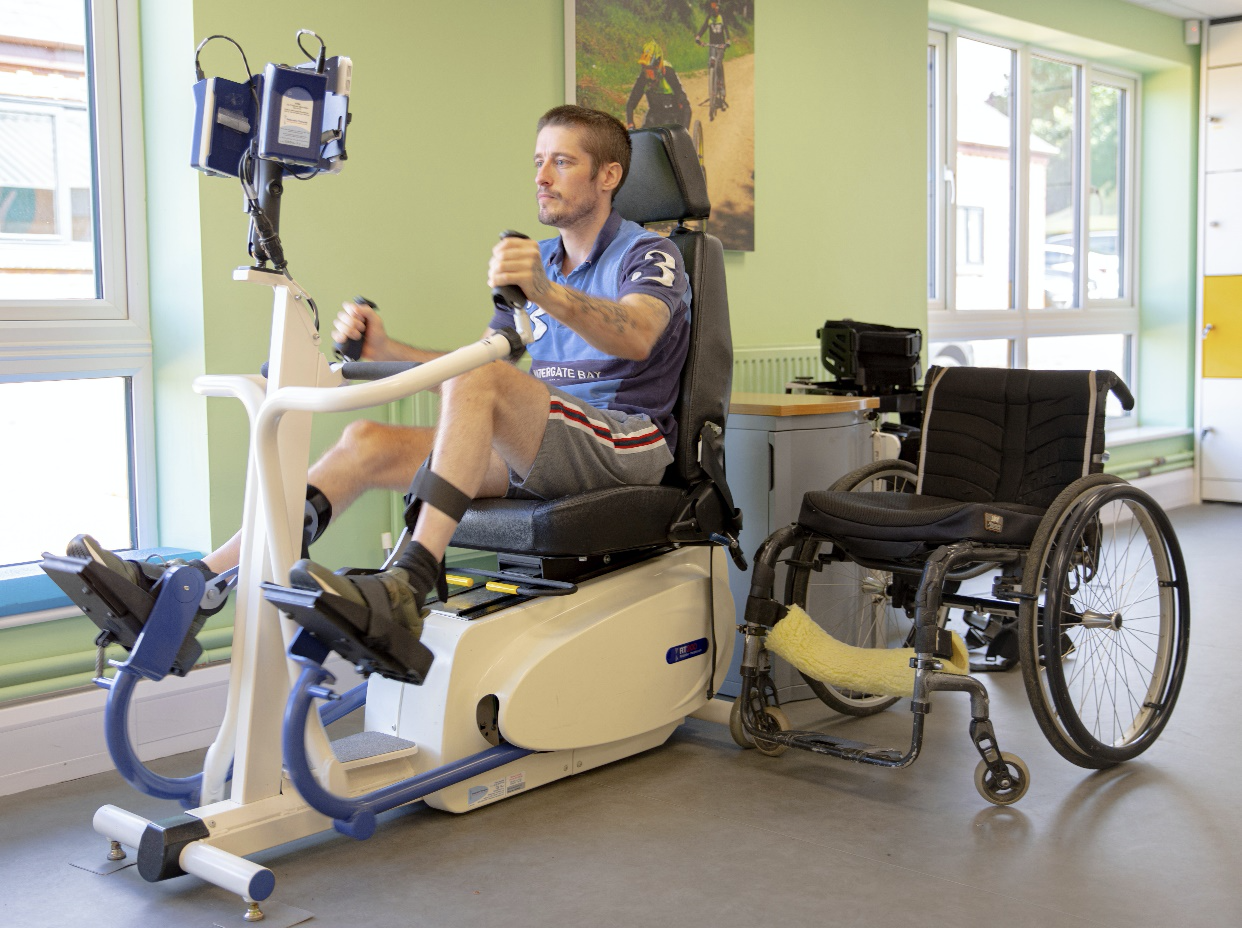
Our Intensive Rehabilitation Programme is designed to provide clients at any stage post discharge with up to four hours of daily rehabilitation (five days per week) using a combination of hands-on physiotherapy, aquatic physiotherapy, wheelchair skills training, transfer training and use of advanced rehabilitation technology to bombard the nervous system with positive messages and promote function.
We have an extensive array of rehabilitation technology, being a key component of the Rehabilitation Triad upon which Physiofunction was founded, including:
- Three robotic Exoskeletons (FREEWalk, Rex and ReWalk)
- Keeogo dermoskeleton
- AlterG anti-gravity treadmill
- Litegait
- RT200 and RT300 FES Cycling systems
- GMove
- Galileo Med-35 vibration plate
- MindMotion GO
- Bioness GO / Go Plus
- Bioness H200
- Gripable
- Denervated muscle stimulation
Integration of these technologies into our programme allows for effective, high repetition task-based practice, customised to the client’s level of function.
Our Discharge Continuity Service is intended to help clients newly discharged from hospital with a continuation of therapies received whilst they settle into life in the community, primarily within Northamptonshire and the surrounding area.
Utilising treatment approaches as found in our Intensive Rehabilitation Programme, we will work with clients to optimise their function and independence, whilst continuing to promote recovery and plasticity. We encourage working alongside the multidisciplinary team including case managers, occupational therapists and psychologists to gain the optimal results from this service.
Our SCIFit programme has been designed by our expert spinal physiotherapist Matthew White as an evidence led, exercise-based service to prevent or manage secondary complications arising from SCI and is delivered by our Physiotherapy team and PFit by PhysioFunction personal trainers. The service involves an SCI-specific personal training programme combining adapted physical activity, using a combination of aerobic exercise equipment for above and below the level of injury, Desmotec d line and v line eccentric flywheel systems, free weights and bodyweight resistance exercise, with nutritional guidance and psychological support.
The specific content of the SCIFit programme can be customised to the individual needs of the client, utilising Neuromuscular Electrical Stimulation (NMES) and multi-channel Functional Electrical Stimulation (FES) when there is reduced or absent voluntary muscle strength. Sessions can be delivered 1:1 or in small groups of similar ability to enhance the sense of community and maximise motivation.
For further details on our services, visit www.physiofunction.co.uk or contact us by phone on 01327 842321 or by email to rehab@physiofunction.co.uk.


