Spinal nurse lucky to walk again after garden fall
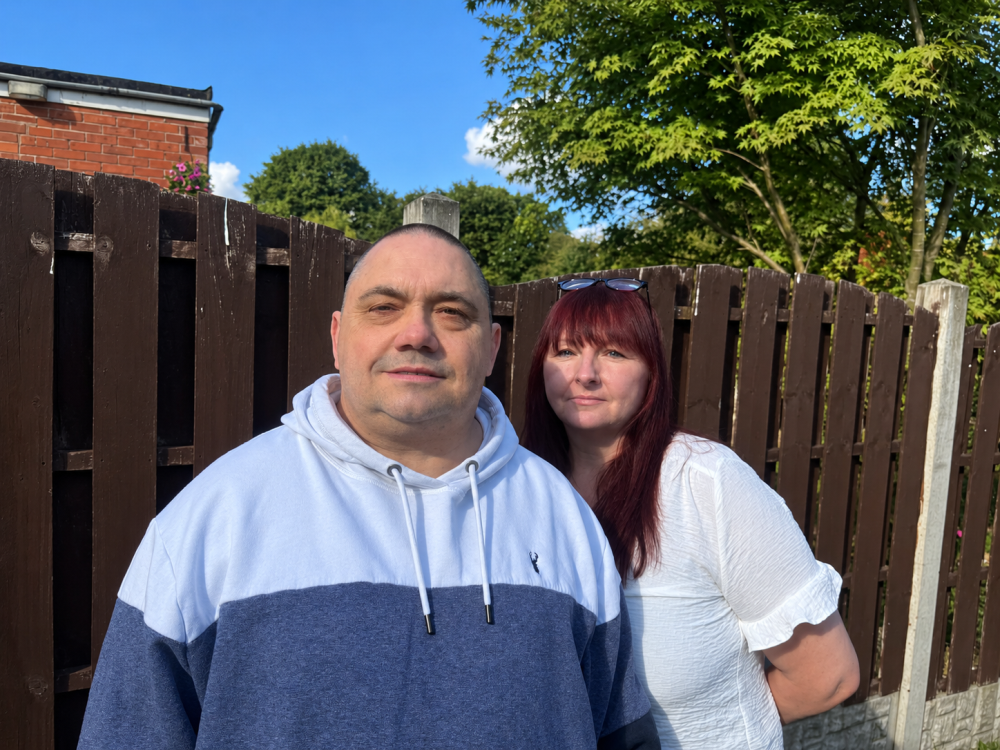
A Sheffield spinal nurse says he is lucky to walk again following a spinal cord injury when he fell in his garden.
“I cared for spinal cord injury patients for 22 years, you think you can empathise a little, but you can’t in any shape or form”
When Tony Fallon (57) from Sheffield was paralysed by a spinal cord injury, he returned to the spinal unit where he had worked for 22 years, to be treated by his friends and old colleagues.
Despite his decades of experience, Tony says he was unprepared for the realities of living with a spinal cord injury.
Tony qualified as a nurse in 1996 and worked on The Princess Royal Spinal Unit at Sheffield’s Northern General Hospital for 22 years.
His wife, Sarah, was a support worker in the same spinal cord injury centre.
Tony said: “Between us, we’ve had 48 years working with people with spinal cord injury.”
According to Spinal Injuries Association, there are currently 105,000 people living with spinal cord injury in the UK, with someone sustaining a new injury every two hours.
Effects include paralysis, chronic nerve pain, and loss of bladder, bowel, and sexual function.
In May 2020, one of Tony and Sarah’s garden steps gave way, causing Tony to fall and injure his spine.
Although he initially retained his mobility, his condition worsened while he was in hospital, and he became paralysed and lost bladder and bowel function.
Tony spent three months on bedrest, before doing two months of rehabilitation in the spinal unit where he once worked.
He said: “It was surreal. I was working with a lot of my old workmates, and my wife was working on the same unit.
“Some of my close friends, who I’d known for years, were doing intimate care, which was difficult to put into words.”
Tony was sent home early due to the bed shortage in the NHS caused by the COVID-19 pandemic.
When he was sent home, there had been no adaptations made to the couple’s home. As a result, Tony could not leave the house for six weeks because they did not have a ramp for his wheelchair.
Despite their extensive knowledge of spinal cord injury care, Tony and Sarah both struggled when Tony returned home.
Sarah said: “I always thought that once people got home, everything was just hunky-dory, but it’s actually not like that at all. Nothing prepared me for him coming home and how much he actually needed me at the time.
“We didn’t get any help, so it was just on my shoulders. It was heavy at the time.”
Over time, Tony regained his movement and went on to make an extraordinary recovery, the extent of which is rare for people with spinal cord injuries.
By early 2021, he was able to use his walker to walk up the drive independently. By mid-2023, he could walk again unaided, and by March 2025, he had regained enough mobility to walk up and down the garden steps that had caused his injury.
Tony said: “I’ve made a good recovery, a very good recovery. I wouldn’t say I’ve made a complete recovery, but I would say a good 80-85 per cent.
“In the grand scheme of things, compared to many other people with spinal cord injuries, I’ve got away with it very lightly.”
Now six years on, Tony has regained most of his mobility and is able to walk unaided, and he has regained almost full bladder and bowel function.
Tony said: “For all the training that spinal cord injury staff, doctors, nurses, and therapists have, it can never ever prepare you for being a patient.
“You think you can empathise a little, but you can’t in any shape or form.”
For others who sustain a spinal cord injury, Tony said: “You’ve got to let the dust settle before you realise what you can achieve again.
“Life changes in a very big way, but there is still a lot of life to be lived afterwards, albeit in a different way.
“It’s very hard in the early stages to get your head around things, but a new person is born from the end of it.”