



Smarter rehab
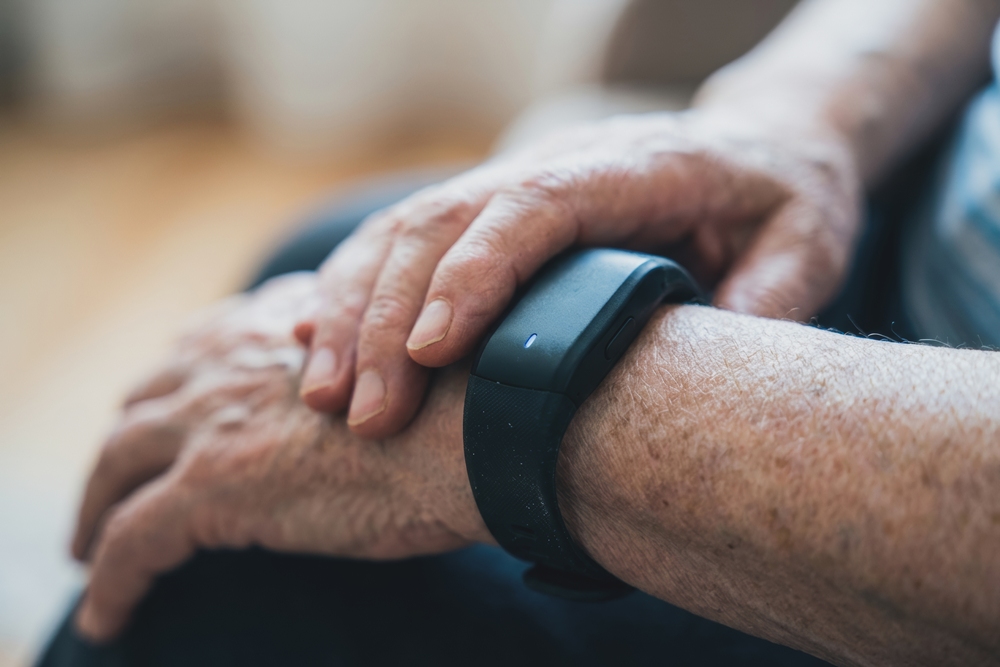
A wearable-delivered Parkinson’s therapy eased motor symptoms in some patients with advanced disease, preliminary trial observations suggest. An independent safety monitoring committee has recommended that the Phase 1b trial of SER-252 move to a second dosing group. The panel reviewed safety and tolerability data from the first eight patients, who received the lowest dose. This [...]
A woman with progressive motor neurone disease used a brain implant to generate her own words and communicate in real time through text and synthesised voice. The participant, a Michigan, US woman in her 60s, became the first person to receive Paradromics' Connexus brain-computer interface as part of the Connect-One Early Feasibility Study. Unlike earlier [...]

A smartwatch programme may support home stroke rehab by helping survivors take more daily steps and spend less time inactive, a pilot study found. Researchers developed the 12-week BIG STEPS programme to help people stay active after returning home following hospital treatment for stroke. The programme combines behavioural coaching with structured walking goals [...]
A new dataset could help researchers develop AI tools to detect Parkinson's remotely using motor and memory data collected through home computers. Parkinson's can cause motor symptoms including slowness and tremor, as well as non-motor symptoms such as memory problems and digestive complaints. Clinical assessment by an expert is currently the gold standard for diagnosing [...]
CergenX has secured a CE mark for Wave, its AI-supported technology designed to assess newborn brain activity using EEG. The certification under EU MDR 2017/745 allows the Irish medtech company to commercialise the product across the European market. Wave combines electroencephalography, or EEG, with artificial intelligence to give clinicians information about newborn brain activity and [...]
A stroke survivor says an AI receptionist at her GP surgery could not understand her, leading her to register elsewhere. The ASA surgery at Armthorpe, near Doncaster, was one of many facilities using a nationwide AI system called EMMA to prevent long waits on the phone. Judith Butterfield, 71, said she tried five times to [...]
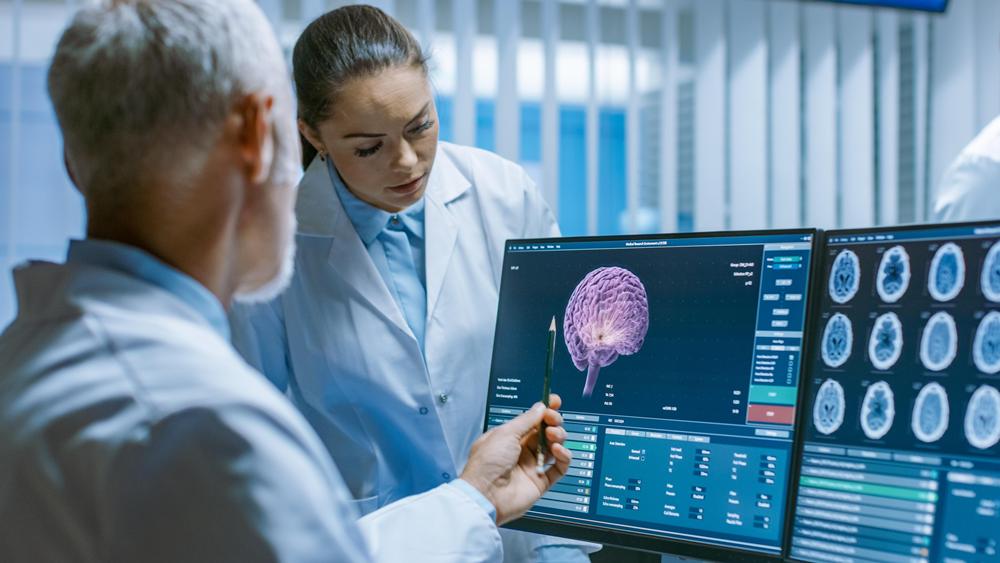
Deep brain stimulation may improve speech and swallowing control after traumatic brain injury, early research suggests. A proof-of-concept study found that low-frequency electrical stimulation of the motor thalamus improved control of facial and tongue muscles used in speaking and swallowing. The motor thalamus is a deep brain region connected to the motor cortex. Researchers suggest [...]
AI-designed intrabodies could help target disease-linked proteins inside cells, with potential applications in Parkinson's, MND and Alzheimer's treatments. The microscopic antibody fragments are designed to remain stable inside human cells, where they can attach to proteins associated with neurodegenerative conditions. Researchers used artificial intelligence and protein redesign techniques to convert 672 antibodies into intrabodies capable [...]
A flexible device may help restore multiple functions after spinal cord injury by interpreting signals linked to movement, sensation and organs. The device wraps around the spinal cord and can interpret several types of signals at once. Preclinical studies found the device could accurately detect signals associated with intended movement, distinguish sensory information and identify [...]

By Natalie Mackenzie, BIS Services A few years ago, I wrote a book. Not the kind you curl up with, but the kind that sits on a rehab shelf, or in a therapy room, and helps someone make sense of one of the most misunderstood parts of life after brain injury: fatigue. Those working in [...]


