Trial tests spinal stimulation for low blood pressure after spinal injury
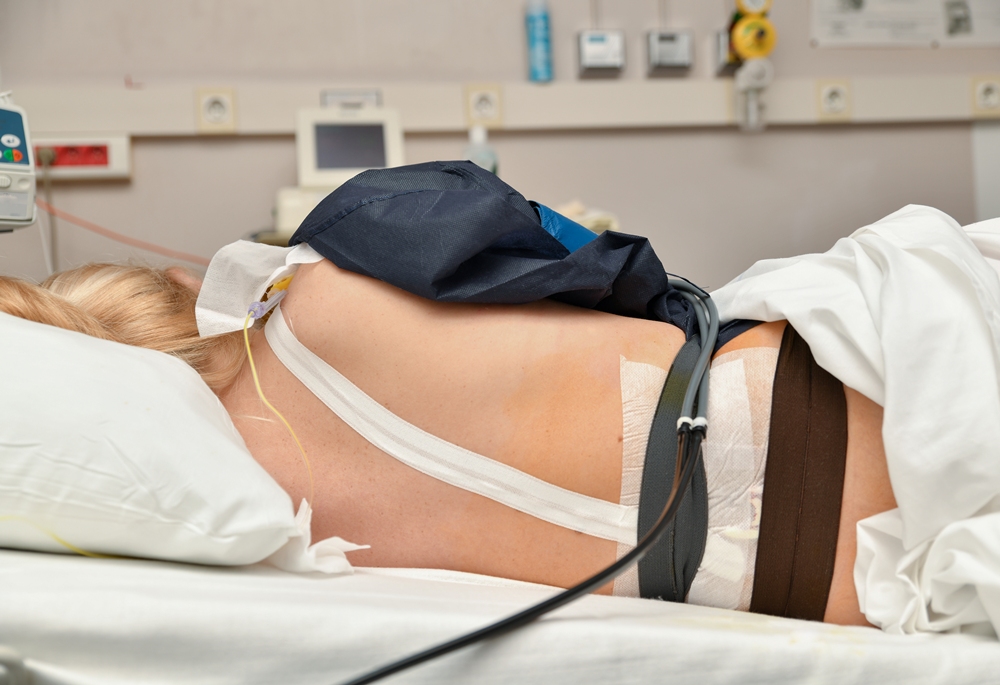
A clinical trial is testing whether implanted spinal stimulation can help people with spinal cord injury maintain blood pressure when sitting or standing.
The multicentre Empower BP study is investigating whether epidural electrical stimulation can treat orthostatic hypotension, a condition in which blood pressure drops when someone changes position.
The treatment delivers electrical pulses near the spinal cord to activate circuits involved in blood pressure regulation. Participants can switch on stimulation using a smartwatch.

Researchers at the University of Miami Miller School of Medicine are taking part in the ONWARD Empower BP trial, which is expected to enrol 80 people across 14 locations.
Leslie Morse, chair of the university’s Department of Physical Medicine and Rehabilitation, is the principal investigator at the Miami site.
James Guest, professor of neurological surgery and a member of The Miami Project to Cure Paralysis, helped design the study and worked with the US Food and Drug Administration to finalise the treatment protocol.
Orthostatic hypotension affects approximately 85 per cent of people with spinal cord injury, with symptoms ranging from mild to severe.
Normally, the body automatically adjusts blood flow when a person sits, stands or lies down.
Spinal cord injury can disrupt the autonomic reflexes responsible for these adjustments, reducing blood flow to the brain when changing position.
Symptoms include dizziness, reduced awareness, visual disturbances, fatigue and difficulty remaining upright or conscious.
Low blood pressure can also affect cognition and energy levels and increase the risk of stroke.
Some people manage their symptoms with medication or supportive equipment, including leg or abdominal binders. Others experience difficulties that interfere with everyday activities, including eating and staying awake.
Morse said: “Imagine feeling that way all the time, to the point where it’s really challenging to keep your blood pressure at a level where you feel alert and engaged in your environment.”
The implanted system consists of a small pulse generator connected to a lead positioned near the spinal cord.
Electrical stimulation targets the lower thoracic region, which is involved in controlling blood pressure.
Researchers are testing whether activating these spinal circuits can trigger vasoconstriction, the narrowing of blood vessels that increases resistance to blood flow and helps maintain blood pressure.
Participants can activate programmed stimulation through a smartwatch when changing position or experiencing symptoms of low blood pressure.
Since August, Joacir Graciolli, a neurosurgeon at UHealth and member of The Miami Project to Cure Paralysis, has implanted the systems in four participants.
More patients are undergoing screening and enrolment, with the Miami site expecting to recruit 12 participants.
The trial uses a randomised, double-blind design, with participants and assessors unaware of treatment allocation during the initial comparison period.
Two-thirds of participants are assigned to receive active stimulation, while one-third receive sham therapy for the first three months.
Researchers will then compare outcomes between the groups.
After this initial assessment, all participants will receive active stimulation for up to two years, allowing further evaluation of safety.
Guest, who is also the study’s medical monitor, said: “Even if a person is initially randomised to sham therapy, they still get their chance to test the device effectiveness.”
Epidural spinal cord stimulation is already approved by the FDA for treating chronic pain, but not for managing low blood pressure following spinal cord injury.
Previous research has examined whether epidural stimulation can support voluntary movement in people with severe spinal cord injuries.
A 2011 study indicated that some voluntary movement could occur when electrical stimulation was applied.
Empower BP is among the first large-scale randomised trials designed to evaluate the therapeutic effects of epidural stimulation in people with spinal cord injury.
Guest said earlier studies had involved small, highly selected groups of participants.
The researchers believe blood pressure regulation could provide a starting point for investigating other uses of spinal stimulation.
Unlike some treatments aimed at restoring movement, improvements in blood pressure regulation may not require lengthy rehabilitation programmes.
Guest said: “If you previously couldn’t get out of bed or put your chair up vertically, and now you start doing that after using the stimulation, these are restorative physiological effects that don’t require going to the rehab centre.”
The trial is ongoing, and no results are yet available to establish whether the treatment is effective.
Morse said successful treatment could improve quality of life for people whose daily activities are restricted by persistent low blood pressure.
Researchers are also interested in whether epidural stimulation could help manage other complications of spinal cord injury.
Potential areas include autonomic dysreflexia, which causes sudden increases in blood pressure, neuropathic pain, bladder and bowel dysfunction, spasticity and difficulties with posture and movement.
Other possible applications include improving trunk control, upper limb strength and walking ability.
These remain areas for future research rather than demonstrated benefits of the treatment being tested.
Guest said: “I hope that this will succeed and be the first approved epidural stimulation therapy, so then it could become a platform for other research.”
 Human-centred AI: What neurorehabilitation stands to gain and guard against