New technology could give a voice to patients trapped in apparent coma
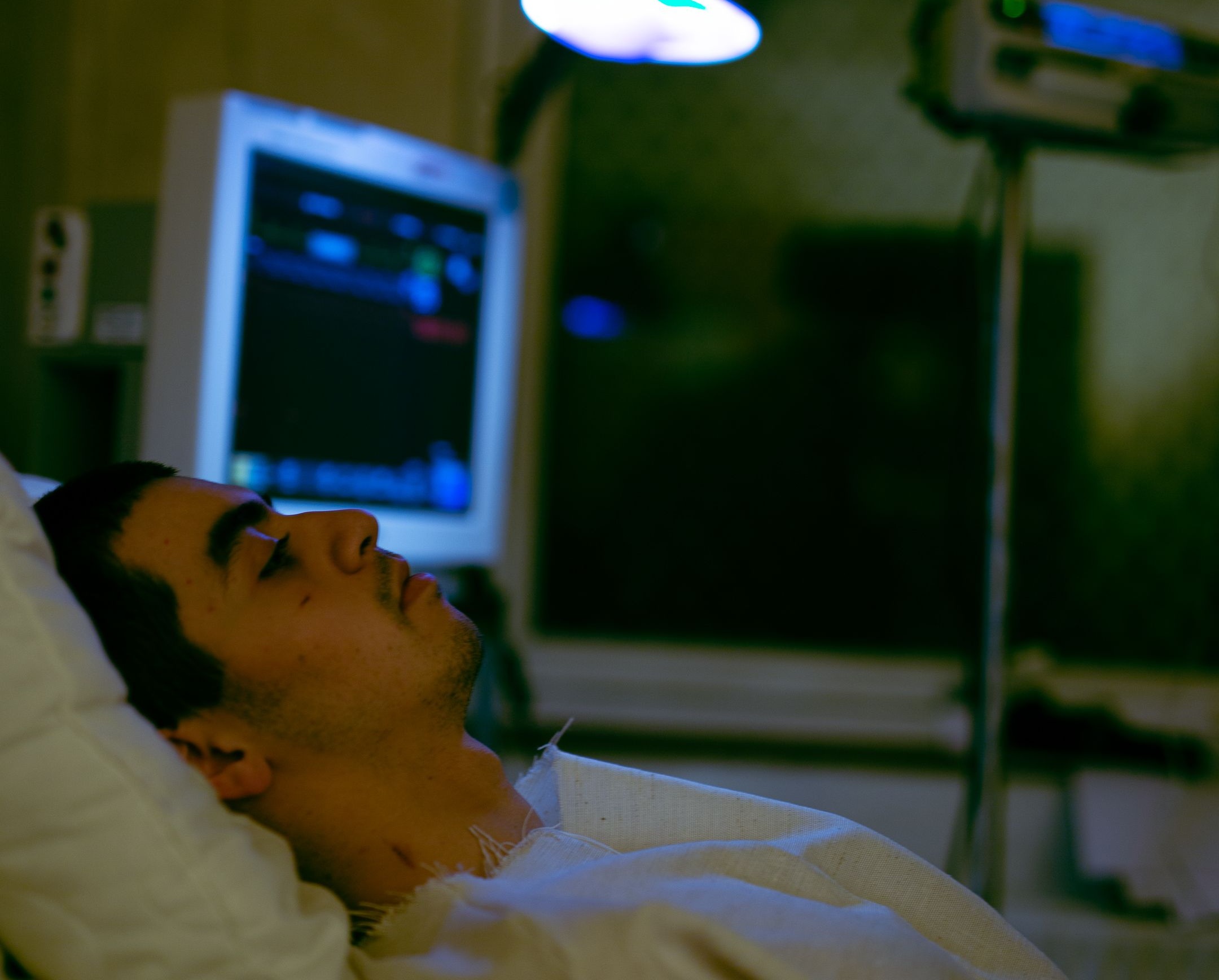
Patients who appear to be in a coma may be able to communicate through their thoughts, according to new research into severe brain injury.
A brain-computer interface allowed about one in three unresponsive patients with acute brain injury to control a beeping tone using their thoughts.
The non-invasive technology uses electrodes placed on the scalp to record electrical activity in the brain and translate it into signals that control a computer.
Researchers tested the system with 41 clinically unresponsive patients a few days after they were admitted to hospital.

The study, led by researchers at Columbia University, could help develop ways for patients with hidden consciousness to communicate with doctors and family members.
Hidden consciousness refers to patients who appear to be in a coma and cannot respond physically, despite retaining some level of consciousness.
Jan Claassen, professor of neurology at Columbia University Vagelos College of Physicians and Surgeons and lead researcher, said the findings built on earlier work identifying consciousness in apparently unresponsive patients.
He said: “Research in the past decade by us and others has shown that many patients with acute brain injury who appear to be in a coma actually have some level of preserved consciousness, even though they are unable to speak or move their hands or eyes to communicate.
“Our brain-computer interface is only a first step, but it shows that, in principle, we could hopefully in the future give some of these patients a voice.”
In 2019, his team used electroencephalography (EEG), which records electrical activity in the brain, alongside artificial intelligence to examine brainwaves from unresponsive patients with acute brain injury.
The researchers detected signs of hidden consciousness in 15 per cent of patients.
Although these patients could not follow instructions visibly, such as blinking, making a fist or moving their toes, their brain activity showed they were attempting to comply.
This is known as cognitive motor dissociation (CMD), where a patient can process instructions but cannot produce the movements needed to respond.
Subsequent research linked this disconnect to disrupted communication between brain regions responsible for higher-level thinking and those controlling muscle movement.
Claassen’s studies also found that patients with CMD were more likely to regain consciousness and recover significant everyday functioning.
However, techniques for identifying the condition are currently available only in research settings.
The latest study tested whether clinically unresponsive patients could use their brain activity to control a computer.
Rather than relying on implanted devices, the researchers used EEG electrodes attached to patients’ heads, a technique already used routinely in intensive care.
Patients listened to a beeping tone through headphones while a recorded voice instructed them to change its frequency by attempting to open and close their hands.
Electrical signals from their brains were transmitted to a bedside computer, which analysed them in real time and adjusted the sound.
The system provided spoken encouragement when patients changed the frequency and congratulated them when they reached the target.
After a brief training period, approximately one in three patients could control the beeping tones using their thoughts alone.
All participants whose CMD had been identified through a separate examination were able to complete the task.
The researchers demonstrated this ability within days of the patients sustaining severe brain injuries.
Previous research had shown that functional magnetic resonance imaging (fMRI), a scanning technique used to measure brain activity, could obtain answers to simple yes-or-no questions from a single unresponsive patient.
However, fMRI is not practical for routine use.
Claassen said: “That’s why our system is a major advancement.
“EEG is used in clinical practice every day in the ICU. The only sophisticated part is the computer program we wrote, which analyses the data in real time and modulates the feedback to the patient.”
The system does not yet allow patients to communicate specific needs or wishes, but the researchers hope to develop that capability.
Study participants and family members provided feedback, including suggestions to incorporate the voices of loved ones, culturally relevant features and ways to identify pain, hunger and awareness.
The longer-term aim is to enable patients who cannot speak or move to tell healthcare professionals and family members how they are feeling.
Claassen said: “Patients with hidden consciousness or cognitive motor dissociation are unable to show any expression or communicate in any way.
“I think that’s where our work can be fundamentally transformative.”
 Single punch led to fatal brain injury, manslaughter trial hears