Bioliberty raises €2.95m to bring rehabilitation technology into the home
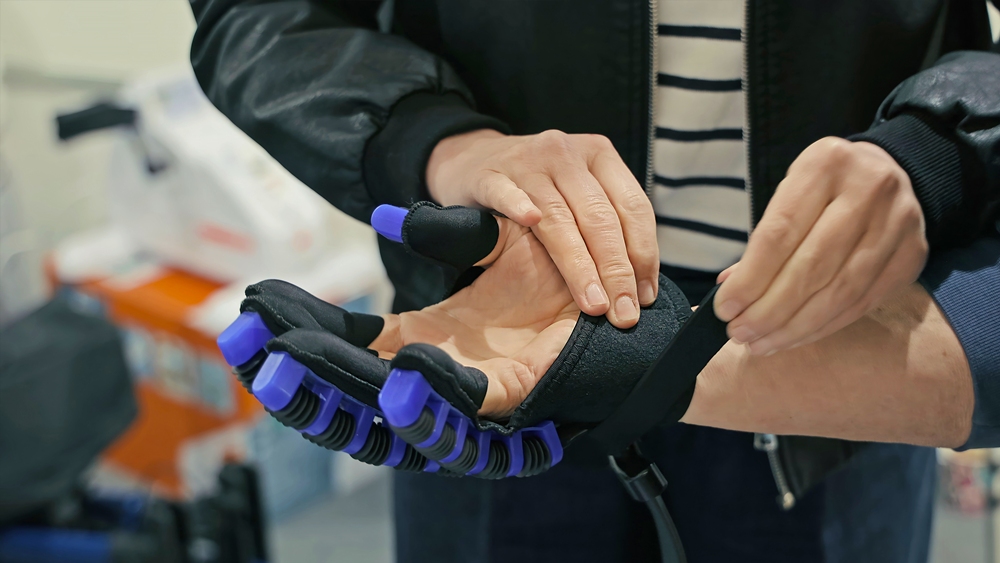
Bioliberty has raised €2.95m to extend its rehabilitation technology into patients’ homes and develop connected care data and AI tools.
The Edinburgh- and Boston-based company secured the funding through a Series A extension, bringing its total funding to €12.07m (US$13.5m).
The latest €2.95m (US$3.3m) follows €9.12m (US$10.2m) raised through previous pre-Series A and Series A rounds.

Rowan Armstrong, co-founder and chief executive of Bioliberty, said: “This funding and our new strategic investors are crucial to our next phase: creating a more connected rehabilitation journey.
“We want to connect data across the patient journey, extend our technology into the home, and use AI to further augment therapy and assessment for physical and occupational therapists.”
Founded in 2020 by Armstrong, Ross O’Hanlon, Conan Bradley and Shéa Quinn, Bioliberty develops soft robotic technology for upper limb rehabilitation.
Its systems primarily target people recovering from strokes and other neurological conditions that affect mobility.
The company’s technology comprises three products: Lifehub, a portable control centre delivering interactive therapy sessions; Lifeglov, an air-powered robotic glove that helps patients open and strengthen their hands; and Lifemind, a clinician dashboard that brings together therapy data and uses artificial intelligence to generate clinical notes.
Lifehub and Lifeglov are listed with the US Food and Drug Administration (FDA), and Bioliberty launched commercially in the US in 2025.
The company says its technology was developed alongside inpatient rehabilitation facilities, allowing therapy sessions to begin in less than five minutes and enabling patients to complete more repetitions per session.
Ethan Clark, therapy manager at Methodist Rehabilitation Hospital, said: “Bioliberty has been implemented by our therapists seamlessly. Patients are excited to see gains in their function and enjoy the interactivity of the tasks and games they can access.”
The new funding will support three priorities: expanding the technology into patients’ homes, connecting rehabilitation data across care settings and developing additional AI capabilities to support clinical decisions.
The Series A extension introduces four institutional investors: TGH Ventures, the investment arm of Tampa General Hospital; Ballad Ventures; Belfast-based Whiterock; and 25m Health.
Bioliberty has established relationships with rehabilitation providers in the US, including a clinical study with the Mount Sinai health system in 2024.
The company aims to develop a rehabilitation platform connecting hospital, post-acute and home-based care.
Its goal is to maintain continuity of rehabilitation after patients leave specialist facilities, allowing therapy and assessment information to be shared across different stages of recovery.
 Experimental Huntington’s drug selected for UK access pathway