Remedy Robotics raises US$62m to develop remote stroke surgery robot
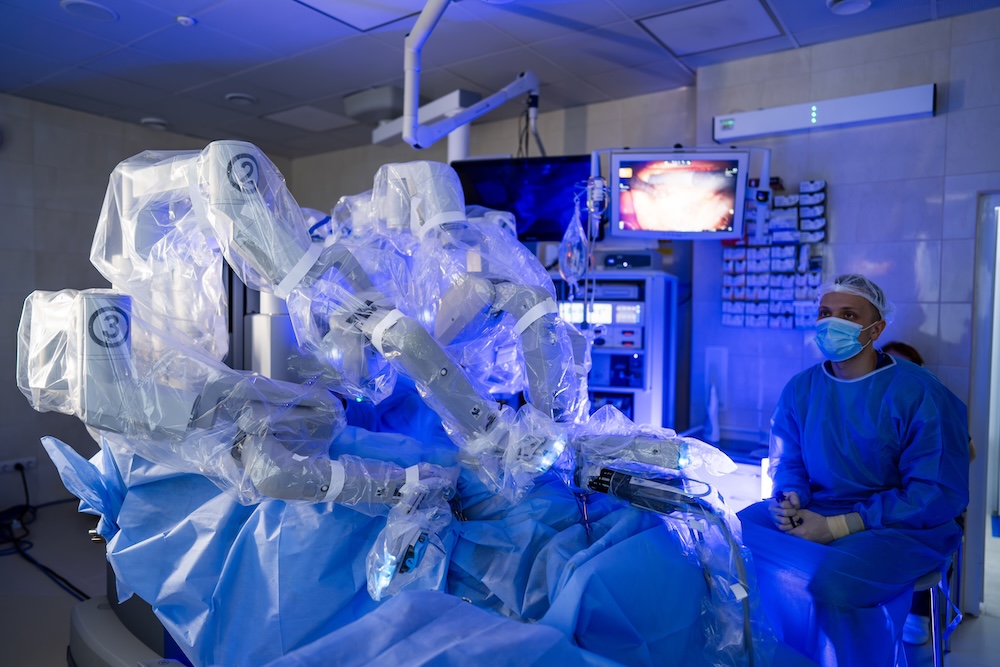
Remedy Robotics has raised US$62m in Series B funding to advance a robotic system designed to enable specialists to treat stroke patients remotely.
The San Francisco-based medical technology company, co-founded by Perth-born doctor David Bell, plans to use the funding to support a clinical trial across the University of California’s network.
Its N1 robotic system is designed to allow specialists to perform procedures on patients hundreds of kilometres away, potentially expanding access to stroke treatment in regional hospitals.

The company is seeking approval from the US Food and Drug Administration (FDA) for procedures involving blood vessels that supply the brain.
Remedy also plans to place prototype robots with clinical partners, including the Australian Stroke Alliance.
The N1 system allows a specialist working from a remote console to guide a catheter, a thin, flexible tube, through a patient’s blood vessels.
Its software uses machine learning to analyse medical scans, simulate procedures and match a three-dimensional map of blood vessels with live X-ray images.
The company is also developing autonomous functions that could allow the system to perform certain tasks independently.
In August 2025, a Toronto neurosurgeon used the N1 system to perform diagnostic angiograms on two patients at a hospital 6km away.
Angiograms are imaging procedures used to examine blood vessels for narrowing or blockages.
A clinical team remained with each patient while the neurosurgeon guided the catheter remotely to examine their blood vessels.
The N1 system has not yet received approval for routine clinical use in any country.
In Australia, Remedy and the Australian Stroke Alliance are working towards allowing specialists in major cities to remove blood clots from stroke patients without requiring them to leave regional hospitals.
Bell spent eight years working in medicine, including cardiac surgery and air retrieval, before studying at Stanford University.
There, he met co-founder and chief technology officer Jake Sganga.
In 2021, the pair lined a garage in Venice Beach with lead and bought a second-hand X-ray machine.
A colleague in Berkeley then operated their prototype remotely.
Sganga said the new investment would support further development of the N1 system.
“This funding will allow our world-leading hardware, software, and machine learning teams to progress the N1 system towards clinical trials and potential FDA approval, while also developing additional features including full autonomy,” Sganga said.
The Series B round was led by US venture capital firm DCVC, with participation from existing investors Blackbird, Build Collective, Divergent Capital and KdT Ventures.
New investors included the University of California’s investment office, Skip Capital and Australian superannuation fund Hostplus.
Remedy Robotics had previously raised US$35m through its seed and Series A funding rounds.
The latest investment will fund clinical development and work towards regulatory approval for the N1 system, which remains investigational.
 Bioliberty raises €2.95m to bring rehabilitation technology into the home