A £6.2m investment will expand clinical trials and treatment development at an NHS neurotechnology centre in Newcastle.
Newcastle upon Tyne Hospitals NHS Foundation Trust, Newcastle University and the Advanced Research and Invention Agency (ARIA) have agreed a partnership to support the National Centre for Neurotechnology and Neurorestoration (NCNN).

The funding will increase the centre’s capacity to research, develop, evaluate and introduce technologies designed to help people with significant difficulties affecting physical or mental function.
This includes conditions such as Parkinson’s, MND and spinal cord injury.
Established in 2025, the NCNN is the UK’s first NHS centre dedicated to accelerating the clinical use of technologies that interact with the brain and nervous system.
Its work covers conditions including Parkinson’s disease, epilepsy, motor neurone disease and spinal cord injury, as well as difficulties affecting memory, thinking or concentration.
The investment will support the expansion of clinical facilities and the growth of a specialist workforce of clinical, technical and research staff.
It will also help the centre develop and evaluate technologies including brain-computer interfaces, neuromodulation and neuroprosthetics.
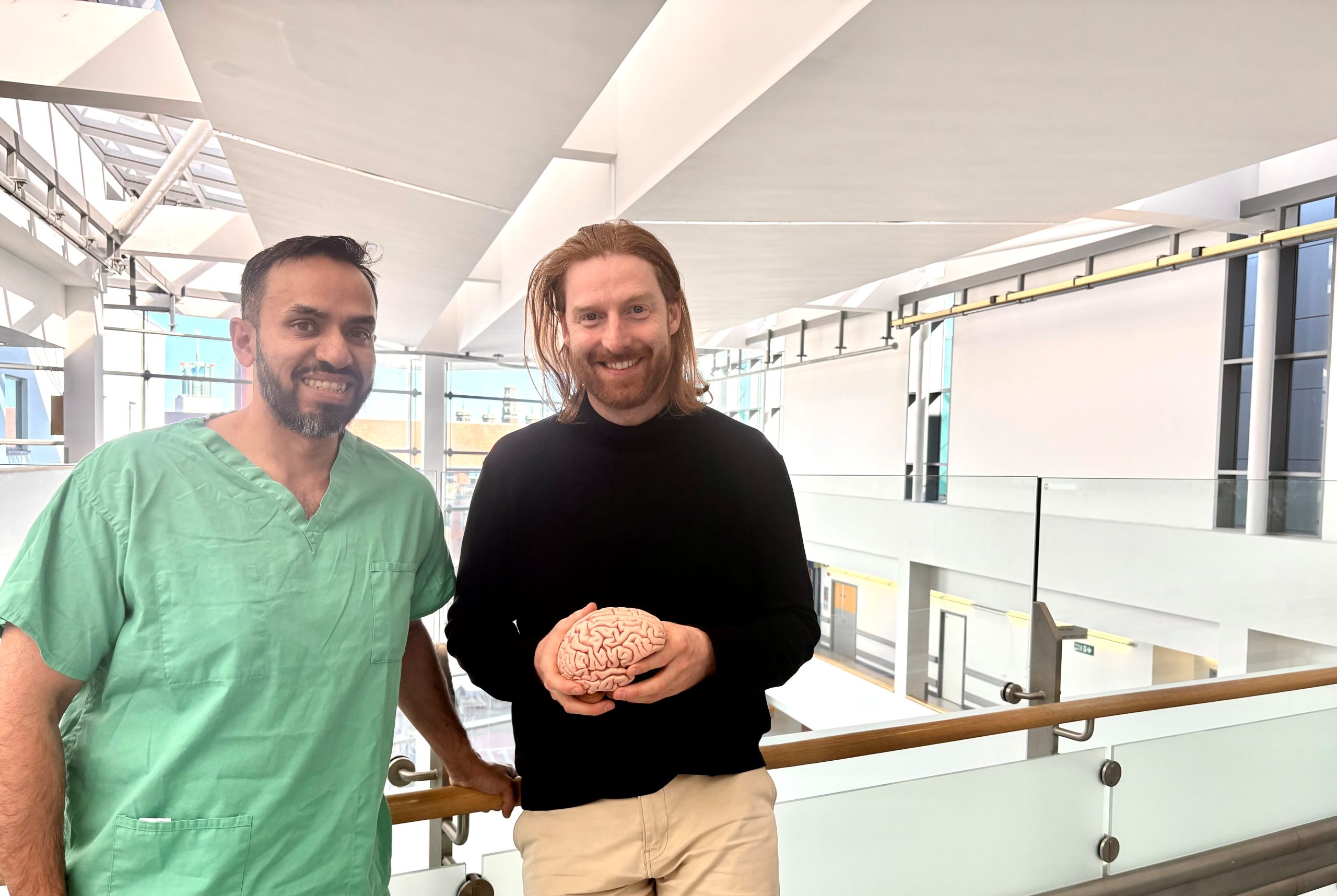
Akbar Hussain, clinical director of the NCNN and consultant neurosurgeon at Newcastle Hospitals, said the investment would increase the centre’s capacity to bring these technologies to patients.
“Neurological conditions are the leading cause of disability worldwide and can be life-changing, causing seizures, loss of movement and communication, issues with mood and difficulties with thinking.
“This funding will support a major boost in our capacity to use the latest neurotechnology to help people who have lost some or all of their normal ability.”
Hussain said the centre had already seen successes over the past couple of years using implant technology for people living with Parkinson’s disease, paralysis and severe pain.
He also pointed to the potential for further technologies to improve the abilities and independence of a wider range of people with neurological conditions.
The NCNN brings together NHS clinicians, university researchers, industry partners and patients in a hospital setting, helping move developments from scientific research into clinical care.
Luke Bashford, scientific director of the NCNN and researcher at Newcastle University, said the partnership would help expand the centre’s existing work.
“The National Centre for Neurotechnology and Neurorestoration was created to enable and accelerate the delivery of clinical studies of neurotechnologies, advance research and development, and bridge the gap between scientific discovery and patient benefit.
“This investment will enable us to scale up this vital work.
“By working with people who have lived experience, innovators and policy makers, we can accelerate the development of safe and effective neurotechnologies, establish new treatments for neurological conditions and strengthen the UK’s position as a global leader in this rapidly growing field.”
The centre will also help more NHS organisations and research centres take part in neurotechnology studies through training and projects involving multiple sites.
This is intended to give more people access to innovative treatments and technologies.
International partnerships will also support larger-scale clinical studies.
Jacques Carolan, programme director at ARIA, said translating emerging technologies into patient care remained a significant challenge.
“There is an extraordinary amount of innovation in neurotechnology right now.
“The hard part is not simply inventing a new device, it is working out how to get it to the people who need it most. NCNN gives us a real-world place to do that.
“ARIA’s investment will help build the clinical and regulatory capability needed to translate the most promising neurotechnologies, both within our programmes and across the broader ecosystem, into real-world impact.”
 ALS therapy advances to Phase 2 trial