Deep brain stimulation may improve speech and swallowing after TBI – study
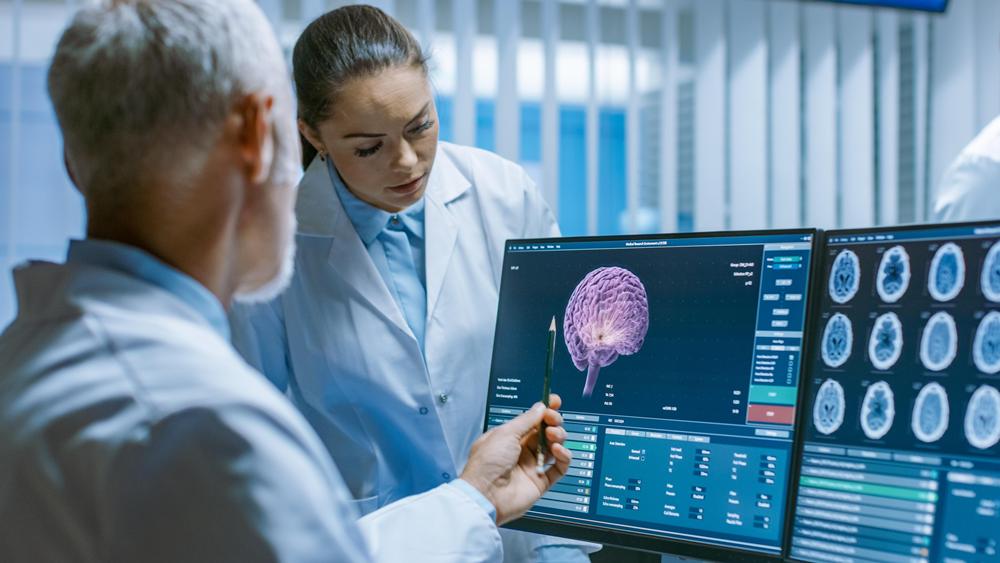
Deep brain stimulation may improve speech and swallowing control after traumatic brain injury, early research suggests.
A proof-of-concept study found that low-frequency electrical stimulation of the motor thalamus improved control of facial and tongue muscles used in speaking and swallowing.
The motor thalamus is a deep brain region connected to the motor cortex. Researchers suggest stimulation may strengthen remaining communication pathways between the brain and muscles after traumatic brain injury (TBI).

The University of Pittsburgh School of Medicine study was led by Elvira Pirondini, assistant professor of physical medicine and rehabilitation at Pitt’s Rehab Neural Engineering Laboratory, and Jorge A. Gonzalez-Martinez, professor of neurological surgery at Pitt.
The research builds on the group’s previous work using neuromodulation to improve arm and hand movement after brain injury.
“Rehabilitating speech deficits after an injury is a top priority for many people, often even more than mobility,” said Pirondini, co-senior and corresponding author of the study.
“For many people, losing speech affects work, independence and relationships. It can have a profound effect on a person’s life.”
Speech and swallowing rely on coordinated signals between the brain and muscles of the face, tongue, throat and respiratory system.
Brain injuries can disrupt these pathways, causing dysarthria, or impaired speech, and dysphagia, or difficulty swallowing.
The study notes that more than 5m people in the US live with dysphagia or dysarthria.
Current treatments often involve speech-language therapy and compensatory behavioural techniques. Outcomes vary, while external communication devices do not restore natural speech production.
Deep brain stimulation (DBS) has been tested and used to treat neurological conditions including tremors caused by Parkinson’s disease, but its potential role in restoring speech has remained controversial.
The researchers investigated low-frequency stimulation and its immediate effects on muscles involved in speech and swallowing.
Their protocol used stimulation in the 50 to 80 Hz range, almost three times lower than the 130 Hz used for high-frequency DBS. Previous research has shown that high-frequency stimulation can have a suppressive, negative effect on speech.
Eight participants with intact speech and swallowing pathways who were undergoing DBS implantation for essential tremor received low-frequency stimulation. It increased activation of face and throat muscles without worsening speech.
One participant with TBI, chronic moderate dysphagia and severe dysarthria also received low-frequency DBS. The stimulation improved facial muscle movement, swallowing and speech control.
The participant’s word intelligibility improved by 8 per cent, 20 per cent and 16 per cent across three testing sessions when stimulation was on compared with when it was off.
The study notes that a 7 per cent change is considered a small clinically significant improvement, while a 15 per cent change is considered large.
“This study shows that stimulation parameters matter,” said Gonzalez-Martinez, co-senior author of the study.
“By targeting the correct brain circuit with low-frequency stimulation, we may be able to support the remaining pathways that help patients speak and swallow after brain injury.”
The findings suggest low-frequency motor thalamus DBS deserves further study as a potential neuromodulation strategy for dysarthria and dysphagia after TBI and other brain lesions.
The study was not a clinical trial and included one participant with TBI and speech and swallowing difficulties. Larger studies are needed to assess safety, effectiveness and long-term therapeutic effects in more patients and across different types of brain injury, including stroke.
The group is now testing whether DBS can produce lasting improvements in speech and motor function of the hand and arm.
A new clinical trial is recruiting participants and will measure the effects of stimulation over four weeks.