



Clinicians & therapists
For doctors, nurses, therapists and psychologists.
 Case management24 Nov
As the country faces the second wave of the coronavirus pandemic, the management team at Richardson Care reflect on their experiences so far. Richardson Care has six specialist residential care homes – three for adults with acquired brain injury and three for adults with learning disabilities. Caring for up to 78 people, many of whom are vulnerable brings added responsibilities and pressures, as well as additional skills.
Our experience in supporting people who are rebuilding their lives after brain injury or living with learning disabilities means that we are problem solvers. We support people to overcome challenges every day. Never has this been more important and we’re proud of the way that our management team and staff have responded. Stroke17 Nov
Stroke is a leading cause of death and severe long-term disability with limited treatment available. A research team led by Prof. Gong Chen at Jinan University, Guangzhou, China recently reported the first non-human primate study demonstrating successful in vivo neural regeneration from brain internal glial cells for stroke repair.
Ms. Long-Jiao Ge, the first author of the work and a PhD student in the Institute of Zoology, Chinese Academy of Sciences, said: "Current treatment of ischemic stroke mainly aims at restoring blood flow and neuroprotection, typically with a narrow time window of several hours. Care & services12 Nov
A project has been launched to introduce smart assistant devices into residential facilities for brain injury patients to enhance their wellbeing and increase their communication with the outside world both during the COVID-19 pandemic and beyond.
The Disabilities Trust is pioneering the ConnectAbility project, which makes use of technologies and digital means to help increase independence and widen opportunities for social interaction among patients.
Through raising money to buy smart assistant devices, such as the Amazon Alexa, the Trust believes this could help people to live independently and bridge the ‘digital literacy’ gap which have previously prevented many people, particularly those with cognitive impairments, from benefitting from technology.
 Therapy6 Nov
Five brain injury professionals spanning dietetics, case management, physiotherapy and speech and language therapy share what they've learnt from to shift to virtual therapy.
At the start of the pandemic, many statutory rehab services were redeployed, and some independent therapy teams closed or therapists moved back into frontline work within the NHS and community. A group of private therapists in the North West of England started keeping in touch on social media and in weekly group support sessions to share their fears and concerns, and identify the strengths that helped them survive in such challenging times. Care & services4 Nov
Rehabilitation services for stroke and other neurological diseases have seen a slower recovery in outpatient clinics than those in inpatient settings as a result of the impact of the COVID-19 pandemic, a new report has found.
Outpatient services were largely stopped or significantly scaled back when the pandemic hit, the study said, and continue to take longer to recover post-lockdown, which could have long-term implications for patients into the future.
Decreases of around 36 per cent compared to 2019 were seen in the ability of outpatient units to interact with patients, with many appointments being delayed for between 3 and 6 months.
In an inpatient setting, the decrease was around 27 per cent at the peak COVID-19 period, although the recovery in rates of seeing patients came much quicker.
 Tech & industry27 Oct
Having been an early adopter of telerehab, PhysioFunction was perhaps less daunted than most at the prospect of responding to the COVID-19 lockdown and ensuring their clients’ needs were met.
The specialist neuro physiotherapy practice has, for the past year, used video calls to enable its clients to receive one-to-one sessions in addition to those provided in person, with its staff supporting them to install and use the technology remotely.
It is also an early adopter of the MindMotion GO, a first-of-its-kind mobile neurorehabilitation therapy system which uses gaming to support the recovery of brain injury and neuro patients.
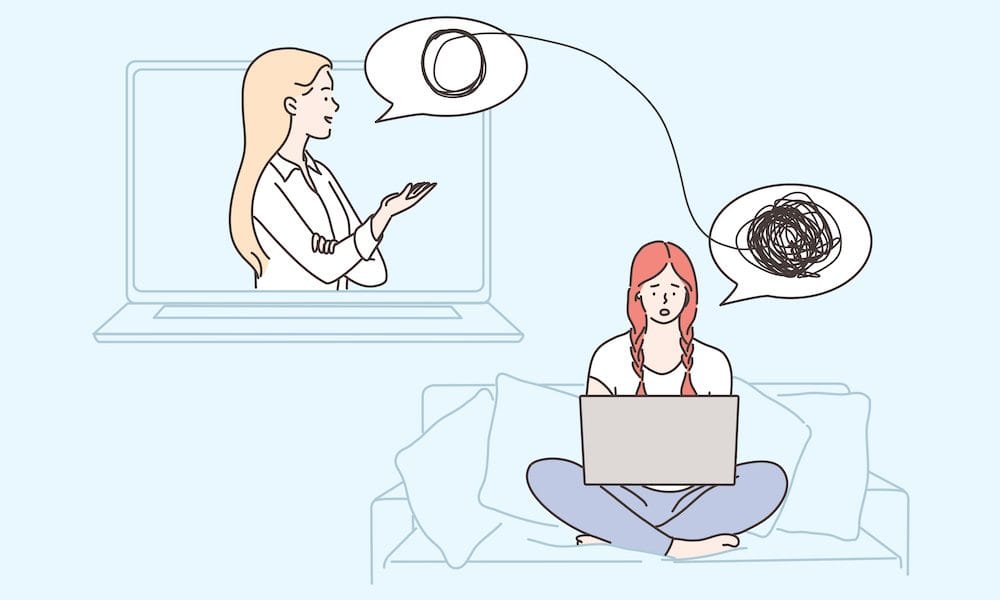
New research has found that intensive therapy is not necessarily best when it comes to treating the loss of language and communication in early recovery after a stroke.
Published in the International Journal of Stroke, the research found that unlike physical and motor skill rehabilitation, recovering lost language caused by a condition known as aphasia after stroke is a marathon, not a sprint. It also showed that early intervention is crucial. Therapy22 Sep
Laura Nicholls, lead speech and language therapist at The Bridge Neurological Care Centre in Middlesbrough, reflects on the rehabilitative journey of her patient Angela on regaining some normality following a lengthy admission in intensive care.
Firstly there’s a couple of things you need to know about Angela before I can tell you about her journey. She isn’t usually one to let another person speak for her but I have been given full permission to share with you all the ups and downs of her rehabilitative journey. Angela has acquired the very fitting nickname ‘The Duchess’. This comes from her previous occupation as a community matron, her fine eye for detail, her drive for perfection and her tendency towards bossiness. Therapy22 Sep
Rehabilitation journeys are increasingly being guided by the rhythmic interventions of music therapists but challenges in opening up access remain; as Chroma's Daniel Thomas explains.
Daniel Thomas, managing director of art therapies provider Chroma, developed an interest in music at a young age. However, he’s concerned that young people today aren’t exposed to enough music education, and that this will have a knock- on effect on music therapy, which can help a range of people, including those with a brain injury. “There have been massive cutbacks, a killing off of music in schools,” Thomas says, “Which has had a huge effect over many years as that side of school life has been systematically eked away and cut back. Therapy13 Aug
By Daniel Thomas, joint managing director of Chroma Therapies
With its ability to produce new neural pathways, Neurologic Music Therapy is able to encourage movement, co-ordination, improve speech and language, and improve the ability to read/feel emotions, reactions and more, in people living with catastrophic injuries. This is because music automatically connects to the brain. And this automaticity is what makes music so powerful. Music also has to ability to push your training capabilities farther and faster especially in running. This is why a running playlist is the ideal accompaniment to any runner.


