



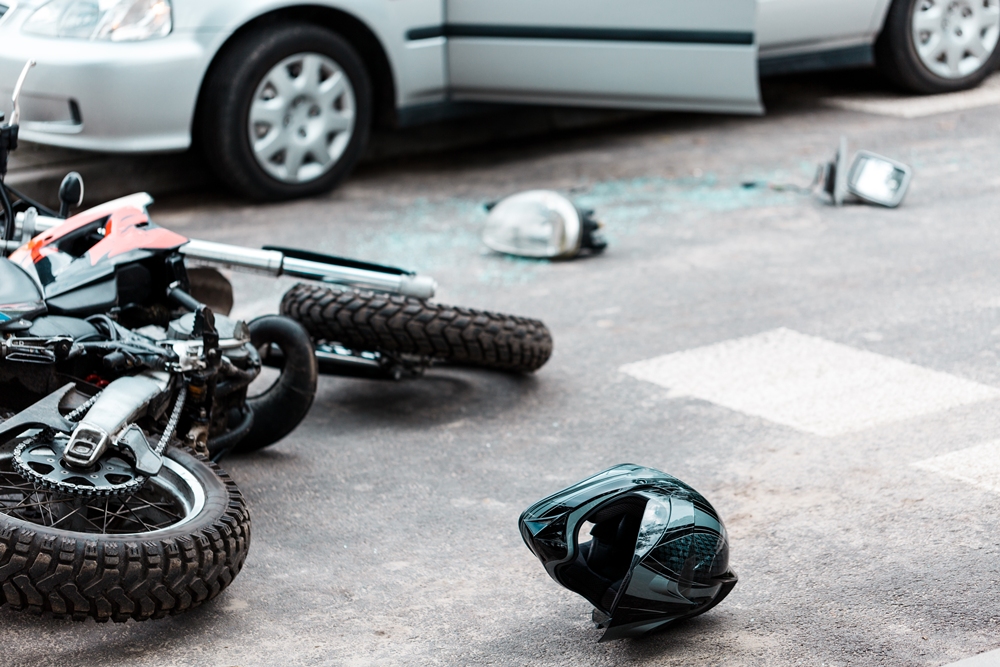
Motorcycle collisions: What happens when a ride goes wrong?
By Brian Barr Solicitors
This blog was written thanks to the expertise of our team, including Alex Cohen, Philip Cohen and Steven Akerman, leading experts in compensation claims for chronic pain and serious injury.
For many people, riding a motorcycle is about freedom, enjoyment and the open road. But motorcyclists are also among the most vulnerable road users, with relatively little protection between them and the road or another vehicle.
The latest road casualty figures underline the risks.
In 2025, 386 motorcyclists were killed on Great Britain’s roads, while a further 5,710 were seriously injured and 9,351 suffered slight injuries. Motorcyclists accounted for 25 per cent of road deaths despite making up only around 1 per cent of road traffic.
Behind every statistic is a person whose life can be changed in seconds.
A motorcycle offers considerably less physical protection than a car. Even a collision at a relatively modest speed can result in significant injuries.
Motorcyclists can suffer fractures, spinal injuries, head injuries, internal injuries, nerve damage and serious soft tissue injuries.
The consequences can extend well beyond the initial physical injuries, affecting someone’s ability to work, enjoy their usual activities or care for their family.
Some collisions are straightforward. Others can be much more difficult to establish responsibility for.
A driver may have failed to see a motorcycle at a junction, pulled out into its path, changed lanes without noticing the rider or opened a car door into the motorcycle’s path. Poor road surfaces, inadequate signage or other road conditions can also contribute to a collision.
One of the most common explanations given after a collision involving a motorcycle is that the driver simply did not see the rider. But failing to see a motorcycle does not automatically mean the motorcyclist was at fault.
Drivers have a responsibility to look properly and to take reasonable care around other road users. Establishing what actually happened can involve looking at the road layout, visibility, speed, traffic conditions, vehicle positions, witness evidence and any available CCTV or dashcam footage.
The circumstances of every collision are different, which is why it is important to get proper legal advice rather than assuming that you have no claim.
If another person was responsible for the collision, a claim may cover more than the immediate physical injury.
Depending on the circumstances, this could include compensation for:
- Pain and suffering caused by the injuries
- Loss of earnings, both now and in the future
- Medical treatment and rehabilitation
- Travel and other expenses
- Damage to the motorcycle and protective equipment
- The cost of care and assistance provided by family members
- Any long-term impact on your ability to work or enjoy your usual activities
Serious injuries can have financial consequences that are not immediately obvious after the collision.
Someone may initially expect to return to work within a few weeks, only to discover that their injuries affect their ability to carry out their job months or even years later.
This is often the case with many of our clients who go on to develop fibromyalgia or chronic pain conditions following the incident.
Following a motorcycle collision, your priority should always be your safety and getting medical attention if you need it.
If you are able to do so safely, try to gather as much information as possible about what happened.
This could include taking photographs (photograph the vehicles, motorcycle, road layout, damage, road surface, signs and your injuries where appropriate), getting witness details, and of course reporting the collision where appropriate.
If you believe another road user was responsible, speaking to a solicitor can help you understand whether you have a claim and what evidence may be needed.
At Brian Barr Solicitors, we understand that a motorcycle collision can have consequences that go far beyond the initial incident.
Our personal injury team can investigate the circumstances of the collision, consider who may have been responsible and assess the impact your injuries have had on your life, work and finances.

 Delayed diagnosis of brain cancer: Medico-legal considerations


