Saline used as placebo in clinical trails may have spinal injury benefits – study
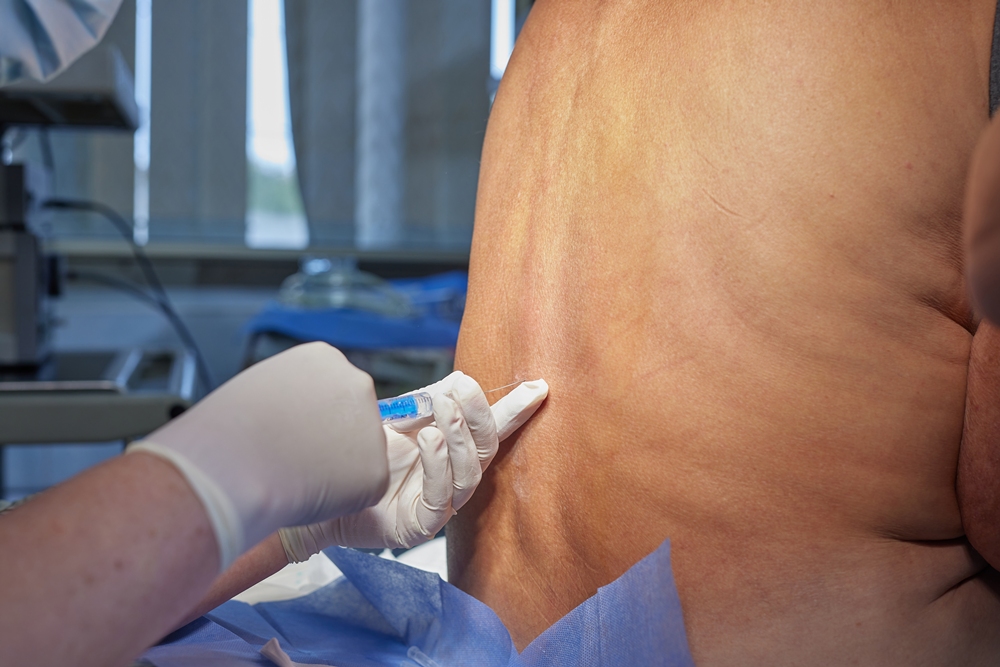
Saline placebo injections may reduce pain and disability in some spinal conditions, raising questions about their use as clinical trial controls.
Saline is commonly used as a placebo in trials assessing steroid injections and other active treatments, but patients receiving injections around the spine also showed improvements.
The findings came from a systematic review and meta-analysis of 18 randomised controlled trials involving 759 patients who received saline injections.

The Brown research team examined lumbar radiculopathy, pain caused by a pinched spinal nerve, and discogenic pain, which results from damage to the discs between vertebrae.
Bryce Basques, principal investigator and assistant professor of orthopaedics, said the researchers began examining saline after patients receiving injections around the spine “still seemed to improve” in several studies.
Co-author Maxwell Dassow said: “Comparing an active drug to saline might be underestimating the drug’s real benefit, since the ‘control’ itself is producing an effect.”
The researchers assessed pain scores and disability at follow-up points within one year of injection.
Dassow said patients with lumbar radiculopathy who received saline injections experienced statistically significant reductions in leg pain and disability, “exceeding clinically meaningful thresholds”.
Basques said these improvements often persisted over time.
Patients with disc-related low back pain also improved, although Basques said the effect was smaller.
The location of the injection also appeared to matter. Dassow said epidural saline provided “more consistent benefits” than injections into muscle.
The researchers suggested several possible explanations.
Basques said the fluid could reduce inflammation around an irritated nerve or wash out inflammatory chemicals in the area.
Dassow also highlighted a “positive-feedback mechanism”, suggesting that early pain relief and reduced inflammation could allow patients to participate in rehabilitation and normal activities sooner.
“You can almost think of that early saline injection as an investment in the recovery process that allows for even more healing over time,” Dassow wrote.
Alan Daniels, professor of orthopaedics and spine division chief, who was not involved in the study, said the most important implication was understanding “what component of an injection procedure is actually responsible for improvement”.
“Researchers may need to think twice about using saline as the only placebo group,” Basques wrote.
He suggested future studies could compare an active medication with saline and a no-injection control group to examine the effects more clearly.
Sadh said further research was needed to establish the “actual benefit” of drugs being tested.
“Saline may not be as neutral as we once assumed, and we need to account for that when we compare treatments,” Basques wrote.