Survivor turns stroke recovery into stand-up comedy

An Exeter stroke survivor who had a stroke at 29 has turned to stand-up comedy to help rebuild her life and confidence.
Molly Kinsey’s act focusses on the chaos of raising her young son, and audiences are stunned when she reveals that she survived a stroke.
She is determined not to let the memory problems, fatigue and eyesight problems caused by her stroke in 2022 stop her from pursuing her passion.

Molly will perform at the Bootlegger in Fore Street, Exeter, on Friday 31 July.

She said: “During my act, when I tell people that I’ve had a stroke, the room goes really quiet. No one knows what to say. But it’s fun to be a bit daft about it – and I don’t want people to feel sorry for me. I enjoy taking the mickey out of myself.”
“On stage, the most difficult thing is that my brain just blanks out, and I think what am I doing? I have to give myself a minute – it’s like a computer where I just turn myself on and off again.”
“The best thing is when I come off stage and other people who have had a stroke come up and talk to me. When they talk about their aspirations after a stroke, I say ‘just do it’.”
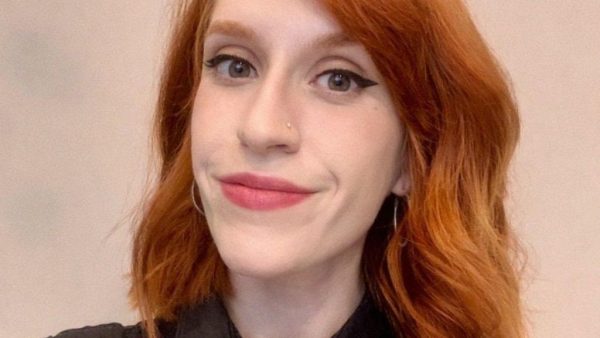
Molly Kinsey
Molly is sharing her story to challenge the belief that strokes only affect older people and raise awareness of the support available from the Stroke Association.
The Stroke Association is a UK charity that provides lifelong support for stroke survivors and their loved ones.
When Molly, who lives in St Thomas, Exeter, had the stroke, she had no idea that her life was about to change so dramatically.
She said: “I’d felt awful for a while. Then one morning I woke up blind in my left eye. I remember thinking something was really wrong, but I never once thought it could be a stroke.”
Doctors at the Royal Devon and Exeter Hospital initially suspected a migraine when Molly arrived at A&E.
However, a brain scan confirmed that she had experienced a stroke. Doctors also told her that she had previously had two other strokes earlier in her life without realising it.
Before the stroke, Molly described herself as confident, capable and sharp.
She said: “I genuinely believed I had an excellent memory. I trusted myself, I had self-belief, and after the stroke, it felt like all of that just disappeared.”
Doctors later found that the stroke had been caused by a patent foramen ovale, known as a PFO.
A PFO is a small hole in the heart that usually closes after birth. In a small number of cases, it can allow a blood clot to travel from the heart to the brain, increasing the risk of stroke.
Molly has since had surgery to close the hole.
She said: “Finding out there was this literal hole in my heart was surreal and I couldn’t understand how I didn’t know about having two previous strokes. I felt a strange mix of embarrassment and shame, even though I’d done nothing wrong. It’s hard to explain, but I felt broken.”
“Alongside the physical symptoms came a heavy emotional toll. I was depressed for a long time. I was anxious, exhausted, and trying to be a mum at the same time. I felt guilty – like I’d put my family through something awful.”
“Socially, life changed too. People acted like I shouldn’t go on a night out or have a pint at the pub because I’d been ill. Suddenly I felt fragile in other people’s eyes, even though I was still me.”
“I really thought, that’s it, that’s me done now. I stopped thinking about my dreams entirely. I assumed my memory issues meant I’d never be able to do the things I once wanted to achieve.”
One ambition that remained with Molly was performing stand-up comedy.
She said: “I’d always wanted to do it. But after the stroke and brain injury, I just assumed it was impossible. I told myself I’d never remember material, never be confident enough, never be quick enough. Recently, I realised the only person actually stopping me was me. That was a big moment.”
At 33, Molly decided to try stand-up and joined a comedy course led by Maggie Irving.
She tested her material at an open mic night at the Bootlegger last November and has since performed at several events in Exeter, including Squawkers at the Exeter Comedy Festival.
She is also due to perform at the Penzance Comedy Festival in October.
Molly recently started a new job as an events administrator at Exeter Phoenix, a multi-artform venue.
She said: “I’m proving myself wrong, which feels incredible. Stroke can happen at any age. And when it does, you are still you. You’re not finished. You’re not broken beyond repair.”
“I’m grateful I came out the other end. Now, I feel like I owe it to myself to live, to try new things and to follow my dreams – even if they scare me. I thought my story ended with a stroke. But it turns out, it was just the beginning of a different chapter.”
“My husband Alan is incredibly supportive. I couldn’t have started this without him.”
Molly used the Stroke Association’s online resources to understand more about her stroke and find useful information.
She said: “I found the website especially helpful in having things to give my employer to let them know what had happened and how they could support me.”
Jacqui Cuthbert, associate director for the South West and Channel Islands at the Stroke Association, said: “It’s wonderful to see how Molly’s courage and determination to overcome her difficulties after her stroke has led to these exciting opportunities. We wish her every success.”