The opening of one of the world’s largest and most comprehensive neuroscience centres has been hailed as helping to pave the way towards a “new era” of research.
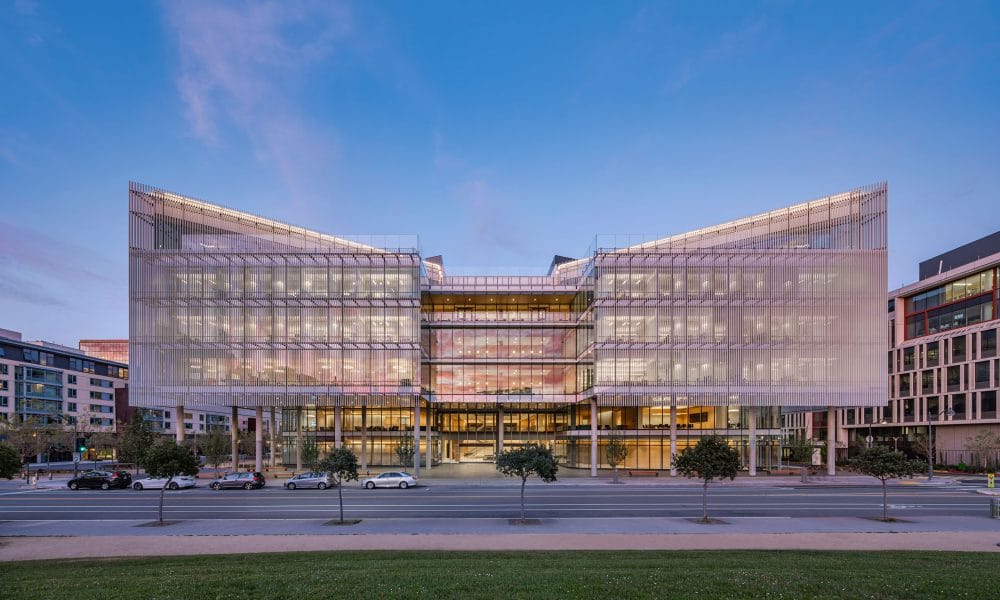
The UCSF Joan and Sanford I. Weill Neurosciences Building is part of a campus already home to Nobel-Prize winning research on the nervous system and brain and is hailed as a global destination for researchers to develop innovative treatments for intractable brain diseases.
The six-story building will be the new hub for the UCSF Weill Institute for Neurosciences and the UCSF headquarters for the Weill Neurohub, a research collaboration with UC Berkeley and the University of Washington that was launched in 2019 to support groundbreaking, cross-campus research.
Together with the nearby Sandler Neurosciences Center, Arthur and Toni Rembe Rock Hall, Genentech Hall, and soon-to-be-opened Nancy Friend Pritzker Psychiatry Building, the facility will bring together some of the most innovative researchers in the field.
The building will serve as a cornerstone of neurological care for UCSF Medical Center – recognised as the United States’ best hospital for neurology and neurosurgery by U.S. News & World Report for 2021-22 – with specially designed clinical areas to serve up to 450 patients per day.
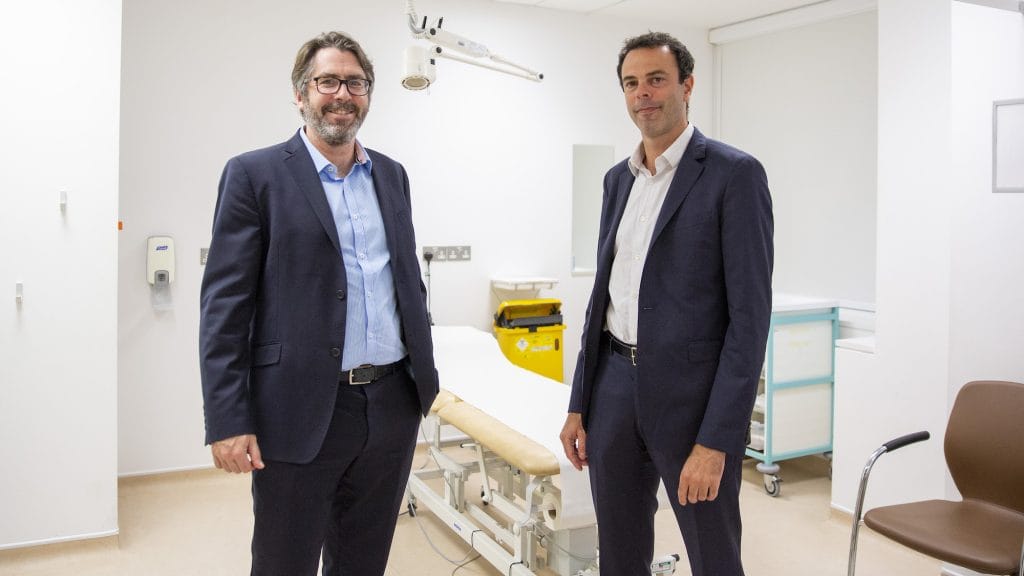
“This is a remarkable time for neuroscience,” said S. Andrew Josephson, professor and chair of the UCSF Department of Neurology and a member of the steering committee for the UCSF Weill Institute for Neurosciences.
“The UCSF Weill Neurosciences Building will stand as a beacon of hope, striving to push the frontier of what we know about the brain and expand the possibilities for effective treatments.”
“The UCSF Weill Neurosciences Building is a place for patients with the most complex and challenging cases to receive expert care, and a place for researchers to find answers to the most perplexing neurological and psychiatric conditions,” said UCSF Chancellor Sam Hawgood.
“The building’s design will enable us to bring researchers and clinicians together with our patients, to continue to advance that care into the future.”
“Traditionally, neuroscience has been partitioned into sub-disciplines, working in relatively small labs with limited access to engineering and computational resources,” said Stephen Hauser, director of the UCSF Weill Institute for Neurosciences, and professor of neurology.

“But big goals require close collaboration of large multidisciplinary teams. The UCSF Weill Neurosciences Building will enable widespread sharing of expertise, data and tools to tackle the big problems.”
The building provides space for multiple clinics and research centres, with dedicated laboratory areas integrated with engineering and computational research, to further our understanding of the brain’s complex biology and circuitry. It also has shared facilities for studying brain conditions caused by genetic diseases, as well as by autoimmune and infectious diseases.
The building was made possible by a $185 million gift in 2016 from Joan and Sanford “Sandy” I. Weill and the Weill Family Foundation.
The gift – one of the largest in the United States for neuroscience – brought the Weills’ more than five decades of philanthropy to a total of more than $1 billion in support of medical, educational, cultural and art institutions.
That support included an additional $106 million to launch the Weill Neurohub, whose emphasis on collaboration across three top universities in neuroscience research enables the most innovative projects to tap into an unprecedented strength in the field.
“Joan and I are ecstatic about the completion and opening of the building, as it has been a labor of love for us and so many over the years. Our goal is to bring together the resources and talent to tackle the most debilitating neurologic disorders and mental diseases,” said Sandy Weill.
“This is a challenge that can’t be solved by one person or even one institution, given the vast resources needed.
“By partnering and bringing together the best and brightest in their respective fields and giving them the support and facilities they need, we believe they will have an enormous impact on improving the quality of people’s lives and curing the diseases that will present the biggest challenges to our country in the decades to come.”
That support has the potential to transform the lives of millions of people, Joan Weill added, noting the impact the Weills have already seen through the UCSF Weill Awards for high-risk, high-return research, which were funded through the Weills’ gift.