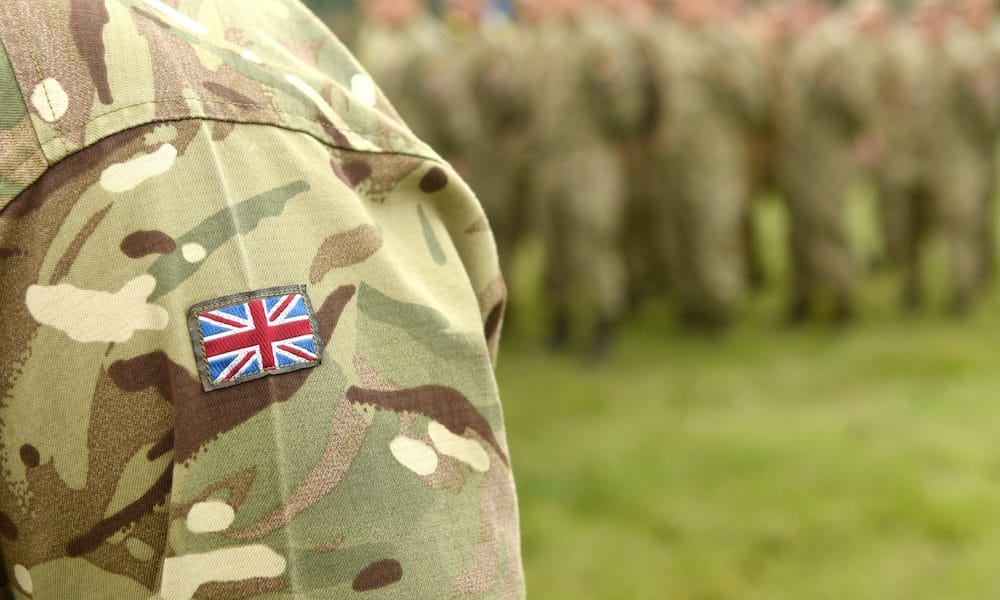
A new study is to investigate traumatic brain injury in armed forces personnel.
The five-year project will look at the effects of TBI in battlefield casualties from the UK Armed Forces.
The TBI project aims to improve understanding of the relationship between environmental factors, such as TBI, and long-term neurological outcomes.
Participants for the TBI project will be recruited from the ADVANCE Study – the Armed Services Trauma Rehabilitation Outcome Study.
ADVANCE is a 20-year longitudinal cohort study looking at the long-term physical and psycho-social outcomes of battlefield casualties from the UK Armed Forces following deployment to Afghanistan between 2002 and 2014.

The study has been running for several years and has already completed detailed baseline assessments of the 1,145 participants.
Professor David Sharp, centre director at the UK DRI Care Research & Technology Centre based at Imperial College London and the University of Surrey, has been awarded a five-year grant to investigate the new TBI study.
The project is an extension to the ADVANCE Study and is funded by the ADVANCE Charity, with support from a grant from the Headley Court Charity. This new grant will allow Professor Sharp’s team to use state-of-the-art advanced neuroimaging, biomarkers and cognitive assessments longitudinally to assess how trauma relates to long-term brain health.
The research team based at Imperial hope to build a better understanding of:
- How common traumatic brain damage is within the ADVANCE cohort, and how it relates to the number and type of head injuries
- Whether participants with TBI develop neurological or psychological problems over time
- Whether early changes of dementia are detectable in the participants with evidence of previous TBI (using advanced brain scanning and blood test analysis)
Professor Sharp says: “We are excited to be leading this new ADVANCE TBI study and are grateful to the Headley Court Charity and the ADVANCE Charity for enabling this important work.
“We hope that the results will inform disease prevention in the future, in both military and civilian settings, as well as assist in the early diagnosis of neurodegenerative disease.
“This, in turn, can facilitate prognostication and the development of disease-modifying treatments via clinical trials in high-risk groups.”
Participants in the TBI study will undergo assessments that include ultra-sensitive fluid biomarker analysis, advanced MRI (including DTI, fMRI, and 7T high field strength MRI), tau PET, and advanced computerised cognitive assessment.
The study will largely take place at the state-of-the-art rehabilitation facility at Stanford Hall, where the core ADVANCE Study is already based.