US military looks to improve detection of brain injuries caused by blasts
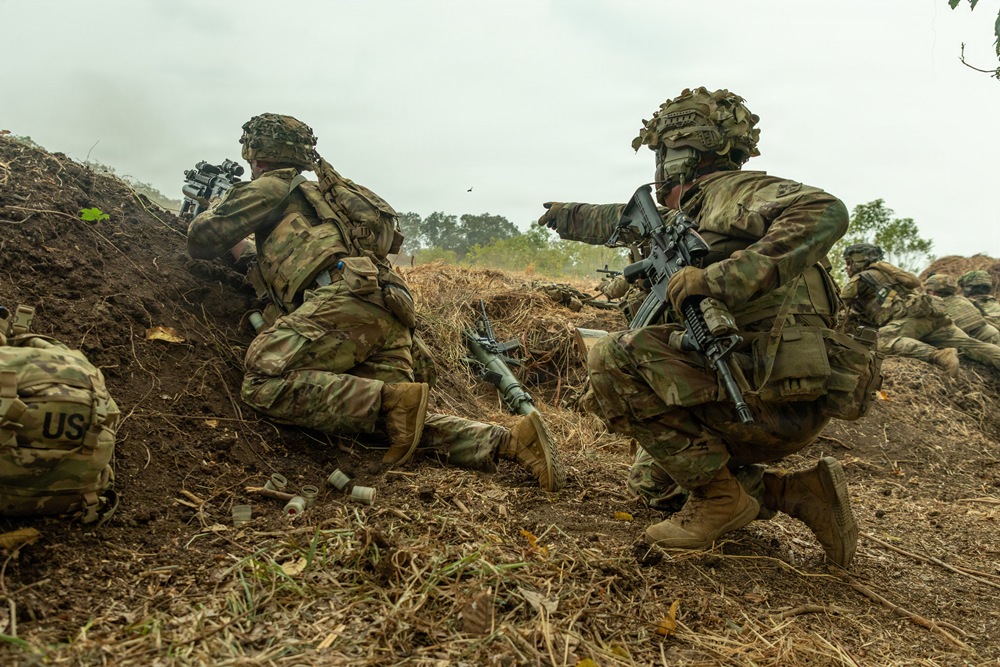
The Pentagon is seeking new standards to assess blast-related brain injuries and other causes of mild traumatic brain injury among US military personnel.
The initiative aims to establish benchmarks for measuring the physiological and biomechanical effects of blast exposure, including explosions involving enemy munitions and pressure waves produced when personnel fire their own weapons.
The standards would also support injury risk assessments involving blunt impacts caused by body acceleration and ballistic strikes to military helmets.

The Blast Injury Research Coordinating Office (BIRCO), part of the US Army Medical Research and Development Command, has issued a Request for Information seeking evidence and specialist expertise to develop the standards.
The Pentagon wants information on existing criteria, standards and models for mild traumatic brain injury (mTBI), as well as details of experts working in the field.
It is also seeking input from protective equipment manufacturers to better understand human tolerance limits and predict potential blast injuries.
The proposed standards would cover a wider range of injuries caused by explosions, rather than focusing exclusively on brain trauma.
These include blast-wave overpressure, a sudden increase in air pressure caused by an explosion, injuries from flying fragments and impacts when people are thrown against hard surfaces.
The framework would also consider injuries caused by collapsing buildings, burns, toxic gases and radiation.
According to the request, the standards could include measurements linking the intensity of blast exposure to the likelihood of injury.
These could assess individual factors, such as the strength of a pressure wave, or combinations of measurements, including how pressure changes over time.
The Pentagon intends to use the standards for health hazard assessments, survivability assessments and the development of safer weapon systems, combat platforms and protective equipment.
The initiative comes amid growing attention to the neurological effects of military blast exposure.
Evidence indicates that exposure to blasts from firing artillery, tank guns and handheld missiles can lead to brain trauma, including traumatic brain injury.
Personnel can also experience potentially harmful physical forces while travelling in small boats used by special operations forces.
Department of Defense data from the Iran war show a relatively high proportion of head trauma associated with Iranian missile and drone strikes.
The request follows an investigation by the Government Accountability Office (GAO) into the military’s ability to conduct baseline cognitive assessments.
These assessments provide a reference point for evaluating changes in cognitive function.
The GAO found that staff shortages and a lack of necessary technology were restricting military services’ ability to carry out the assessments.
In April, the Pentagon announced a one-year pilot programme to test a new cognitive assessment application.
The app would allow service members to complete assessments digitally, with Department of Defense officials saying it would require fewer resources than existing methods.
The programme is also intended to improve the military’s ability to track potentially harmful exposures.
The consequences of traumatic brain injury remain a concern for military personnel and veterans.
A 2019 study found that veterans who had experienced traumatic brain injuries were more than twice as likely to die by suicide.
The proposed standards are intended to improve the assessment of injury risks from blasts and other impacts, while informing the development of protective equipment and military systems.
 Experts urge shift towards long-term care for brain and spinal cord injuries