Trampoline therapy sees patients ‘thriving’
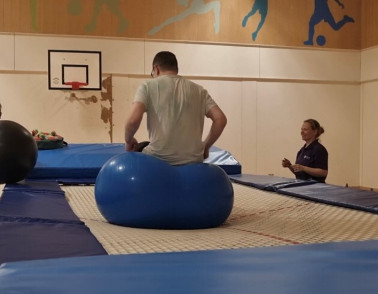
The adoption of therapy which revolves around the use of trampolines is delivering both physical and mental health benefits to patients at St Andrew’s Healthcare.
Through the use of Rebound Therapy, the first cohort of patients to engage are seeing significant positive change and are “thriving” as a result.
Rebound is a specific model of trampoline therapy that is broken down into different types of movements. The approach is used to encourage therapeutic exercise and promote sensory integration.
It been introduced to patients within the ASD and LD division at St Andrew’s, led by senior occupational therapist (OT) Karen Johnson.
“I was first introduced to Rebound Therapy when I worked in CAMHS, where we routinely encouraged our patients to engage with the trampoline,” she said.
“We saw some significant improvements among our young patient cohort so when I moved to ASD and LD, I was keen to implement the therapy when the opportunity for training arose.
“Rebound has many benefits and has been found to improve cardio and respiratory endurance, strengthen muscles, improve stability and balance, improve reaction time and also help boost mood and overall wellbeing.
“We use a very individualised approach to tailor the sessions to the needs of our patients.
“Some may want to work on developing their skills on the trampoline, however for some, it may be about increasing their confidence and becoming accustomed to smaller more gentle movements.”
The team have started to collect health outcome data and have found that out of all the sessions completed, 72 per cent of the patient participants self-reported that their mood levels had improved after participating in their Rebound Therapy session.
In addition, physical benefits have also been reported.
One patient, who had been diagnosed with ADEM and later MOG-AD, managed to improve their balance and co-ordination despite a general decline over time being likely.
Having experienced the positive changes from Rebound, the patient’s confidence helped him to then go on to attend swimming sessions and Thai Chi.
Another patient has seen their overall fitness levels improve significantly. His initial session of bouncing would last for about ten minutes, but he now manages to engage for up to 25 minutes.
Lead OT for the division, Rachel Harwood, said: “Success and progress looks different for every patient and we’re thrilled that so many service users who have engaged with the approach are enjoying so many benefits and thriving from the therapy.
“I would like to thank Karen for introducing this wonderful therapy to our division and I would urge other divisions across the charity to consider using this approach as we’ve really seen some wonderful health outcomes. We firmly believe this could be a widespread intervention.”