



By Esme Mendel-Roe, Psychology Intern, Supervised by Dr Penny Trayner, Paediatric Clinical Neuropsychologist
Beyond the Clinic
In 2026, the iBPM Immersive DJ Project was born through the pioneering collaboration between BPM Rehab, the MediaCity Immersive Technologies Innovation Hub (MITIH) and the Royal Northern College of Music (RNCM).
The study was approved by the Royal Northern College of music research ethics committee (REC).
This article outlines Part 1 of the project, focussing on rationale, methodology and participant experiences.
Part 2 will present the analysed findings (including EEG and GSR data). While initial findings are highly promising, the neuro physiological data analyses are ongoing.
For many individuals living with an acquired brain injury (ABI), or navigating neurodivergent profiles, the road to recovery is often paved with repetitive clinical exercises.
While these interventions are crucial to target isolated cognitive functions (like memory or attention), they can often overlook a more profoundly human element of rehabilitation: confidence, identity and the courage to step back into the world.
This collaboration aimed to challenge the status quo, moving the focus from “patient” to “performer”.
The MITIH Immersive DJ Project was designed to scientifically study the impact of being immersed in this performative environment, heightening the senses and hopefully facilitating recovery.
Yet, through this scientific research, it also bridged a gap for participants, able to perform in situations they may not have otherwise experienced – ranging from empty rehearsals spaces to high-stakes concerts.
Inside the Study
The project used a mixed methods multiple case design to allow researchers to examine both participant experiences and measurable physiological responses.
Ethical approval was obtained prior to data collection, with all research procedures reviewed and approved through the appropriate research ethics processes.
Five BPM Rehab students completed baseline cognitive assessments, exploring areas which are directly involved in DJ performance: attention, working memory, executive functioning, processing speed, visual perception and motor coordination.
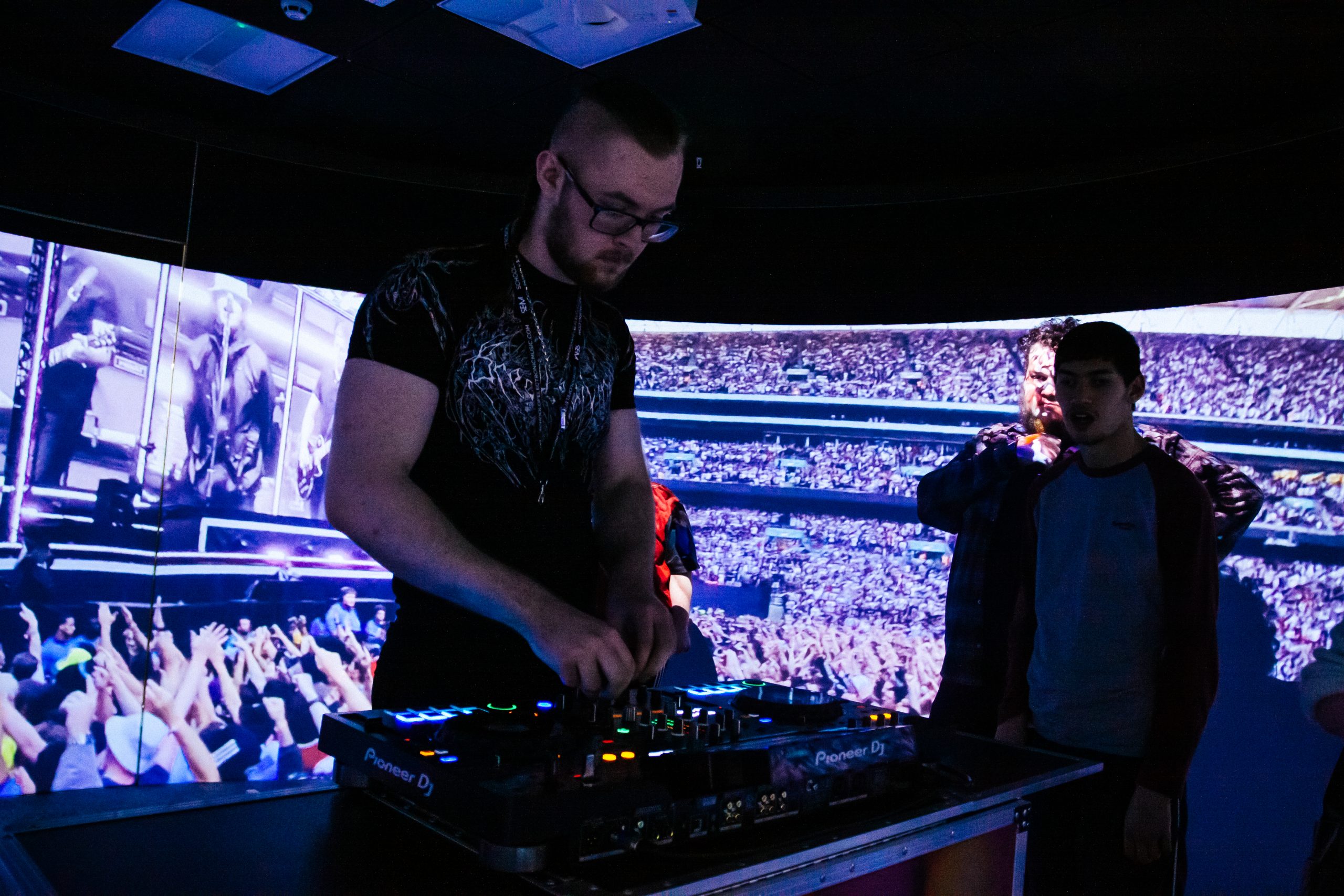
Each participant then performed a prepared DJ set in their usual environment, before repeating the task within the Igloo 360* immersive space at MediaCity.
The panoramic projection and spatial audio simulated two contrasting performance settings; an empty stadium and a busy concert arena.
This controlled progression allowed the research team to examine how increasing environmental stimuli and sensory input influences performance, cognitive demand and emotional arousal.
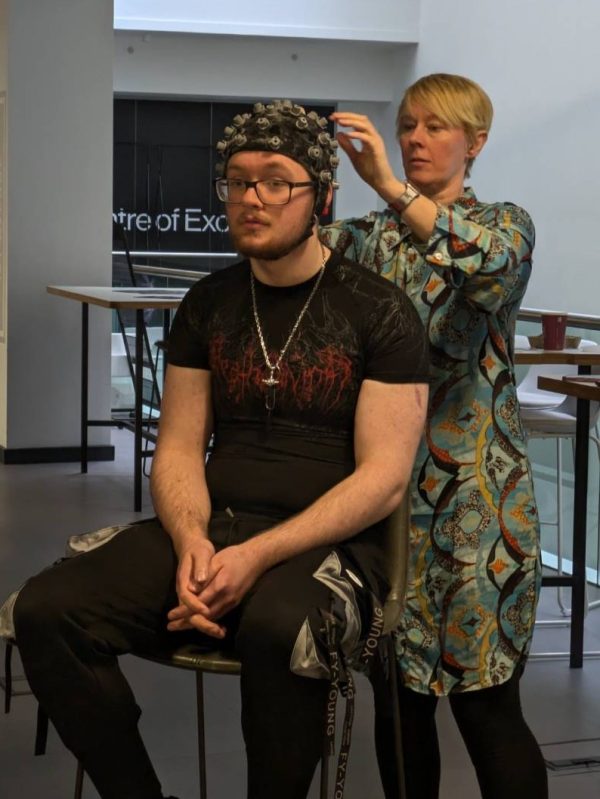
Where clinically appropriate, electroencephalography (EEG) was used to record changes to cortical activity, as well as galvanic skin response (GSR) measured changes in physiological arousal.
DJ actions like cueing, transitions and beat drops were temporally coded to allow physiological responses to later be examined against specific performance moments.
Participants later completed semi structured interviews immediately afterwards, allowing infighting into confidence, the role of sensory experience, performance flow and ecological validity.
These methods allowed a detailed picture of how individuals responded to immersion.
Why DJing?
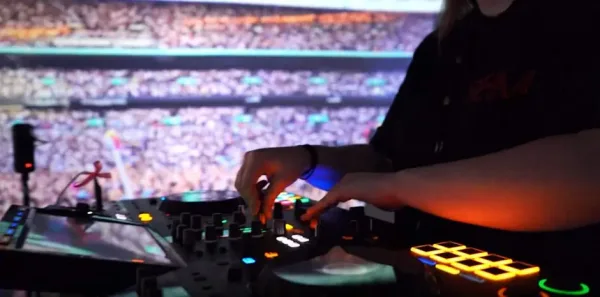
On the surface, DJing may seem like an unusual rehabilitation activity, but behind every transition lies a complex cognitive workout, blending divided attention, working memory, motor coordination, sequencing and further neurological mechanisms.
Participants must listen to two different tracks, plan their next move, execute fine motor skills and perform confidently all at the same time, the very skills frequently disrupted by acquired brain injuries.
Unlike many rehabilitation exercises, participants are not completing activities simply because they are therapeutic, this meaningful activity means they are practicing because they want to learn these genuine skills.
This motivation shift is a powerful driver of recovery, as musical engagement provides immediate auditory rewards and emotional reinforcement.
A Spectrum of Human Experience
One striking finding from the project was the substantial participant heterogeneity. No two brains are the same and as such, neither are two experiences in the immersive booth.
For some (such as participant 1), the immersive environment allowed them to refine their strengths.
With relatively preserved executive functioning and visual memory, this participant used the simulated arena to master real time track sequencing and flexible transitions.
For them, the technology offered a chance to achieve a state of “performance flow”, that felt professionally valid.
For others, the tool allowed them to overcome sensory barriers. Individuals with marked impairments in processing speed or attention, like Participant 2, often find public spaces overwhelming due to sensory sensitivities.
For these participants, the immersive set up allowed a graded exposure tool, a psychologically safe space to gradually encounter the visual “noise” and auditory complexity of a crowd, helping them to build the real-world resilience.
They noted “I was a bit nervous because it was a new environment and I’m not very good at new environments… but I was excited when it was being talked about and I really did want to do it”.
Even for those facing more severe cognitive challenges, the benefits were profound. While the technical data reflected high cognitive effort, their qualitative feedback told a completely different story, one of true engagement and enjoyment.
For these, the project allowed an opportunity to do something they once believed was permanently out of reach.
“DJing on the Clouds”
The qualitative heart of the project is shown in the participants’ own words.
Looking past EEG sensors or physiological monitors, the immersive environment provided a sense of presence, one that traditional therapy doesn’t encompass.
One participant unforgettably described the experience as though they were “DJing on the clouds”, a metaphor for the elevated, ethereal feeling of creative freedom, and a true sense of self.
For many, the realism of the 360 projection was transformative, “it feels like you’re there”, one participant shared, another noting that “I felt like I was in the moment “highlighting the projects ability to lift the weight of being a “patient” and instead replace it with the pride of being a “performer”, an artist.
This reconstruction of identity is vital, as ABI frequently results in a loss of autonomy, but creative engagement provides a path to reconnect with meaningful aspects of the self.
The Future of Immersive Recovery
This project successfully established a practical framework to combine creative education, immersive technology and neuroscience.
While researchers are still analysing the neurophysiological data, the behavioural and emotional results are evident.
By linking cognitive profiles to how a person actually feels in a “busy arena” environment, we can begin to create scalable models of immersive creative health.
This allows the use of immersive technology to foster experience dependant neuroplasticity through meaningful, motivating activities.
For BPM Rehab and its collaborators, the project has reinforced a fundamental truth, that recovery involves more than just cognitive scores, maybe the best way to help someone to their feet is to give them the opportunities they may not have otherwise had.
That sense of reclaimed possibility is the true measure of success.

 Don't miss the new issue of NR Times


