Advancing rehabilitation through neurotechnology
By The Children’s Trust
Every year, 40,000 children in the UK experience a brain injury. Around 350 sustain a severe acquired brain injury requiring rehabilitation, but only a fraction can access the specialist treatment provided by The Children’s Trust.
For those who do, the impact can be life-changing.
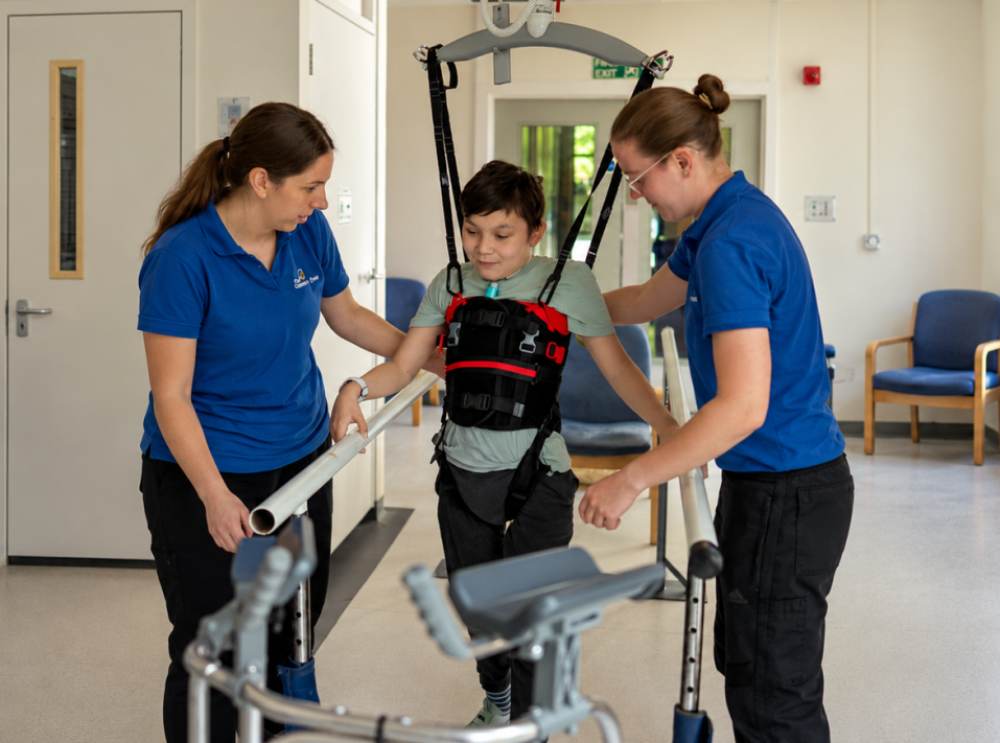
At the national specialist centre in Tadworth, Surrey, The Children’s Trust are integrating advanced neurotechnology into paediatric neurorehabilitation, using robotics, anti-gravity support and virtual reality to help children rebuild movement, independence and confidence after brain injury.
A critical success factor in rehabilitation is repetition: the more repetitions, the better the outcome.
Through technology, we can increase the intensity and precision of rehabilitation programmes in ways not previously possible, opening opportunities for progress beyond what traditional therapy alone can achieve.
Learn more about The Children’s Trust
Systems such as Diego and Pablo (TyromotionGo) enable more intensive upper limb rehabilitation, helping children regain skills essential for everyday life such as brushing their hair, online gaming and managing dressing.
The Innowalk-Pro (Made for Movement offers children the opportunity to stand and experience upright movement, even where this has not been possible with traditional equipment.
Neurotechnology in Action
Leo’s story
Fourteen-year-old Leo first arrived at The Children’s Trust in July 2024 after surgery to remove a brain tumour left him unable to move or breathe on his own.
He spent more than four months in intensive care before he was ready for admission to The Children’s Trust. During his initial 12-week placement, Leo’s programme leant on upper limb neurotechnology for his hands, the Innowalk and Guldmann hoist for walking, and using ROBERT for early mobilisation.
“It’s that distraction factor,” our Clinical Specialist Occupational Therapist, Laura, explains. “They don’t know they’re doing the reps. Without it, we’d see more difficulties getting them engaged.”
Prior to his second inpatient admission, Leo was supported by The Children’s Trust community rehabilitation service for seven-months.
Leo was able to use wearable technology at home including the Lusio so the same gamified, repetitive practice could continue outside of our national specialist centre.
While it’s impossible to know exactly where Leo’s rehabilitation would be without that technology, Laura is certain he wouldn’t be where he is now: his progress slowed noticeably without it.
Following his second inpatient admission in September-2025, Leo again accessed a range of neurotechnology which supported further progress of his left shoulder and arm.
Today, Laura describes a “100% increase” in Leo’s ability to grasp, release and use his left hand with function.
He is sitting himself up, bringing himself forward, changing his own top half sitting on the edge of his bed, and walking with a pulpit frame.
She is in no doubt what his future looks like: “I honestly think Leo will contribute to society; he’ll go to university if he wants to. What’s really important is, I think he’s beginning to see that he can.”
His mum, Asuka, has watched all of it: “What has The Children’s Trust given me? Hope. We’ve got to be here. I don’t know anywhere else that can help him.”
Looking Ahead
Experiences like Leo’s reflect what becomes possible when expert clinical care is combined with innovative neurotechnology.
With funding secured to grow the neurotechnology programme, and the first UK paediatric national trial of the Robert robotic device undertaken, The Children’s Trust continue to push the boundaries of paediatric neurorehabilitation.
Learn more about The Children’s Trust

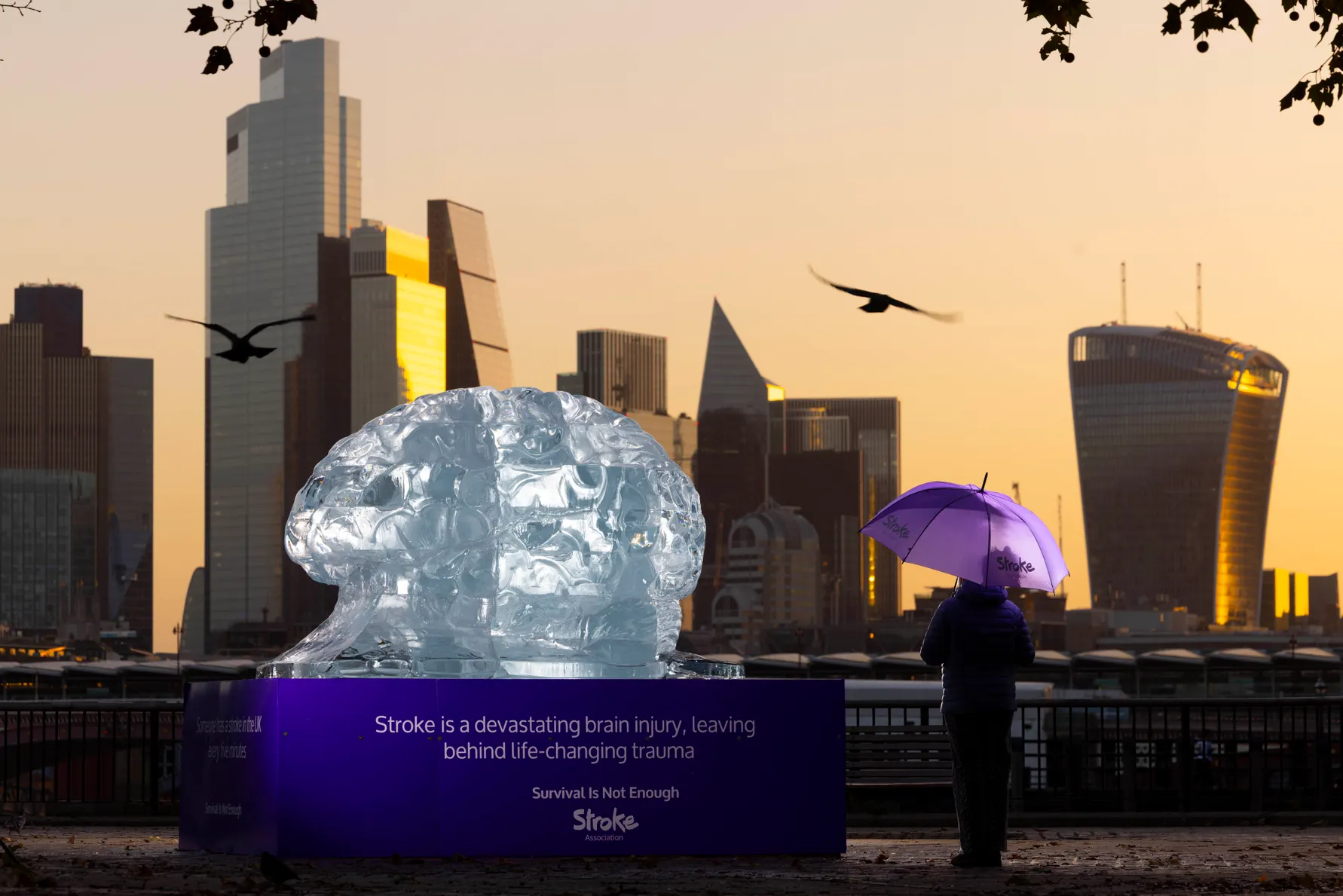 Giant ice brain unveiled as charity warns of gaps in stroke awareness