Smarter rehab
Technology such as VR, robotics, apps and brain implants, adopted where it helps.
 Smarter rehab18 Mar
A quiet revolution is unfolding in London. In a small, determined startup, years of relentless effort have given birth to a breakthrough in digital health. The Value Care Group, a company built on four decades of frontline care experience, has spent two years engineering what many believed was impossible. Today, that vision becomes reality. Mica, [...]
 Research12 Mar
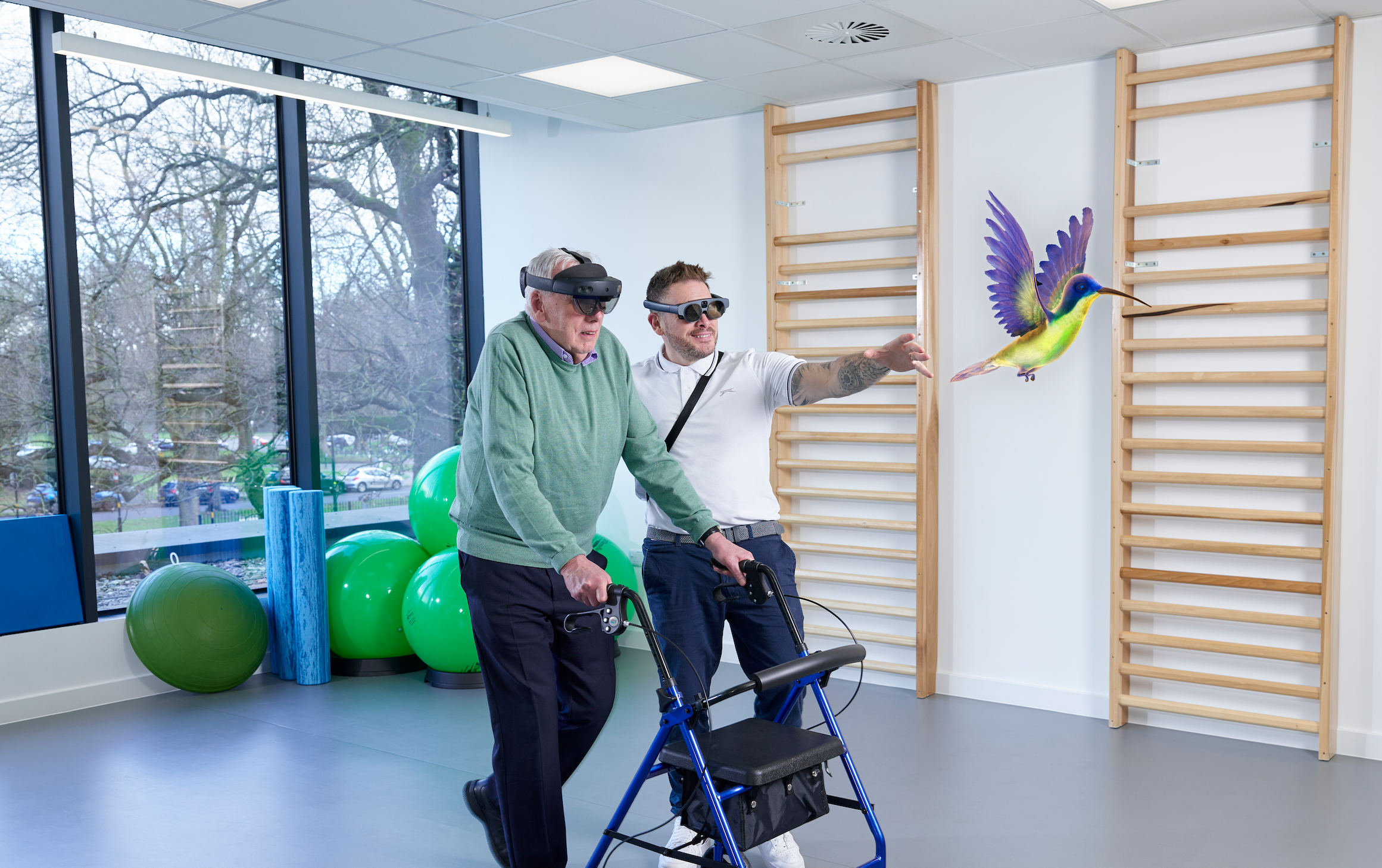
Digital software company Strolll has raised £10.35m to advance its augmented reality (AR) glasses for neuro-rehab to patients living with neurological disorders. Strolll's platform combines digital content with the real world through the use of off-the-shelf AR glasses that are aimed at helping people living with neurological disorders such as Parkinson’s disease, stroke, and multiple [...]
 Tech & industry5 Mar
Neuro Rehab Times explores the latest developments in the world of neurotech. New MRI technique can help predict and guide stroke patients’ recovery A new Georgetown University Medical Center study in collaboration with MedStar Health and the National Institutes of Health exploring a new brain imaging technique is bringing stroke experts a step closer to [...]
 Tech & industry25 Feb
NR Times explores the latest advancements in neurotechnology. First trial of innovative stent for Treating Idiopathic Intracranial Hypertension Serenity Medical, a NeuroTechnology Investors (NTI) portfolio company, has announced the publication of The River Study: the first multicentre trial of a novel venous sinus stent for the treatment of Idiopathic Intracranial Hypertension (IIH). The publication reports [...]
- Dementia25 Feb
A new AI model can measure how fast the brain is ageing, paving the way for its use as a powerful new tool to help understand, prevent and treat cognitive decline and dementia. The first-of-its-kind tool can non-invasively track the pace of brain changes by analysing magnetic resonance imaging (MRI) scans. Faster brain ageing closely [...]
 Smarter rehab19 Feb
In a new study, a sponge-like implant in mice helped to guide a treatment that slowed or stopped a degenerative condition similar to multiple sclerosis (MS) in humans. It also gave researchers a first look at how primary progressive MS, the fastest-progressing version of the disease, attacks the central nervous system early on. If administered [...]
 Smarter rehab13 Feb
Efforts to develop spinal cord injury treatments have taken a step forward with the first implant of a novel spinal stimulator in the US. It is hoped that the implantation of the spinal cord epidural stimulator in an individual with paralysis will improve motor and autonomic function. The milestone is part of an exploratory and [...]
 Tech & industry10 Feb
NR Times explores the latest developments in neurotechnology - from new rehab centres championing state-of-the-art neurotech to robot-led physiotherapy and more. Spinal cord stimulation targets key features of progressive neurodegenerative disease Spinal cord stimulation has been found to target the root cause of progressive loss of neural function in spinal muscle atrophy (SMA). The intervention [...]
 Stroke7 Feb
Mild electrical brain stimulation did not further improve motor recovery in stroke survivors, according to the results of what researchers say is a surprising study. Motor impairment, such as arm and/or leg weakness, is the most common complication after stroke. Constraint-induced movement therapy (CIMT) restricts movement on the unaffected arm by wearing a mitt over [...]
 Stroke6 Feb
Stroke wards with access to the AI imaging platform Brainomix 360 were able to double their thrombectomy rate and reduce door-in-door-out (DIDO) time by 65 minutes, its creator says. The results of a three-year study into stroke-focused AI options involving 71,000 patients in 26 hospitals will be shared at the International Stroke Conference (ISC) in [...]