Smarter rehab
Technology such as VR, robotics, apps and brain implants, adopted where it helps.
 Tech & industry19 Nov
New research has demonstrated that scientists can train artificial intelligence (AI) models to distinguish brain tumours from healthy tissue. Convolutional neural networks are powerful tools that allow researchers to train AI models on large image datasets to recognise and classify images. In this way the networks can “learn” to distinguish between pictures. The networks also [...]
 Spinal injury13 Nov
Nevro, a global medical device company delivering solutions for the treatment of chronic pain, has received CE Mark Certification in Europe for its HFX iQ spinal cord stimulation (SCS) system. The CE marking allows Nevro to market HFX iQ in all countries that recognise this certification. HFX iQ is the first and only SCS system [...]
 Parkinson's31 Oct
An app which tracks activity in Parkinson's patients has been found to help reduce hospital A&E visits, increase exercise and improve medication adherence. Precision medicine firm Rune Labs' StrivePD platform has been trialled for 10 months in 138 Parkinson's patients at a clinic in California. The patients had an age range of 39 to 88 [...]
 Dementia15 Oct
Global think tank the Milken Institute has published an action plan on how to better harness AI and precision medicine to address neurodegenerative disease. The report aims to serve as a resource for patient advocates, philanthropists, researchers, policymakers, and industry to work together to accelerate the ethical adoption of these emerging technologies for maximum impact. [...]
 Parkinson's11 Oct
Novel magnetic nanodiscs could provide a much less invasive way of stimulating parts of the brain, paving the way for stimulation therapies without implants or genetic modification, MIT researchers report. The scientists envision that the tiny discs, which are about 250 nanometres across - about 1/500 the width of a human hair - would be [...]
 Smarter rehab10 Oct
The British Heart Foundation (BHF) Data Science Centre, led by Health Data Research UK, is hosting an open challenge which invites competitors to explore the potential of Artificial Intelligence to improve the use of electrocardiogram (ECG) for cardiovascular disease patient care. The challenge has been co-designed with members of public and patients affected by cardiovascular [...]
 Smarter rehab1 Oct
Deep brain stimulation may provide immediate improvement in arm and hand strength and function weakened by traumatic brain injury or stroke. Encouraging results from extensive tests in monkeys and humans open a path for a new clinical application of an already widely used brain stimulation technology, offering insights into neural mechanisms underlying movement deficits caused [...]
 Neuropsychology24 Sep
A new study has suggested that a common brain network detected among veterans with traumatic brain injury could protect against PTSD, and that using neurostimulation therapies on the network could treat post traumatic stress disorder (PTSD) in veterans. A team of researchers have analysed 193 patients from the Vietnam Head Injury Study with penetrating traumatic brain [...]
 Smarter rehab18 Sep
A novel neurotechnology treatment known as deep brain stimulation (DBS) can benefit patients with neurological disorders, but it involves surgical procedures with potential risks. Assessing the risk-benefit tradeoffs and the ethics in making decisions about whether to begin such treatments and when can be tricky for both patients and clinicians. Laura Cabrera, associate professor of [...]
 Parkinson's18 Sep
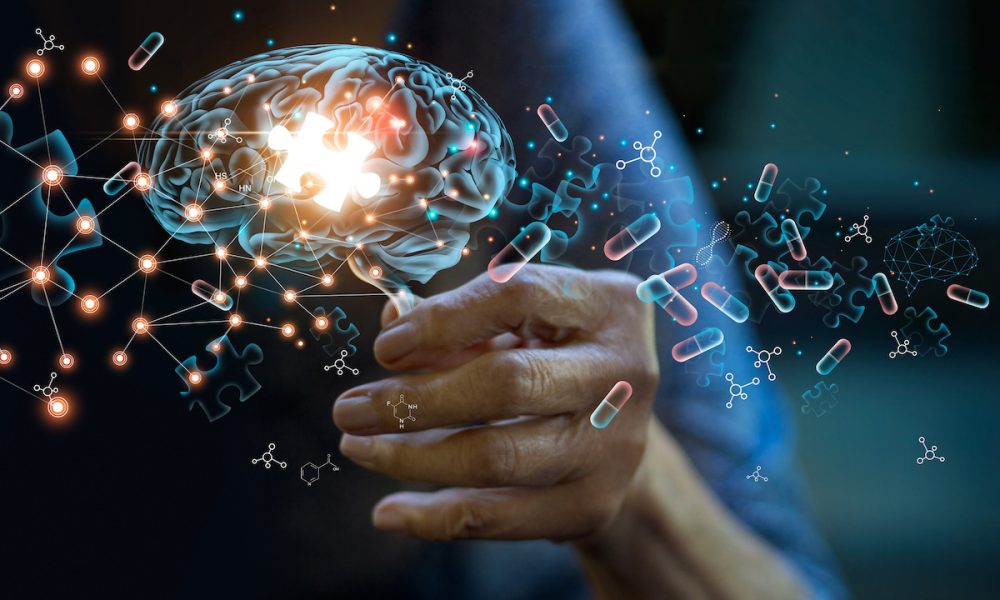
Researchers have developed a new method for detecting protein aggregation in cells – a hallmark of Parkinson's disease. The technology can enable diagnosis up to 20 years before the first motor symptoms appear, facilitating treatment or even prevention of the severe disease which is currently incurable. The novel approach is based on super-resolution microscopy combined [...]