Smarter rehab
Technology such as VR, robotics, apps and brain implants, adopted where it helps.
 Dementia12 Sep
A five-year study, backed by US$3.9m in funding, will investigate whether wearable sleep trackers can predict blood biomarkers of Alzheimer’s disease in at-risk individuals. The National Institutes of Health has awarded Joyita Dutta, professor of biomedical engineering at the University of Massachusetts Amherst, the funds to conduct the research that could pave the way for [...]
 Smarter rehab4 Sep
The World Health Organization (WHO) and International Paralympic Committee (IPC) are joining forces to highlight the transformative impact of assistive technology on sports during the Paris 2024 Paralympics. The "Equipped for equity" campaign emphasises the crucial role of assistive technology for Paralympic athletes to advocate for concerted global action to improve access to these essential [...]
 Therapy3 Sep
A small study shows that adaptive deep brain stimulation is better than the standard version at controlling movement symptoms day and night for people with Parkinson’s. Researchers explored whether adaptive deep brain stimulation (DBS) could improve movement symptoms for four people living with Parkinson’s when compared to standard DBS. Results show that adaptive DBS can [...]
 Smarter rehab2 Sep
Immersive virtual reality (VR) could open up a whole new world for people with intellectual disability, enabling them to learn practical life skills much faster without relying on caregivers, according to a new study. Australian researchers compared the effectiveness of immersive VR headsets and non-immersive virtual environments to teach 36 adults with an intellectual disability [...]
 Neuropsychology29 Aug
A new study has investigated the relationship between adolescents’ executive function (EF) and their use and perceived usefulness of generative AI chatbots for schoolwork. Since their release, AI tools like ChatGPT have had a huge impact on content creation. In schools and universities, a debate about whether these tools should be allowed or prohibited is [...]
 Smarter rehab22 Aug
A groundbreaking study has unveiled significant findings that could enhance brain-computer interface (BCI) technologies, marking a crucial step towards more intuitive neuroprosthetic control and advanced rehabilitation therapies. The study employed high-density electroencephalogram (EEG) recordings to delve into the neural dynamics of motor and tactile imagery. Brain-computer interfaces, devices that translate brain activity into commands for [...]
 Brain injury21 Aug
The idea of electrically stimulating a brain region called the central thalamus has gained traction among researchers and clinicians because it can help arouse subjects from unconscious states induced by traumatic brain injury (TBI) or anaesthesia, and can boost cognition and performance in awake animals. But the method, called CT-DBS, can have a side effect: [...]
 Brain injury20 Aug
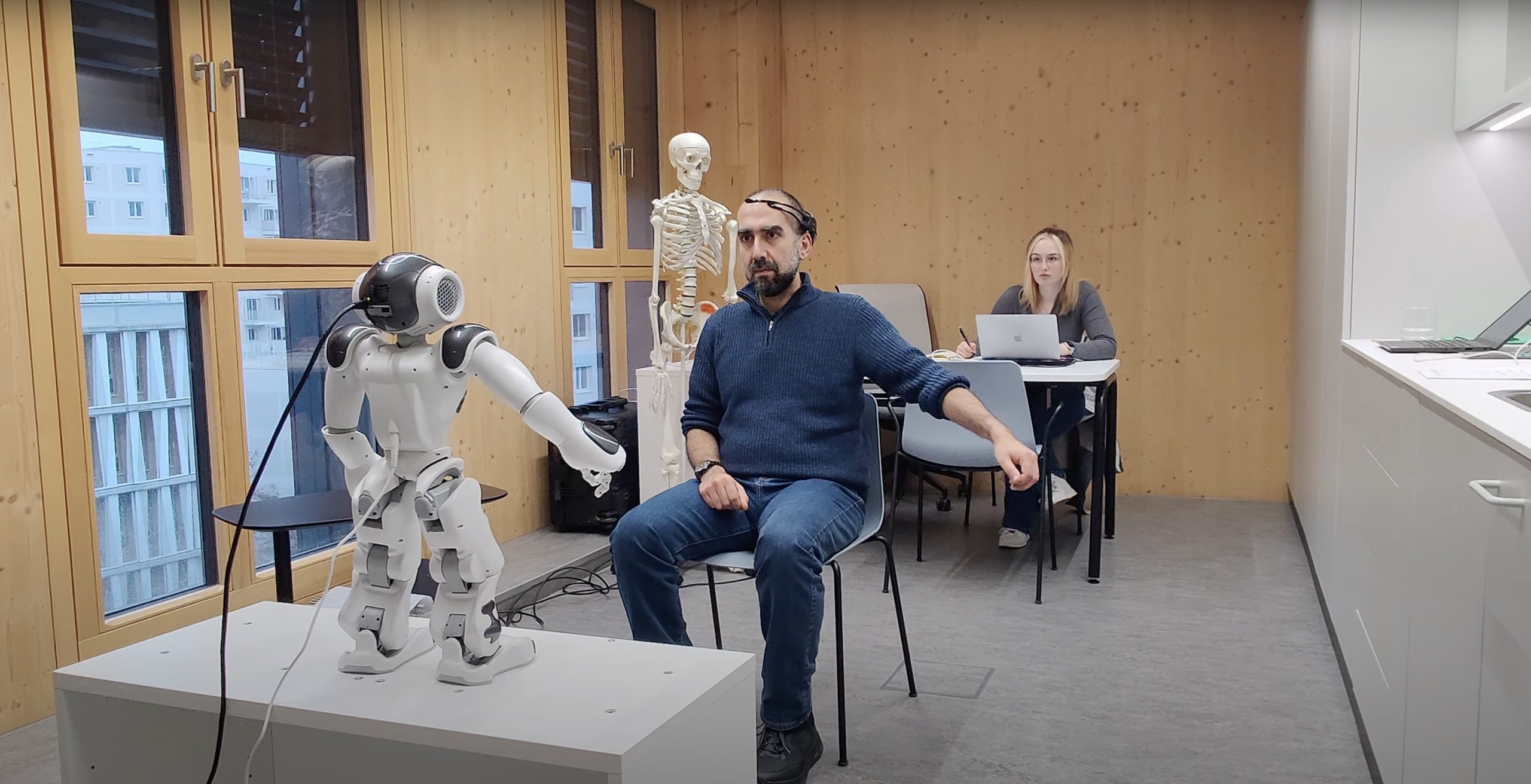
Robotic ‘coaches’ which help aid upper limb rehabilitation for stroke and brain injury survivors have been successfully trialled in Vienna, Austria as part of an international pilot study led by researchers from the UK’s National Robotarium. The VITALISE project, funded by the EU Horizon 2020 programme and led by the National Robotarium's Human Robot Interaction [...]
 Stroke12 Aug
A personalised brain-computer interface therapy, RehabSwift, significantly enhances hand mobility for stroke survivors, new research has shown. Strokes often lead to impaired hand function, presenting substantial challenges in daily activities. Sam Darvishi and colleagues developed and tested a brain-computer interface therapy that translates imagined hand movements into real actions using a personalised algorithm and bionic [...]
 Smarter rehab5 Aug
Heart conditions can be diagnosed roughly as accurately using just three electrodes and an artificial intelligence (AI) tool as a 12-lead electrocardiogram (ECG), new research has found. The researchers reported that their AI algorithm can recreate full 12-lead ECGs with data from only three ECG leads. Moreover, clinicians can identify heart attacks with nearly the [...]