Smarter rehab
Technology such as VR, robotics, apps and brain implants, adopted where it helps.
 Dementia31 Jul
Researchers in the US are using artificial intelligence (AI) and machine learning to analyse electroencephalogram (EEG) tests more quickly and precisely, enabling neurologists to find early signs of dementia among data that typically go unexamined. The century-old EEG, during which a dozen or more electrodes are stuck to the scalp to monitor brain activity, is [...]
 Stroke29 Jul
Using a socially assistive robot (SAR) in post-stroke rehabilitation improves outcomes, according to researchers at Ben-Gurion University of the Negev in Israel. The finding from the first long-term study of robot use in physical therapy could open up a totally new method for rehabilitation exercises. Prof. Shelly Levy-Tzedek is a member of the Department of [...]
 Dementia28 Jun
AI could be used to predict whether a person will develop Alzheimer’s-associated dementia by simply analysing their speech, scientists believe. Researchers at Boston University are exploring how analysis of speech patterns via a machine learning model could detect with a high degree of accuracy whether someone with mild cognitive impairment will develop Alzheimer’s-associated dementia within [...]
 Smarter rehab10 Jun
By Mike Battista, Director, Science and Research, Creyos
 Tech & industry23 May
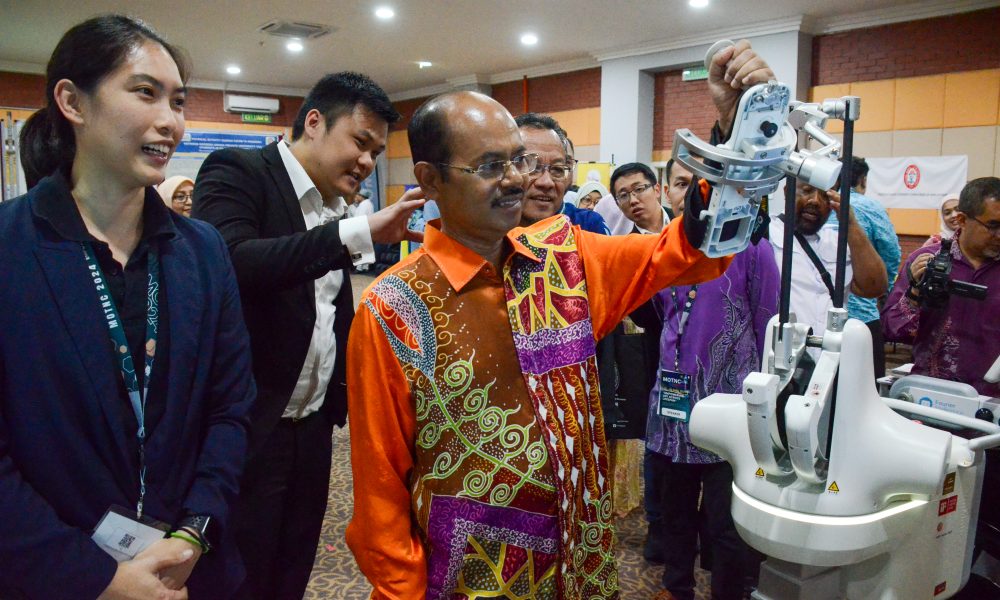
Rehab tech company Fourier Intelligence showcased its portfolio at the recent Malaysia Occupational Therapists National Conference (MOTNC 2024), held on the east coast of Malaysia. Under the theme 'Empowering Life Across the Lifespan,' the conference brought together a diverse group of occupational therapists and healthcare professionals. The event was officiated by YB Tuan Ir. Razali [...]
 Smarter rehab22 May
Thor Assistive Technologies recently installed two EGZOTech devices at Complete Neuro Rehab’s facility in the West Midlands. NR Times reports on the impact of the tech on patient outcomes and how it is enabling physiotherapists to “do what they do best”. “This relationship between technology and traditional physiotherapy principles works very well,” says Dave Swinburne, [...]
 Dementia25 Apr
Cleveland Clinic researchers are using artificial intelligence to uncover the link between the gut microbiome and Alzheimer’s disease. Previous studies showed that Alzheimer’s disease patients have changes in their gut bacteria as the disease develops. The newly published Cell Reports study outlines a computational method to determine how bacterial byproducts called metabolites interact with receptors on cells [...]
 Community neuro rehab16 Apr
By Dr Penny Trayner, Clinical Director, Academic Director, Clinical Neuropsychologist ; Charlotte Giblin, Assistant Psychologist and Sarah Lake, Research Assistant
 Smarter rehab18 Mar
A new study has revealed for the first time how the brain can precisely adapt to external stimuli, amounting to a breakthrough in our understanding of brain stimulation therapies. A team of researchers at the University of Minnesota Twin Cities showed that non-invasive brain stimulation can change a specific brain mechanism that is directly related [...]
 Patient stories13 Mar
The Care and Rehabilitation Centre near Leatherhead, provided by disability charity Queen Elizabeth’s Foundation for Disabled People (QEF), now offers technology-assisted therapy as part of their neuro rehabilitation and complex neurological care service. Expert therapy and care teams support people to regain core skills after a stroke, acquired brain injury, spinal injury or neurological illness. [...]