Smarter rehab
Technology such as VR, robotics, apps and brain implants, adopted where it helps.
 Stroke26 May
A brand-new challenge for artificial intelligence and machine learning developers, to build models that can predict heart failure-related health outcomes including stroke, for veterans has been launched by a collaboration between regulators and healthcare organisations in the UK and US. The Veterans Cardiac Health and AI Model Predictions (V-CHAMPs) Challenge, has been launched by the [...]
- Research25 May
A team of researchers have developed a new artificial intelligence framework in order to address the number of strokes that go unrecognised by human emergency call handlers. This new AI framework has already shown to outperform emergency call handlers in recognising stroke for both sexes and across all age groups studied, indicating its potential as [...]
 Tech & industry24 May
Changes and improvements in assistive technology are fast-paced and constant. Emma Chesworth caught up with assistive technology consultant Oliver Lewis to talk about some of the latest equipment and software that are helping improve the lives of people with a brain injury, limiting condition or disability.
“There have been a lot of changes in hardware,” says Oliver. One recent advancement is the robotic arm for wheelchairs devised by Rahana Life. The arm bolts onto someone’s wheelchair and through head movements or a joystick they can operate the chair’s controls. “This means that someone who does not have control of their limbs can use the robotic arm to feed the dog for example or take something gently from a child or look at a piece of paper. Little things that can make a big difference to someone’s life,” says Oliver.- Tech & industry23 May
By using advanced digital health and AI technologies Mintt specialises in fall detection, prevention, and analysis. However, how does its technology help stroke survivors? Mintt gives SR Times insight into its founding and how its technology can help with stroke prevention. What was the inspiration behind Mintt? One of the founders of Mintt had a [...]
 Stroke22 May
High-tech Powerbead device set to support moderate to severe impairments
- Tech & industry17 May
A brand new, state-of-the-art wearable device for stroke survivors boasts the potential to help up to 50 per cent of stroke survivors to recover movement in their arm.
 Interviews3 May
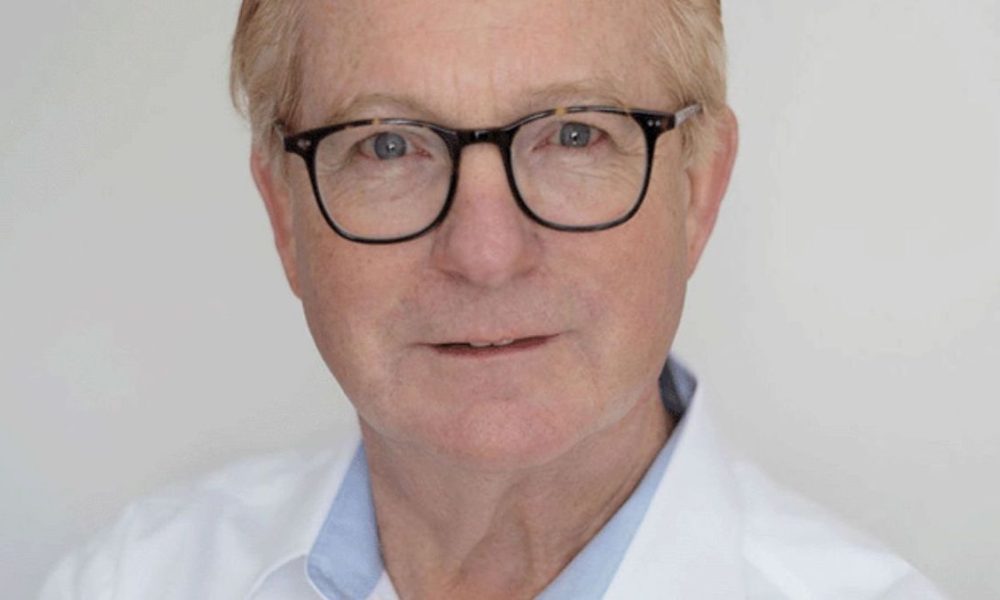
The voice AI platform Canary Speech has achieved an accuracy of 96 per cent in recognising early signs of Huntington’s disease. NR Times spoke to CEO and co-founder Henry O’Connell about its potential role in neuro-rehab.
Speech is the most complex motor function in the human body and a key indicator of disease progression in patients with neurological conditions. As a neurological disease impacts the muscular system it leads to changes in patients’ voice and language. These changes occur gradually, beginning as subtle clues before developing into more noticeable symptoms as the disease progresses. Parkinson’s patients, for example, might slur words, mumble or struggle with articulation, while people with Alzheimer’s may begin to forget words as their condition deteriorates. The minute changes to speech that begin at the early stages of neurological diseases are difficult to spot. But, as a new era of AI and natural language processing technology (NLP) emerges, new platforms are showing promise for identifying dysarthria at a much earlier stage. One of the leaders in this field is Canary Speech, a voice biomarker platform that has already had success in screening for mood, stress, and energy levels using a single 20-second audio clip. Now, the company is turning its attention to neurological diseases as it seeks to use the same technology to detect the first signs of Parkinson’s, Huntington’s and Alzheimer’s Disease. Sign up to NR Times now to read our Canary Speech interview in full.- Opinion28 Apr
SR Times speaks with Chris Brickler, founder and CEO of MyndVR on how virtual reality is allowing senior stroke survivors to explore new possibilities. SR Times: What was the inspiration behind MyndVR? Chris Brickler: “In 2016, we got a really deep look into Oculus and what Facebook had done with their acquisition of Oculus and [...]
- Stroke27 Apr
Oxford-based Ultromics has been granted FDA Breakthrough Device Status for its AI-enhanced platform for detecting stroke risk factor cardiac amyloidosis. What is cardiac amyloidosis? Cardiac amyloidosis, also known as stiff heart syndrome, is a condition caused by amyloid deposits replacing normal heart muscle. It is also the most common form of restrictive cardiomyopathy. Cardiac amyloidosis [...]
- Tech & industry21 Apr
Gavin Bashar, UK managing director at Tunstall Healthcare, discusses how technology can enable older people to live independently for longer, emerging technologies that can support falls management, and how we can meet the 2025 digital transformation target. Falls are the largest cause of emergency hospital admissions for older people with 70,000-75,000 people fracturing their hip [...]