In focus ›
Smarter rehab
Technology such as VR, robotics, apps and brain implants, adopted where it helps.
 Tech & industry28 Jun
With the creation of LusioMATE, rehabilitation is being revolutionised through the use of gaming. NR Times meets Justin Keenan, CEO of Lusio Rehab, to learn more about the world-first device
From a series of chance encounters came the creation of a business which is helping to revolutionise therapy and rehabilitation on a global scale through the use of gaming. With the creation of LusioMATE, the world’s first wearable therapy controller and game ecosystem, Lusio Rehab is helping to redraw the boundaries and rehab potential for people living with neurological conditions and other disabilities around the world. Since its launch in 2019, the device has expanded far beyond its origins in Australia to be in use in the UK, across Europe, the United States and South America. Tech & industry17 Jun
With the creation of the Luscii remote monitoring platform, people with ongoing care needs can avoid the necessity for regular medical appointments, while clinicians can ensure they're being looked after from afar. NR Times speaks to its founder Professor Daan Dohmen about Luscii's role in the future of healthcare
From his early experience of working part-time in a nursing home came a realisation that patients could and should play a more active role in their care and health. “For me, that was a really important step in my vision to use technology to help regain people’s independence,” says Professor Dr Daan Dohmen. “The nursing home had all good intentions but took away the independence of people living there - they put them in the shower, they did everything. Spinal injury1 Jun
Exoskeletons could help people with spinal cord injury improve their bowel function, new research has revealed.
Physical intervention plans which included exoskeleton-assisted walking were shown to help people with SCI evacuate more efficiently and improved the consistency of their stool. Rehabilitation professionals have traditionally managed bowel dysfunction using approaches that target the gastrointestinal system or require manual intervention, but some newer research suggests that physical activity and upright posture may enhance bowel motility. However, few studies have explored the possibility that exoskeletal-assisted walking - in which a person with spinal cord injury wears a robotic suit, enabling them to stand and walk - may be an effective addition to existing intervention plans. Smarter rehab13 May
The world’s first Alzheimer’s disease drug candidate designed by artificial intelligence (AI) is to enter Phase I clinical trial in the US.
The study will assess whether DSP-0038 has improved antipsychotic effects in patients with Alzheimer’s psychosis and evaluate if it can improve the behavioural and psychological symptoms of dementia, including agitation, aggression, anxiety and depression. DSP-0038 is the third molecule created using Exscientia Ltd’s AI technologies and the second molecule to enter trials from the company’s partnership with Sumitomo Dainippon Pharma. The two other compounds are DSP-1181, developed in collaboration with Sumitomo and entered trials to treat obsessive-compulsive disorder in 2020, and EXS-21546, an immuno-oncology agent which began trials earlier this year.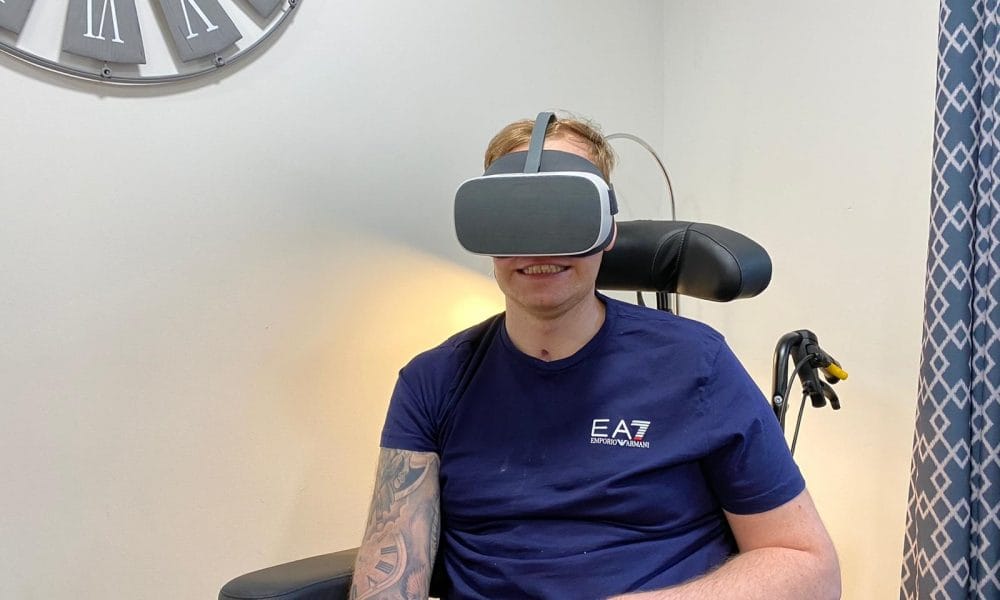 Tech & industry11 May
Having fun in the snow and touching the clouds are some of the ways that residents at Exemplar Health Care’s Ribble View care home are using virtual reality technology to relax during lockdown. The team at Ribble View, alongside experts from Rescape Innovation, have been using virtual reality (VR) technology, DR.VR, to support therapy sessions in the home in Preston. This is part of Exemplar Health Care's commitment to investing in the latest life-enriching technology to make every day better for their people.
 Brain injury5 May
The first digital health intervention for families affected by ABI has been launched, with a view to national roll-out in the coming months.
CBIT In Hand has been created to provide immediate, tailored information via a mobile device to families of children and young people who have been affected by concussion and/or acquired brain injury (ABI). After three years of planning by the Child Brain Injury Trust, the app went live last week when it was launched at the CBIT virtual conference, and is being trialed in Alder Hey and Birmingham Children’s Hospital for the next three months. CBIT in Hand, which can be accessed by QR code or downloaded from App stores, is being targeted at A&E departments and major trauma units, to ensure families can find the digital information, resources and support they need instantly during the most difficult early stages of their loved one’s injury.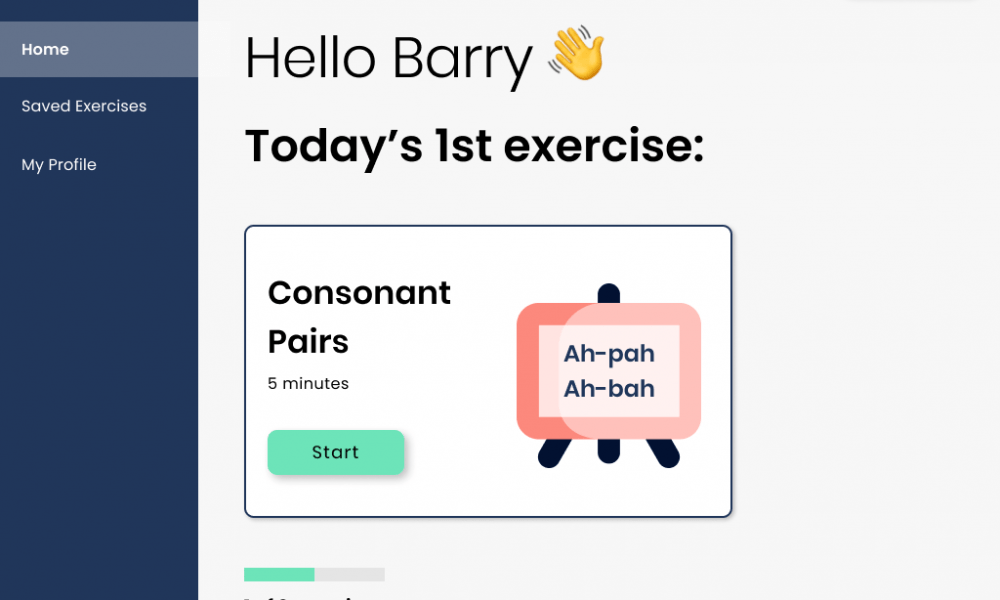 Tech & industry27 Apr
An app which uses AI to enable stroke survivors to rebuild their speech and language capability at home has been launched, inspired by the personal experience of its creator.
SpeechFirst supports survivors to build on their speech and language therapy provision through using AI to detect incorrect facial movements and pronunciation and provide real-time tips and recommendations to enable them to make progress. The app is the first British built creation to make use of AI in speech and language therapy, and with its launch is set to increase the rehab potential of thousands of survivors nationally. Its home-based approach enabling people to continue their rehabilitation remotely, while supervised by their therapist who can access the person’s SpeechFirst dashboard. Tech & industry12 Apr
A tech platform credited with revolutionising rehabilitation for the neuro sector goes live today as the first step in its national roll-out.
Neuro ProActive has been created to enable a fully multi-disciplinary approach to rehabilitation, covering both inpatient and community care and involving patients and their families in the process. The app - which supports the spectrum of neurological conditions, from brain injury to stroke, dementia and Long COVID - enables greater cohesion between therapists through its end-to-end message and video calling encryption, which allows remote services and patient monitoring to be done via one single platform. Dementia12 Apr
Powerful algorithms used by Netflix, Amazon and Facebook can 'predict' the biological language of neurodegenerative diseases, scientists have found.
Big data produced during decades of research was fed into a computer language model to see if artificial intelligence (AI) can make more advanced discoveries than humans. Academics from St John's College, University of Cambridge, found the machine-learning technology could decipher the 'biological language' of cancer and neurodegenerative diseases like Alzheimer’s, Parkinson’s and Huntington’s. Their groundbreaking study could be used in the future to 'correct the grammatical mistakes inside cells that cause disease’. Tech & industry31 Mar
An app designed to support people who have acquired reading impairments or aphasia due to stroke, brain injury or dementia, has launched globally.
In its first week, iReadMore, with its unique and engaging approach to single word reading therapy, was downloaded in every continent of the world except Antarctica. The self-led app is for individuals to use at home, which is proving especially relevant during the pandemic and ongoing lockdown restrictions around the world, with many people pursuing their own therapy options. iReadMore has been developed by researchers in the Neurotherapeutics Group at University College London, working alongside people living with aphasia, to bring to fruition a project that was started in 2007 by Dr Zoe Woodhead and Professor Richard Wise.