Smarter rehab
Technology such as VR, robotics, apps and brain implants, adopted where it helps.
 Case management19 Nov
A key figure in UK case management has won a prestigious award in recognition of her work in opening up access to chronic pain management support through innovative use of digital technology.
Deborah Edwards has overseen the creation of the RESTORE programme, an eight-week online support and coaching initiative which is helping people across the country to improve how they manage and deal with pain. The “revolutionary” programme, which delivers evidence-based improvements in sleep and movement for chronic pain sufferers, has enabled people to bypass long NHS waiting times to access a tailored programme and bespoke advice from specialists. Smarter rehab19 Nov
An NHS-approved cognitive training app is helping to improve the lives of those with Parkinson’s Disease, research shows.
A paper by Radboud University Medial Center Nijmegen and Maastricht (UMC) in the Netherlands shows that patients who used the app regularly for 24 weeks reversed the decline in their global cognition – their memory, their ability to concentrate, make decisions and learn new things. This was when compared to a controlled group of patients in a similar condition who didn’t use the app. Keiron Sparrowhawk, neuroscientist and founder of the MyCognition app says: “These results are fantastic news for people who are suffering with Parkinson’s Disease, or have loved ones who are. Not only has it shown that it can prevent the decline of cognition, but it actually helps to reverse decline, giving patients the ability to self-assess and self-train their cognition. Tech & industry27 Oct
Having been an early adopter of telerehab, PhysioFunction was perhaps less daunted than most at the prospect of responding to the COVID-19 lockdown and ensuring their clients’ needs were met.
The specialist neuro physiotherapy practice has, for the past year, used video calls to enable its clients to receive one-to-one sessions in addition to those provided in person, with its staff supporting them to install and use the technology remotely.
It is also an early adopter of the MindMotion GO, a first-of-its-kind mobile neurorehabilitation therapy system which uses gaming to support the recovery of brain injury and neuro patients.
 Tech & industry27 Oct
Tech firm Neuro Rehab VR has releases its new XR Therapy System, a clinically validated and FDA registered VR therapy system for neuro-rehab and physical therapy treatment and assessment in clinical environments. The company states that its new VR system helps to increase provider efficiencies and enhance patient experiences while expediting recovery through engaging virtual reality exercises. Neuro Rehab VR’s solution has been developed to allow outpatient physical therapy centers and hospitals to work on patient physical therapy for upper and lower extremity, cognitive therapy, pain and anxiety alleviation, behavioral and social skills training, and more, through a library of VR applications.
 Smarter rehab18 Oct
AI experts have successfully addressed what they call a "major, long-standing obstacle to increasing AI capabilities" by drawing inspiration from a human brain memory mechanism known as "replay."
They have developed a new method to protect - "surprisingly efficiently" - deep neural networks from "catastrophic forgetting" - upon learning new lessons, the networks forget what they had learned before. The work, by postdoctoral researcher Gido van de Ven and principal investigator Andreas Tolias at Baylor, with Hava Siegelmann at UMass Amherst, was published in Nature Communications. Siegelmann and colleagues point out that deep neural networks are the main drivers behind recent AI advances, but progress is held back by this forgetting. Tech & industry18 Oct
Artificial intelligence is lauded for its ability to solve problems humans cannot, thanks to novel computing architectures that process large amounts of complex data quickly. As a result, AI methods, such as machine learning, computer vision, and neural networks, are applied to some of the most difficult problems in science and society.
One tough problem is the diagnosis, surgical treatment, and monitoring of brain diseases. The range of AI technologies available for dealing with brain disease is growing fast, and exciting new methods are being applied to brain problems as computer scientists gain a deeper understanding of the capabilities of advanced algorithms.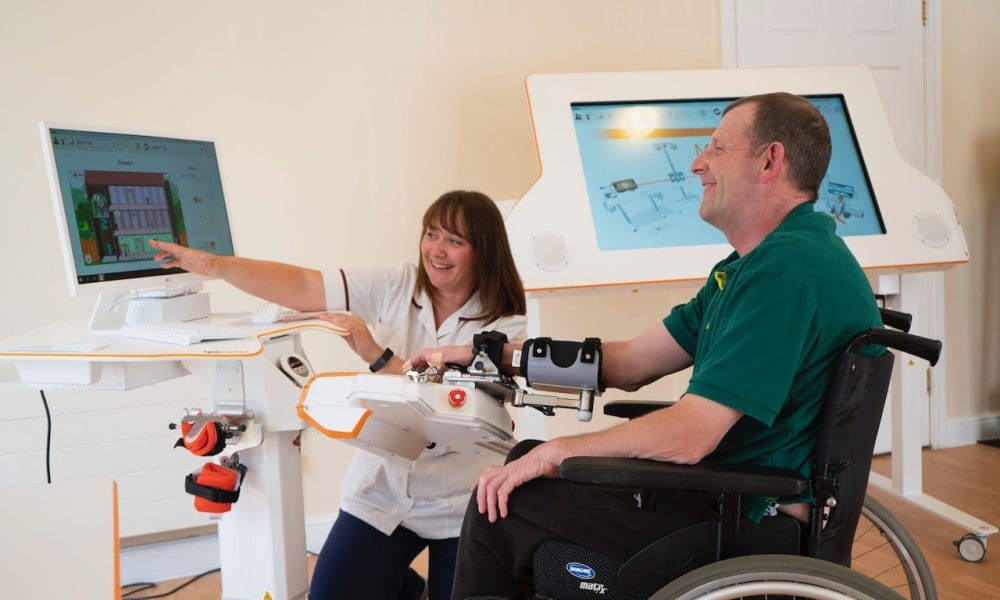 Tech & industry15 Oct
Robotics are being used to enhance patient rehabilitation goals in a residential neuro-rehab setting for the first time, with one UK provider revealing its significant investment is already paying dividends.
Askham Village Community introduced robotic devices in June, creating Askham Rehab, a specialist rehabilitation service which incorporates cutting-edge devices and sensor-assisted technology to extend rehab provision to patients. Having been introduced during lockdown, as well as the innovative new rehab practices adopted at the centre in Doddington, Cambridgeshire, Askham also reports the morale boost it delivered to staff and patients alike, during a difficult time for many. Interviews7 Oct
NR Times caught up with the co-founder of access: technology north to find out its secret to getting people engaged with the tools they need to support them.
Around four years ago, when Mike Thrussell’s caseload of people with learning difficulties and disabilities needing support with assistive technologies began to grow, he went to his wife Kelly with a suggestion. At first Kelly, who has a background in teaching, was unsure. "I’ve worked with people with learning difficulties for years, and I’ve seen that other people’s experience with assistive technology hasn’t always been positive, so I wanted to approach this differently,” she says.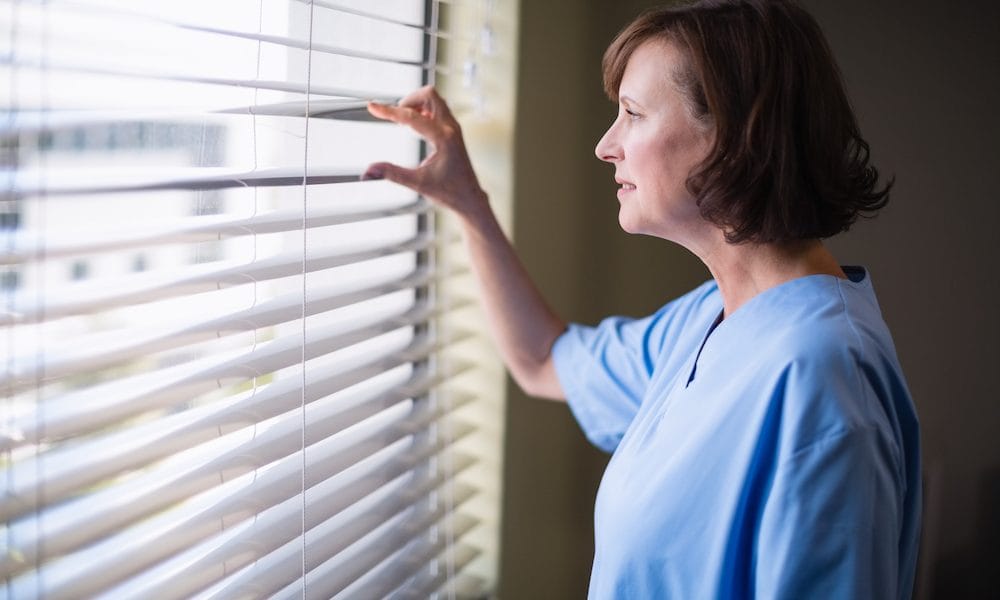 Smarter rehab8 Sep
After a stroke, up to one in three survivors will experience a condition called spatial neglect – but researchers say there isn’t enough research being done into the condition.
Spatial neglect is a type of vision loss, where a stroke survivor loses awareness of one side. It’s most common after strokes to the right hemisphere, where people will be unaware of objects or people on the right side, says Helen Morse, PhD student University of East Anglia, funded by the Stroke Association. People with spatial neglect don’t have anything physically wrong with their eyes that causes these problems. Morse calls it a ‘complex and bizarre condition’ that can also affect other ways people receive information, such as visually, as well as their hearing and sense of touch. This, she says, makes it a difficult condition to measure, detect and treat. Smarter rehab8 Sep
Researchers analysed twelve studies that looked at VR-enhanced rehab, and concluded it can offer long-term positive outcomes for patients with traumatic brain injuries (TBI), especially those with motor skills and cognitive deficits, and those experiencing difficulties with their balance.
One of the benefits of VR rehab is that it can provide a safe environment for people to practice skills with minimal risk of harming. Some VR platforms, the paper states, can model almost any type of environment that may be useful for rehabilitating motor skills including walking, balancing and moving on different types of terrain.