How robotics are creating new possibilities at Askham
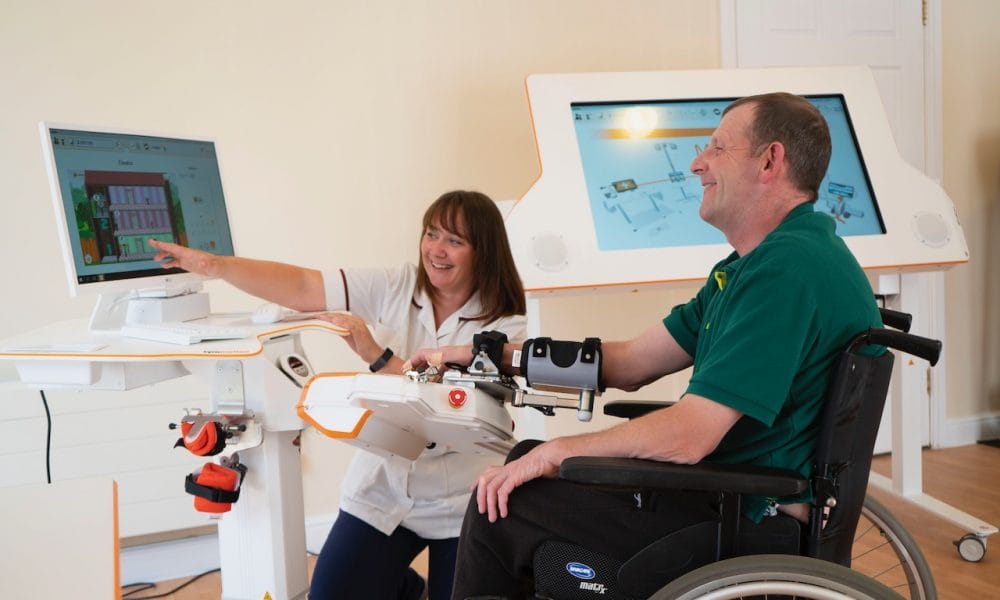
Robotics are being used to enhance patient rehabilitation goals in a residential neuro-rehab setting for the first time, with one UK provider revealing its significant investment is already paying dividends.
Askham Village Community introduced robotic devices in June, creating Askham Rehab, a specialist rehabilitation service which incorporates cutting-edge devices and sensor-assisted technology to extend rehab provision to patients.
Having been introduced during lockdown, as well as the innovative new rehab practices adopted at the centre in Doddington, Cambridgeshire, Askham also reports the morale boost it delivered to staff and patients alike, during a difficult time for many.
Askham is the first residential neurorehab provider of its kind to adopt such high-level technology, which has delivered proven benefits to neuro patients at specialist hospitals and outpatient facilities across the UK.
Able to enhance the treatment of a range of conditions, including spinal injuries, brain injuries, and various traumas, as well as strokes and other neurological conditions, the technology has been hailed as a “game changer” in Askham Rehab’s offering.
Aliyyah-Begum Nasser, operations director at Askham Village Community, says: “By introducing this in June, it felt like a kind of silver lining to the significant challenges COVID brought to us all. For our patients, it has been so well received, and I think brought a very much-needed morale boost at a time when they weren’t able to have visits from family and loved ones, and these kinds of boosts are vital to their rehabilitation and continued motivation.
 “For our team too, the introduction of robotic aids would mean that even if we were depleted for a short period, our rehab wouldn’t stop or slip, we could be confident it would continue.
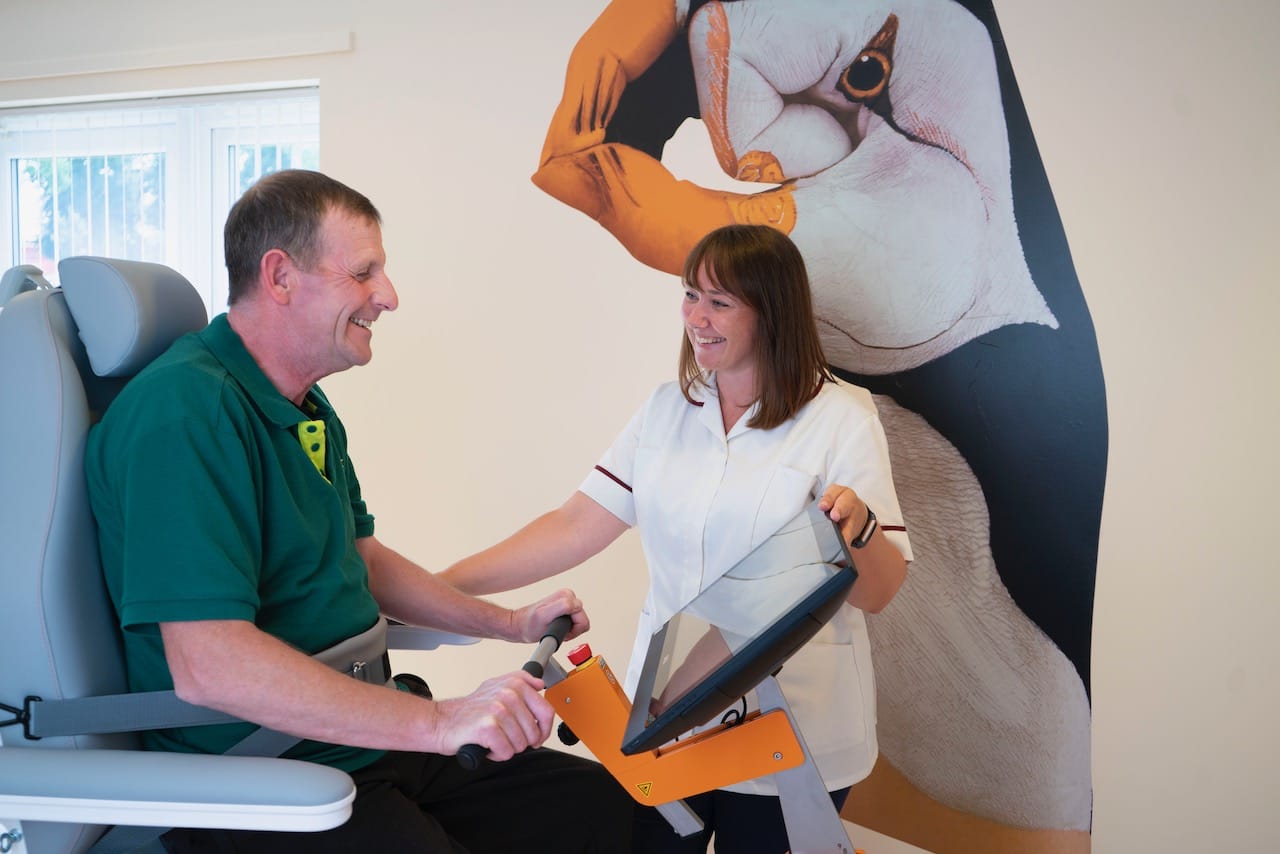
“We can offer very targeted rehab, increasing the frequency and repetitiveness of treatment, which really takes the work our therapists do to the next level.”
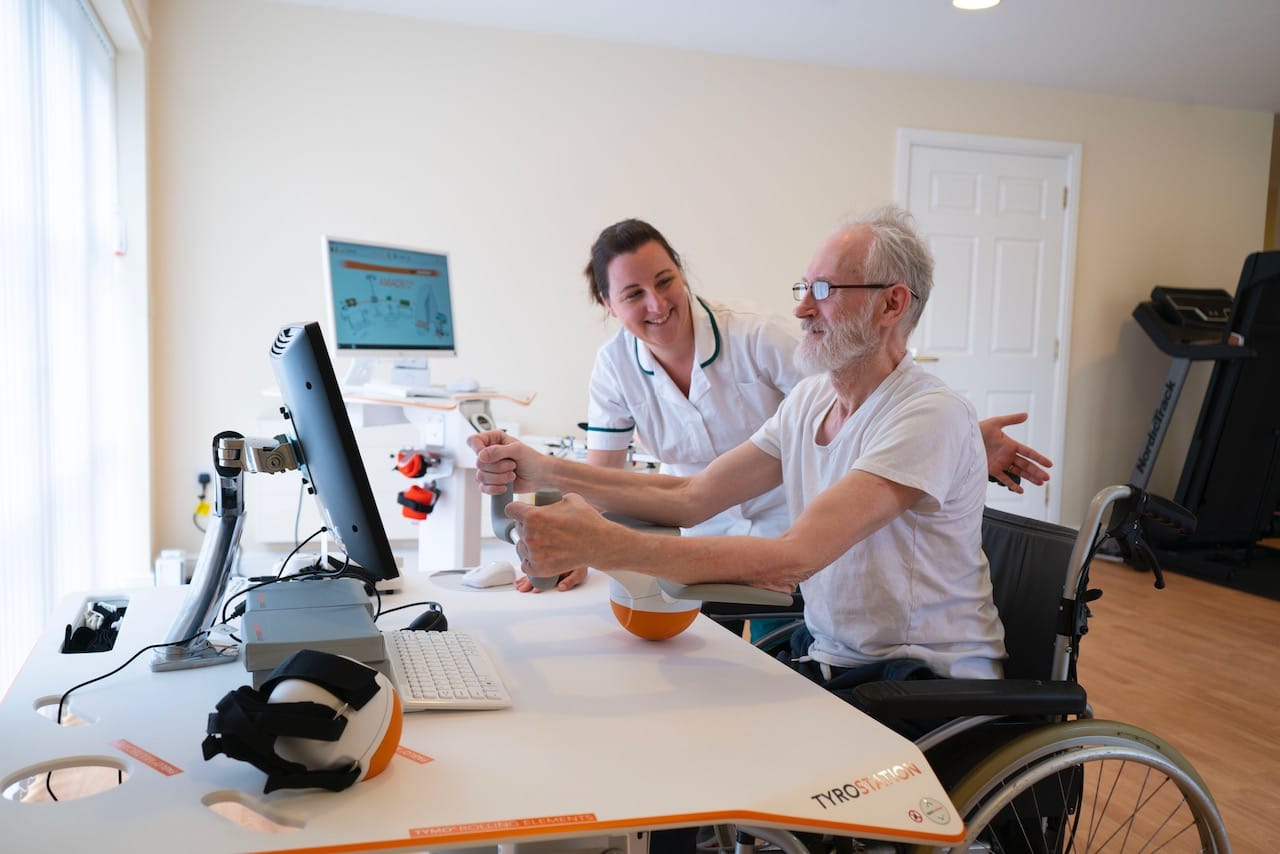
Developed by rehab device company Tyromotion, the equipment helps to merge classic therapy with the latest technology to deliver an intensive and targeted rehabilitative experience for patients.
Priscilla Masvipurwa, head of rehab and nursing services at Askham, says: “Working alongside our patients to establish their personal goals, we deliver a tailored approach to suit individual needs.
“Enabling patients in this way helps to aid them in their recovery, as they become fully invested in the process.
“The ethos at Askham Rehab is very much focused on a person-centred approach, and the introduction of robotics serves to enhance this further.
“This is very much a team effort, and with each patient we are their own personal team, empowering them to reach their goals.
“Our team have really taken to it very well and we have four therapists who have qualified as robotic assistive therapy trainers already, they’re now working with the rest of our staff to help them be able to use it,” continues Aliyyah.
“We can deliver high-intensity rehab. If, for example, someone is learning to re-move their hand, the number of repetitions supported by the robotics enables them to progress to a much higher level than with traditional therapy alone.
“It is very targeted in which muscle groups need to be supported, and we are delivering results.
“We are now in a position where the robotics can also be used by trained rehab assistants based on treatment plans put together by therapists. It has very quickly delivered a boost throughout Askham.”
Askham’s investment in robotics came after it secured funding from the Cambridge Combined Mayoral Authority, and its board then more than matched the sum to roll out its full suite of technology.
“It’s something we had thought about for some time, we thought about introducing robotics in a phased approach, so perhaps do a little bit then wait and see, and maybe then do some more, but when we secured the funding, we decided to just go for it,” says Aliyyah.
“Investing in its widespread use has been the right thing to do for us – this is undoubtedly the way forward, and it’s great we’re at the front end of that.”