



News
The latest news from across neurorehabilitation.
 Research12 Nov
Neural stem and progenitor cell diversity in brain development may contribute to cortical complexity
Stem and progenitor cells exhibit diversity in early brain development that likely contributes to later neural complexity in the adult cerebral cortex, a study suggests.
Researchers from the Center for Neuroscience Research (CNR) at Children's National Hospital say this research expands on existing ideas about brain development, and could significantly impact the clinical care of neurodevelopment diseases in the future. the study was done in collaboration with a research team at Yale University led by Nenad Sestani. News12 Nov
A new US study is investigating the higher rate of Alzheimer's disease and related dementias (ADRD) among black and Latino individuals.
APOE-ε4 is the strongest known genetic risk factor for ADRD , however this finding is largely based on studies of individuals of European descent. To better understand the association of the APOE gene with cognitive decline in Latinx populations, researchers from Brigham and Women's Hospital and collaborators analysed metrics of cognitive decline in six diverse Latino populations: those of Cuban, Central American, Dominican, Mexican, Puerto Rican, and South American backgrounds. They found that the APOE-ε4 genetic variant was associated with risk of cognitive decline in Latino populations, with the strongest effect among those of Cuban backgrounds. Research12 Nov
One of the main natural components of ayahuasca tea is dimethyltryptamine (DMT), which promotes neurogenesis - the formation of new neurons - according to research led by the Complutense University of Madrid (UCM).
In addition to neurons, the infusion used for shamanic purposes also induces the formation of other neural cells such as astrocytes and oligodendrocytes. "This capacity to modulate brain plasticity suggests that it has great therapeutic potential for a wide range of psychiatric and neurological disorders, including neurodegenerative diseases", researchers say. The study, published in Translational Psychiatry, a Nature Research journal, reports the results of four years of in vitro and in vivo experimentation on mice, demonstrating that these exhibit "a greater cognitive capacity when treated with this substance".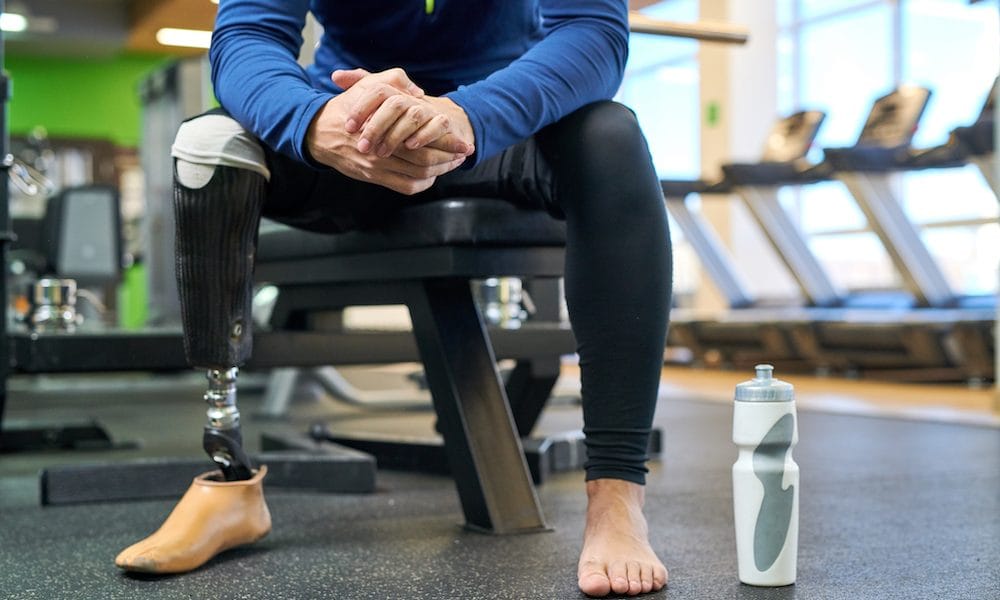 Research12 Nov
Phantom-limb pain is as mysterious as its name implies. The vast majority of amputees experience "phantom-limb" sensations that make them feel their missing limb is still part of their body. The cause is still unknown, and 50% to 80% of the cases, the sensations are painful. With no established treatments or medication, phantom-limb pain can have a large impact on the quality of life and recovery for amputees.
Although the cause is unknown, one theory is that it happens when areas of the brain that used to control the amputated limb remain strongly connected to the mental image of the limb. To weaken this connection, one idea is to train the brain regions that control the intact limb to also control the phantom limb. News12 Nov
Humans are born with a part of the brain that is prewired to be receptive to seeing words and letters, setting the stage at birth for people to learn how to read, a new study suggests.
Analysing brain scans of newborns, researchers found that this part of the brain - called the "visual word form area" (VWFA) - is connected to the language network of the brain. "That makes it fertile ground to develop a sensitivity to visual words - even before any exposure to language," said Zeynep Saygin, senior author of the study and assistant professor of psychology at The Ohio State University. Community neuro rehab12 Nov
Natalie Mackenzie, of BIS Services, has worked with 'James' since 2002. In fact, he was one of her earlier clients in her career. She is immensely proud of the challenges he has overcome; not all of the effects of the accident have been surmounted, but none the less he has exceeded many expectations of medical professionals, with a will of iron and an exceptional talent that is finally being acknowledged. Here she shares the experience.
James is not defined by his brain injury, but his experiences and the challenges of his TBI have moulded his work and the individual we now see. As we are all aware, living with a severe TBI is a lifelong journey, and I still support Jim in the community, and have continued to do so whilst he has travelled around the world, through the now ‘normal’ virtual rehabilitation.
I have watched his art bring meaning and focus to his daily life, encouraging a motivation and structure that is always needed for individuals like James managing their cognition. Although there remain issues with some areas of function, James has learnt, consolidated and implemented a toolbox of strategies that support him to pursue his passion and bring joy to others.
It has been a pleasure to work with someone as driven as James, and I have seen him take a turbulent journey through his recovery, which I am sure many professionals in the field can relate with.
 Brain injury10 Nov
Has your partner experienced a brain injury of any kind? Do you and your partner have one or more children aged between 7 and 17?
If so, your input could be hugely valuable to a new research project. Research shows that following a brain injury, family members may go through a period of grieving and loss, and children can experience emotional and behavioural changes. Brain injury10 Nov
Using chemical biomarkers released by the brain immediately after a head injury occurs, researchers are able to pinpoint when patients need urgent medical attention. This saves time in delivering vital treatment and avoids patients undergoing unnecessary tests where no injury has occurred.
The technique was developed by multi-disciplinary team of researchers in the group of Advanced Nanomaterials, Structures and Applications (ANMSA) led by Dr Pola Goldberg Oppenheimer at the University of Birmingham.
Following a proof-of-concept study, the group has now completed Innovate UK’s commercialisation programme, iCURE, to identify commercialisation routes for the revolutionary technique, identifying potential partners across eight countries.
 Multiple sclerosis10 Nov
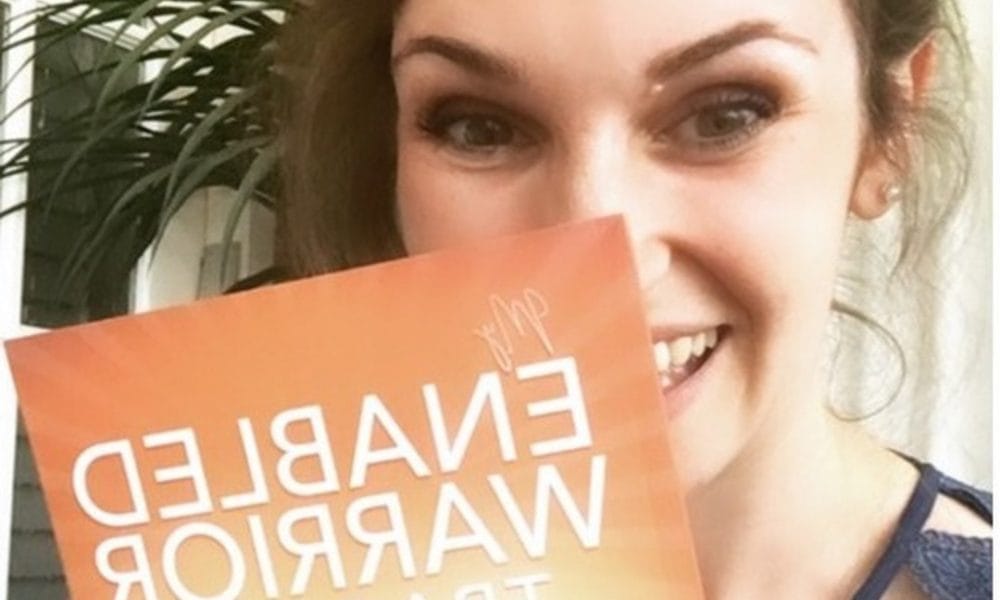
Having felt so let down by the lack of support and guidance available to people with Multiple Sclerosis (MS), podcaster and campaigner Jessie Ace has now produced a book - My Enabled Warrior Tracker - in the latest step on her crusade to empower those with chronic conditions. NR Times learns more.
Diagnosed with MS aged only 22, having just graduated from university and - with a book deal already secured - about to embark on a career as an illustrator, Jessie Ace knows only too well how devastating and scary the outlook can seem.
“I thought my world had ended, but the worst part of it all was not knowing where to turn, or who to turn to. There was a total absence of information about what I should do from that point onwards,” she recalls.
 News9 Nov
For those providing rehab services, lockdown has presented many challenges in how to continue treatment in light of ongoing restrictions. Here, Ben Ruby, owner of Ben Ruby Neuro Physio, discusses how he has adapted his way of working to ensure his clients continue to benefit and how telerehab can help people discover new possibilities.
“Provision of therapy services since March 2020 has shifted due to COVID-19 and the restrictions put in place by the government. Working within the private sector and providing specialist neurological physiotherapy input, I often spend prolonged periods of time within my clients’ home.
Providing rehabilitation within people’s homes can generate fantastic results as it’s possible to make treatments specific to the individual’s needs and is more relevant to their day to day lives. This is something that can’t always be replicated within a rehabilitation unit, for example.


