



News
The latest news from across neurorehabilitation.
 News8 Nov
Over-activity in a single brain region called the subgenual anterior cingulate cortex (sgACC) underlies several key symptoms of mood and anxiety disorders, but an antidepressant only successfully treats some of the symptoms. A new study suggests that sgACC is a crucial region in depression and anxiety, and targeted treatment based on a patient’s symptoms could lead to better outcomes.
Depression is a debilitating disorder affecting hundreds of millions of people worldwide, but people experience it differently. Some mainly have symptoms of elevated negative emotion like guilt and anxiety; some have a loss of ability to experience pleasure (called anhedonia); and others a mix of the two. News8 Nov
We all know that moment when we're in the car, at a concert or even sitting on our sofa and one of our favourite songs is played. It's the one that has that really good chord in it, flooding your system with pleasurable emotions, joyful memories, making your hair stand on edge, and even sending a shiver or "chill" down your spine.
About half of people get chills when listening to music. Neuroscientists based in France have now used EEG to link chills to multiple brain regions involved in activating reward and pleasure systems. The results are published in Frontiers in Neuroscience. Thibault Chabin and colleagues at the Université de Bourgogne Franche-Comté in Besançon EEG-scanned the brains of 18 French participants who regularly experience chills when listening to their favourite musical pieces. In a questionnaire, they were asked to indicate when they experienced chills, and rate their degree of pleasure from them. News6 Nov
It’s early in the morning, I get ready, put the kettle on and…start brainstorming the plan of action for the day ahead! This routine will sound familiar to many rehabilitation assistants, as they prepare for a fulfilling and rewarding therapy session with clients. Why is a structured routine so important in cognitive rehabilitation?
One of the main duties for a rehab assistant (RA) is to help people retrieve or maintain their independence skills by practising daily activities such as making a two-ingredient meal, doing the laundry or assist a client to wash up after having lunch. Another part of the RA role is to ensure clients are safe in their home environment. This is done by partaking in OT assessments and visiting clients’ homes to see how the settings can be adapted to help them feel secure (e.g. walk-in shower, hand rails, fire alarms etc). Case management6 Nov
Case managers, clinicians, therapists and other brain injury professionals will gather virtually later this month for a national conference.
The 18th annual brain injury conference, hosted by law firm Hugh James on Wednesday 18 November, will feature discussions on how the COVID-19 pandemic is affecting patients and claims; plus challenges in paediatric neurorehabilitation and the latest on lobbying for improvements for all living with acquired brain injury.
 Multiple sclerosis5 Nov
Michael was a high-flying company director when he was diagnosed with Multiple Sclerosis earlier this year. Only shortly afterwards, amidst the economic impact of the pandemic, he lost his job. Here, he describes the devastating reality of such a double blow, and why he is determined to find the confidence to get him through.
“I was diagnosed with Multiple Sclerosis just before lockdown. Five months later, I was made redundant. The two events weren’t linked, but both have been central to the real uphill battle I feel I’m fighting at present. Care & services4 Nov
Rehabilitation services for stroke and other neurological diseases have seen a slower recovery in outpatient clinics than those in inpatient settings as a result of the impact of the COVID-19 pandemic, a new report has found.
Outpatient services were largely stopped or significantly scaled back when the pandemic hit, the study said, and continue to take longer to recover post-lockdown, which could have long-term implications for patients into the future.
Decreases of around 36 per cent compared to 2019 were seen in the ability of outpatient units to interact with patients, with many appointments being delayed for between 3 and 6 months.
In an inpatient setting, the decrease was around 27 per cent at the peak COVID-19 period, although the recovery in rates of seeing patients came much quicker.
 Brain injury3 Nov
Brain fog and other neurological symptoms seen in those recovering from COVID-19 may be due to post traumatic stress disorder (PTSD), new research has revealed.
Growing numbers of people recovering from the virus are reporting factors including lapses in concentration, headaches, extreme fatigue and sleep disruptions - all of which can be exacerbated among brain injury survivors, many of whom experience such factors in their everyday lives without the effect of COVID-19.
Specific rehabilitation and resources are being identified for those with brain injuries, whose symptoms have worsened, often significantly, in the aftermath of contracting the virus and the rise in ‘Long Covid’ making recovery increasingly difficult, particularly among those with existing conditions.
 Brain injury3 Nov
Patients with brain injury and other neuro conditions are being supported with pelvic, obstetric and gynaecological matters through a link-up between a clinic and specialist physiotherapist, believed to be the first of its kind.
Kirsten Barrett is part of the team at Neuro Physio Wales and supports its clients with issues including bladder and bowel issues and sexual dysfunction.
Access to such specialism is usually available via separate referral, but through Kirsten’s partnership with the clinic, patients are able to access the specialist support directly.
Kirsten, who has worked in pelvic, obstetric and gynaecological physiotherapy (POGP) for 15 years, is seeing a growing number of patients with neurological conditions, or who are living with a brain injury, spinal cord injury or stroke as part of her case load.
 Stroke1 Nov
Eye research charity Fight for Sight is partnering with the Stroke Association to test the effectiveness of a treatment for ‘retraining’ the eyes for people who experience a loss of vision after stroke. The study hopes to establish a new standard of care for stroke survivors and save the NHS money.
Hemianopia – the loss of vision or blindness in half the visual field on the right or left side - occurs suddenly in 30% of stroke survivors and can have a devastating impact on their quality of life. Currently, there is no cure and treatment to help those with hemianopia compensate for their sight loss is variable and not standardised in the NHS. This is due to uncertainty about what works best and when is the best time to offer treatment, resulting in unfair differences in the care people receive.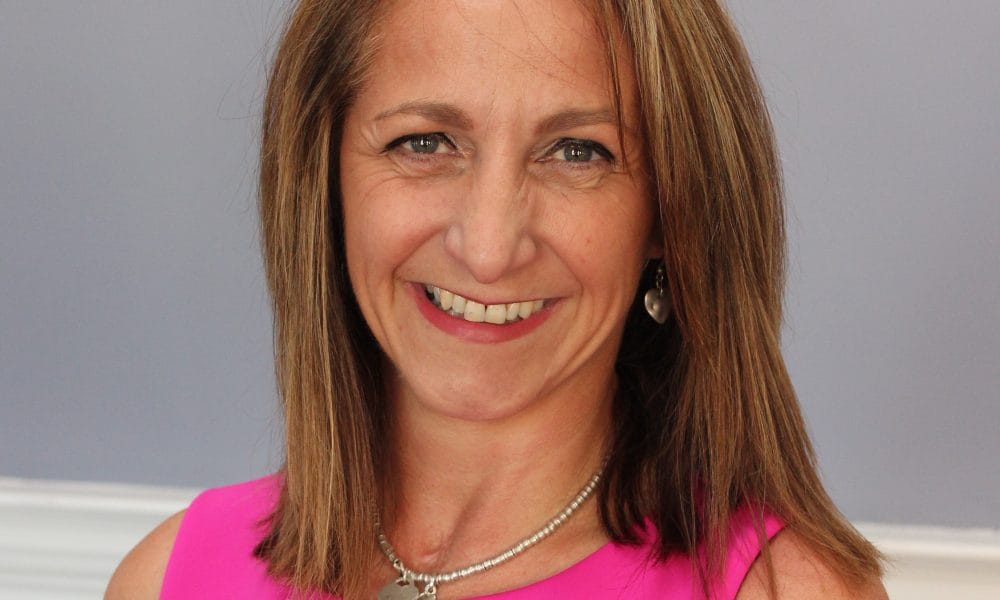 Stroke1 Nov
Rehab technology firm GripAble has appointed stroke survivor Kate Allatt as an ambassador.
Kate suffered a rare, massive brain stem stroke at the age of 39, and then went on to develop locked-in syndrome. Doctors said she’d never walk, talk or be able to use her arms again.
But the mother of three defied all predictions, and today, she is a credible and trusted peer mentor, global influencer, and voice for stroke and locked-in syndrome survivors.
The internationally published author of three books, including the acclaimed ‘Running Free – Breaking Out from Locked-in Syndrome’, says that her role as GripAble ambassador is founded in partnership and collaboration.


