



News
The latest news from across neurorehabilitation.
 News12 Apr
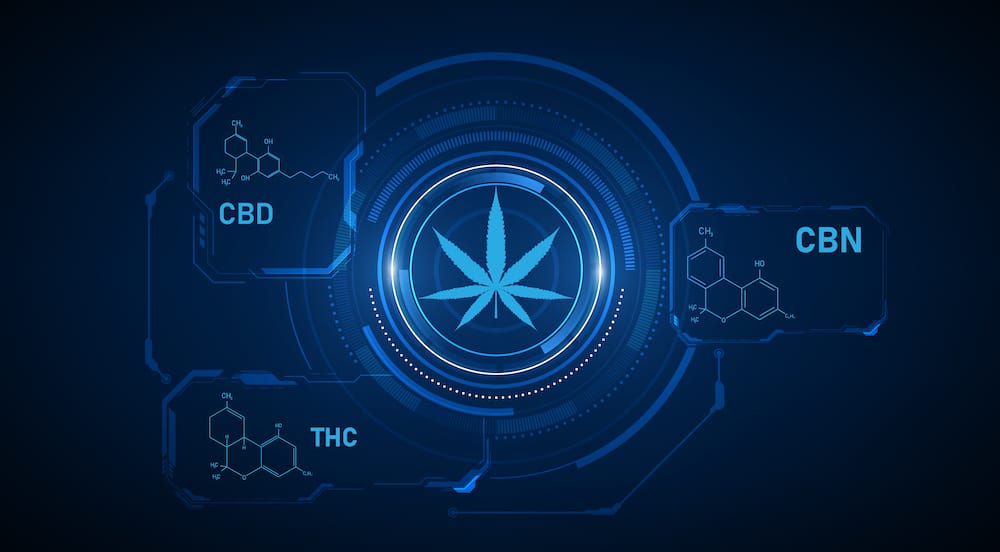
1st November 2018 was an important day in the history of UK cannabis medicine. On that day the government moved “cannabis based medicinal products” from Schedule 1 to Schedule 2 of the Misuse of Drugs Regulations 2001. This enabled doctors on the specialist register to prescribe cannabis. The regulation change was actually quite liberal and allowed for prescription for any condition and for the prescription of any product meeting good quality production standards (EU Good Manufacturing Practice). Unfortunately, since that point there has been no prescription of a full extract cannabis product on the NHS. Why is prescription so limited?
 News6 Apr
Stroke charity the Stroke Association fears that thousands of people could be at risk of severe disability, or even stroke-related death, if they don’t respond to stroke symptoms. And Dr Deb Lowe, NHS national clinical director for stroke and consultant stroke physician at Wirral University Teaching Hospital, warns: “We’re beginning to see some quite striking reductions in the number of people coming into hospital with the symptoms of stroke. "It appears that people aren’t seeking emergency help or going to hospital when they suspect a stroke, possibly due to fear of the virus or not wanting to be a burden on the NHS.
 News5 Apr
The poem ‘If’ was borne out of Victorian-era stoicism, something we could have perhaps done with while all about were panic buying and refusing to stop partying. But just in case anyone has missed Rudyard Kipling’s message and its relevance today, care home technology company Care Planner has given it a modern update; to help recharge your batteries for the tough weeks ahead: But just in case anyone has missed Rudyard Kipling’s message and its relevance today, care home technology company Care Planner has given it a modern update; to help recharge your batteries for the tough weeks ahead:
 News5 Apr
Social distancing, stay at home and COVID-19; the hashtags that have dominated our screens for what seems an eternity. But lockdown is just a couple of weeks old, and this is only the beginning. Our first thoughts in community cognitive rehabilitation were; how do we see our clients? How do we practice function? What about goal attainment, orientation training, functional transfer and providing evidence? How do we support staff out there in the field? But lockdown is just a couple of weeks old, and this is only the beginning. Our first thoughts in community cognitive rehabilitation were; how do we see our clients? How do we practice function? What about goal attainment, orientation training, functional transfer and providing evidence? How do we support staff out there in the field? There was an urgent requirement to shift focus, almost overnight, in order to support one of the most vulnerable groups in society. This is a group which relies on specialist support to learn new skills and practice and habituate new tasks, suddenly being asked to move to a completely new way of being supported and living.
 News2 Apr
Over the last 13 years I am proud that the Acquired Brain Injury Forum for London (ABIL) has become an important part of the brain injury landscape in London and the quarterly conferences a firm fixture in diaries for health and social care professionals, brain injury survivors, families and friends. The aims of ABIL are: to raise awareness of Acquired Brain Injury (ABI) across London; to encourage the development and dissemination of good practice; and to campaign for better services for ABI survivors and their families and carers across London. The aims of ABIL are: to raise awareness of Acquired Brain Injury (ABI) across London; to encourage the development and dissemination of good practice; and to campaign for better services for ABI survivors and their families and carers across London.
 Legal & policy2 Apr
Whilst collaboration between claimant and defendant lawyers is considered the key to the success of effective rehabilitation, this case study is a reminder to take an open minded and consistent approach to rehabilitation, the odd leap of faith and to never, ever give up. In 2013 we were approached by my client, B’s mum about a statutory will to support her son who was residing in a residential care home. In 2011 B had sustained a very severe traumatic brain injury resulting in severe and complex neurological problems.
 Legal & policy2 Apr
Order of evidence is important because it ensures that the nature and extent of the claimant’s injuries and their short-term rehabilitation requirements are identified and that the deficits are subsequently forensically analysed to ensure the appropriate damages are recovered. Every lawyer is different and they will have their own approach. Although this article identifies my own personal views, there will always be different approaches and the particular context of a case may necessitate a different approach too. Every lawyer is different and they will have their own approach. Although this article identifies my own personal views, there will always be different approaches and the particular context of a case may necessitate a different approach too. An example might be where there is a clear accommodation need at the outset of a case, a lawyer may instruct an architect at an early stage to comment on immediate adaptation works, rather than wait for the totality of the medical framework to come through.
 News1 Apr
Due to the nature of hidden impairments in brain injured individuals, they may be assessed as having capacity to make their own decisions when they cannot. As a result, they can be vulnerable and find themselves in dangerous situations.
People working with brain injured service users must be aware of how this injury impacts decision making and be prepared to share and explain this to other professionals.
The Mental Capacity Act (2005) is presumably familiar to most people working with individuals with a brain injury or mental impairment.
 News23 Mar
Finnish company Medicortex Finland Oy has started trials on its diagnostic kit – which it is hoped will improve the tools available in the detection of brain injuries that show no symptoms. The trials will take place at Satasairaala hospital in Finland in the coming months - coronavirus permitting. Dr. Mårten Kvist, medical director of Medicortex Finland Oy, said: “A diagnostic kit for rapid detection of mild TBI in children is truly important. It will satisfy the urgent need to improve the detection of brain injury in children who suffered a head injury” The trials will take place at Satasairaala hospital in Finland in the coming months - coronavirus permitting. Dr. Mårten Kvist, medical director of Medicortex Finland Oy, said: “A diagnostic kit for rapid detection of mild TBI in children is truly important. It will satisfy the urgent need to improve the detection of brain injury in children who suffered a head injury” The trials will take place at Satasairaala hospital in Finland in the coming months - coronavirus permitting. Dr. Mårten Kvist, medical director of Medicortex Finland Oy, said: “A diagnostic kit for rapid detection of mild TBI in children is truly important. It will satisfy the urgent need to improve the detection of brain injury in children who suffered a head injury” The rapid diagnostic kit ProbTBI helps to diagnose brain injury especially in patients who don’t show visible symptoms of brain damage - which is frequently the case with concussion and mild injury.
 Tech & industry23 Mar
The agreement means people with spinal cord injuries in Germany could benefit from use of the ReWalk 6.0 exoskeleton sysyem. This deal could have a significant impact for spinal cord injured individuals. Under this agreement, eligible beneficiaries will be able to obtain a ReWalk 6.0 exoskeleton device for use in the home that will enable them to stand and walk again, after successful training and verification by the medical service. Three SCI beneficiaries have already received access on the back of the news.


