



Smart shoe could monitor gait in TBI, Parkinson’s and more
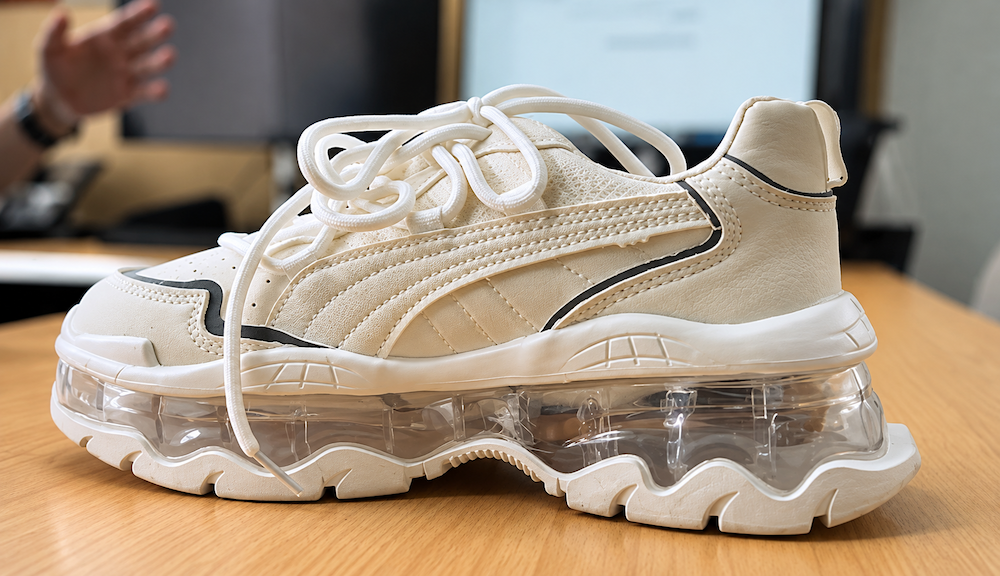
US researchers have developed a smart shoe that automatically analyses how a person walks, a technology that someday could help monitor people with Parkinson’s disease, spinal cord injuries, traumatic brain injuries and other movement disorders.
The prototype counts steps, estimates calories burned and classifies movement without a rechargeable battery, generating electricity from the pressure and friction of each step.

The smart shoe was developed by engineers at Rutgers University-New Brunswick, led by biomedical engineer Simiao Niu.
A device embedded in the sole uses the triboelectric effect, in which electricity is generated when different materials make contact and move against each other.
Niu said: “When you are walking or running, you automatically have biomechanical energy available, so you can harvest this energy.
“When you sit down, there is no energy available, but you don’t need gait monitoring.”
The electricity is produced in irregular bursts that the electronics cannot use directly.
Researchers developed a circuit to convert it into a usable form, increasing usable energy by as much as 120 times compared with a conventional method.
Gait describes a person’s pattern of walking, including balance, speed, stride and rhythm.
Changes can provide information about disease progression, fall risk or rehabilitation.
Doctors often assess gait by watching a patient walk briefly in a clinic or laboratory. A wearable system could eventually monitor movement over longer periods during daily life.
Niu said: “If you are able to use what I call the ‘worry-free shoes’ we’ve developed, patients can just wear them, and the shoes can automatically collect their gait pattern.”
With further development and clinical testing, similar shoes could potentially assess fall risk, detect unusual walking patterns or follow recovery after brain or spinal cord injury.
The current version is an early prototype, not a medical device. It cannot diagnose disease, predict falls or determine whether a treatment is working.
An accelerometer measures foot movement along three axes. A small processor uses artificial intelligence to classify each 15-second period as slow walking, fast walking, running or climbing stairs.
The analysis takes place within the wearable itself, an approach known as edge AI, rather than continuously sending raw information to a phone, computer or cloud server.
Researchers first developed an AI model using 21 characteristics of movement that achieved 98.1 per cent accuracy, but it required more memory than the shoe’s processor could accommodate.
A smaller model using variation in movement along the three axes achieved 95.4 per cent accuracy while running about 15 times faster and using about one-sixth as much current.
The sensor and AI algorithm together consume 86 microwatts. Laboratory tests found that even slow walking generated enough electricity to keep the complete system operating.
Niu said: “We want to solve the fundamental bottleneck in current wearable devices. We are developing a smart wearable with integrated AI functionality that can harvest energy on its own, so you don’t need to worry about charging.”
The prototype was developed using data from four healthy volunteers aged 23 to 26. The AI algorithm has so far been trained and tested only on the activities included in the study.
It has not yet been tested in older adults, people with movement disorders or patients undergoing rehabilitation.
 Nurse discovers renewed sense of purpose in neuropsychiatric rehabilitation


