Smarter rehab
Technology such as VR, robotics, apps and brain implants, adopted where it helps.
 MND / ALS11 Jan
Verge Genomics, a biotechnology company using artificial intelligence (AI) to develop new treatment options, has announced the launch of a new study for the treatment of sporadic and familial forms of amyotrophic lateral sclerosis (ALS).
The study will assess the safety and tolerability of escalating doses of VRG50635, a small molecule inhibitor of PIKfyve, a therapeutic target for ALS discovered in diseased human tissues using CONVERGE®, the company’s all-in-human, AI-powered platform. Tech & industry10 Jan
The value of the global market for rehab robotics is expected to more than quadruple between 2022 and 2030, data suggests. Kings Research reports that the market was recorded at US$239.1m in 2022, with growth likely to take it to US$1026.2m by 2030. As the world's population continues to grow and the field of robotics and AI advances, [...]
 Stroke9 Jan
A US university has developed a new robotic platform, which utilises a patient’s brainwaves and muscle activity, to enable post-stroke rehab.
The assistive planar robot includes a closed-loop feedback system to monitor the muscle and brain activity of the user in order to trigger the execution of reach and grab in an adaptive way.
In a new paper, researchers at the University of Rhode Island Motor Control and Rehabilitation lab write: “Numerous rehabilitation approaches such as muscular electrical stimulations, brain-computer interfaces, and transcranial magnetic stimulation have been investigated to assist the affected individuals.
 Spinal injury8 Jan
News this week from the US health insurance world has provided encouragement for those pushing to increase access to rehab-based exoskeletons.
For the first time, Medicare, the US federal health insurance programme, has made a payment to rehab tech developer ReWalk for its wearable robotic device that allows paraplegics to walk again. The ReWalk Personal Exoskeleton enables powered hip and knee motion for people with a spinal cord injury (SCI), allowing them to stand upright, walk, turn, and climb up and down stairs. According to reports, the payment of US$94,617 to ReWalk was made via Medicare administrative contractor Noridian Healthcare Solutions. It could be a sign that the news represents recognition of exoskeletons as medically necessary for people with an SCI.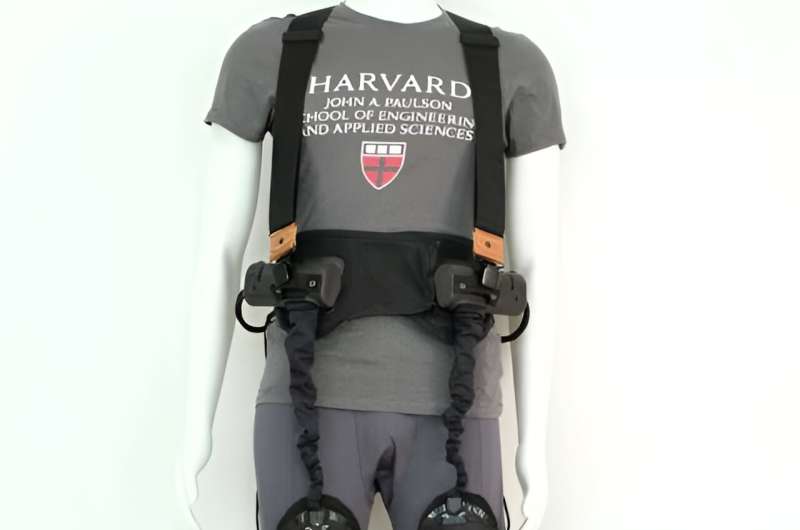 Parkinson's8 Jan
Researchers have developed a soft, wearable robot to help people with Parkinson’s walk without the threat of freezing.
When individuals with Parkinson’s disease freeze, they suddenly lose the ability to move their feet, often mid-stride, resulting in a series of staccato stutter steps that get shorter until the person stops altogether. These episodes are one of the biggest contributors to falls among people living with Parkinson’s disease. Today, freezing is treated with a range of pharmacological, surgical or behavioural therapies, none of which are particularly effective. Researchers from the Harvard John A. Paulson School of Engineering and Applied Sciences (SEAS) and the Boston University Sargent College of Health & Rehabilitation Sciences have used a soft, wearable robot to help a person living with Parkinson’s walk without freezing. Opinion12 Dec
Dr Chen-onn Leong discusses the role of artificial intelligence (AI) and machine learning in the ongoing development of rehabilitation technology - could we be looking at a future without therapists? Healthcare is no exception to the new era of possibilities brought about by the convergence of artificial intelligence (AI) and machine learning (ML). These revolutionary technologies have shown great promise in the field of rehabilitation for helping people recover from illnesses, disabilities, and cognitive impairments.
 Dementia6 Dec
Twice-daily non-invasive tDCS can help support brain performance, new clinical trial indicates
 Smarter rehab5 Dec
An Edinburgh med-tech company has received almost half a million pounds in UK Government funding to develop an assistive robotic glove for stroke patients.
 Smarter rehab5 Dec
"The recent advancements in neurotechnology will significantly transform various aspects of society, offering profound implications for healthcare, communication, and human capabilities" - Alexandrea Day, CEO of MetaBrain Labs
 Stroke4 Dec
Mark Hitchman, managing director of Canon Medical Systems UK, explains why innovations in Artificial Intelligence (AI) for healthcare will deliver time efficiencies and better standards of care for patients