Smarter rehab
Technology such as VR, robotics, apps and brain implants, adopted where it helps.
 Dementia21 Nov
'This opens up an entirely new avenue of treatment for brain diseases like Alzheimer’s,' say research team behind surgery-free new approach
 Smarter rehab20 Nov
Anatomical Concepts discuss five benefits to rehab and fitness through the use of FES bikes
 Tech & industry15 Nov
MetaMotus Galileo, from Fourier Intelligence, ups the ante in neuro-rehab even further
 Smarter rehab10 Nov
A speech prosthetic developed by researchers in the US can translate brain signals into words, and could one day enable people with neurological disorders to regain their ability to communicate.
 Smarter rehab12 Oct
With its AI-based care coordination platform, Viz.ai is transforming stroke care by making every second count. Senior director of clinical strategy, Dr Prem Batchu-Green, speaks to NR Times Viz.ai uses artificial intelligence to help clinicians make the correct diagnosis and communicate this with the relevant people within seconds. Using data from hospital systems, such as CT scans, echocardiograms, MRIs and electronic health records, the company’s algorithms are able to detect specific conditions in medical images and then share this with care teams across different hospital systems.
 Neurophysiotherapy10 Oct
PhysioFunction share their insight into use of the gait rehabilitation device
 Neurophysiotherapy10 Oct
Odstock Medical Ltd shared insight around FES and recently-updated guidelines at its Clinician Forum
 Tech & industry27 Sep
The event - which was held in Asia for the first time and draws neuro-rehab professionals globally - unveiled the Galileo
 Brain injury13 Sep
Study reveals high levels of accuracy when testing among patients in intensive care
 Smarter rehab13 Sep
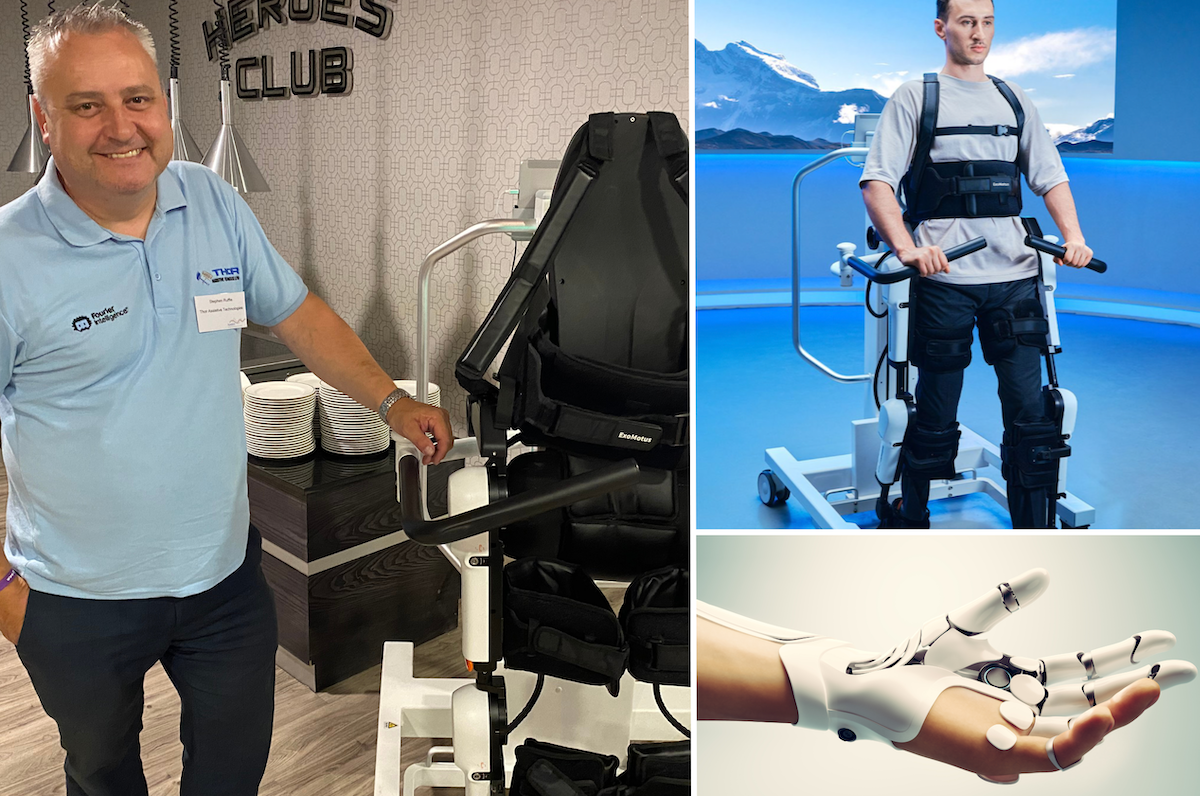
With over 20 years experience in the medical device industry, Stephen Ruffle, commercial director at Thor Assistive Technologies, has been a key player in bringing some of the major breakthroughs of the sector to those who need them most. He sat down with NR Times to share his insights.
Starting out as a wheelchair designer, before becoming a mobility specialist and eventually investigating the emergence of Exoskeleton devices, Stephen Ruffle, has seen some significant technological advances in neurorehabilitation over the last two decades. Over the course of his career, Stephen has introduced a number of new neurorehabilitation devices to the UK from around the world, including the ReWalk 6.0 Personal Exoskeleton in 2015, helping them reach the patients who stand to benefit. He went on to establish Thor Assistive Technologies which trains, supports and supplies its partners with innovative rehabilitation devices, based on using robotics to improve exercise dose, repetitions and engagement - all of which has been proven to help build neuroplasticity and improve overall recovery. Here, Stephen, discusses the important role that these devices have in neurorehab, the major breakthroughs he has seen, and the challenges still to be tackled by the market.