



Neuropsychology
Cognitive, emotional and behavioural assessment and therapy.
 Neuropsychology29 Oct
A comprehensive review published yesterday (Oct 28) has offered new insights into cutting-edge techniques that could help treat people with obsessive-compulsive disorder (OCD) who haven't responded to conventional therapy. The review examines three neuromodulation approaches that are transforming how clinicians treat severe OCD cases. OCD affects roughly two per cent of the population, causing intrusive [...]
 Parkinson's27 Oct
Researchers have directly seen and measured the protein clusters thought to spark Parkinson’s disease for the first time, marking a major milestone in understanding the condition. These microscopic clusters, known as alpha-synuclein oligomers, have long been suspected as the starting point for Parkinson’s but had remained undetectable in human brain tissue until now. A team [...]
 Stroke22 Oct
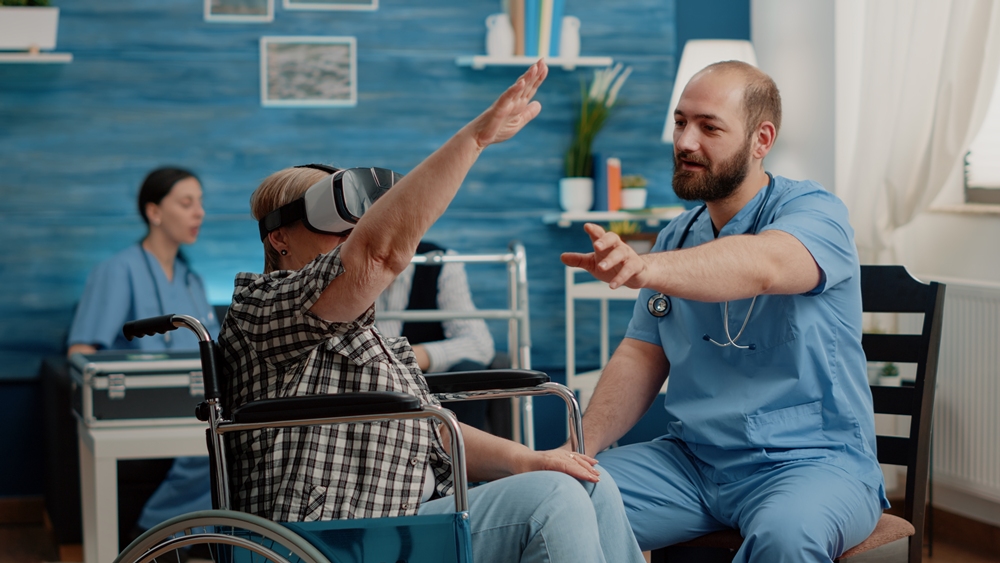
A new virtual reality training task developed by researchers in Finland shows promise for helping stroke survivors with visuospatial neglect, a condition that affects awareness of one side of space. The VR-based rehabilitation tool combines audiovisual cues with physiotherapy exercises to support recovery. Visuospatial neglect (VSN) affects about 30 per cent of stroke survivors and [...]
 Neuropsychology15 Oct
By Lucy Babbs, speech and language therapist, Ascot Rehab When 56-year-old Bernard* arrived at the Ascot Rehabilitation centre in Streatham, London, he was facing one of the biggest challenges of his life: rebuilding his ability to communicate. A fit and energetic man, Bernard had been thriving in an executive role and busy with family life [...]
 Neuropsychology9 Oct
By Natalie Mackenzie, founder and director, BIS Services In the last six months, I've watched as what was once a manageable challenge has evolved into a critical workforce crisis that's directly impacting our ability to provide timely cognitive rehabilitation services to our clients. For years, we've faced the reality that finding male psychology graduates to [...]
 Neuropsychology6 Oct
By The London Neurognitive Clinic In neurorehabilitation and clinical practice, the concept of neurodiversity is no longer confined to a discussion of autism or ADHD alone. It represents a broader recognition that cognitive, emotional, and behavioural differences are part of the human spectrum. For neuropsychologists and other allied health professionals, this shift in perspective demands [...]
 Dementia30 Sep
A new brain imaging technique has detected tiny pulsing blood vessels that could reveal early Alzheimer's disease and track changes linked to ageing. Alzheimer’s disease is the most common form of dementia. It is currently the seventh leading cause of death and one of the major causes of disability in older people worldwide. The method [...]
 Stroke30 Sep
DMT, a psychoactive compound found in plants and the human brain, shows protective effects against stroke damage in new research using animal and cell models. The compound reduced infarct size, brain swelling and inflammation while repairing blood-brain barrier function, according to the study. Researchers found that dimethyltryptamine (DMT) worked through Sigma-1 receptors to limit microglial [...]
 Neuropsychology29 Sep
Researchers in Denmark are working to find ways to prevent symptoms of schizophrenia - and they may now be one step closer. In a new study, researchers discovered that a specific type of brain cell is abnormally active in mice displaying schizophrenia-like behaviour. When the researchers reduced the activity of these cells, the mice’s behaviour [...]
 Brain injury17 Sep
People with traumatic brain injury often internalise public stigma, leading to self-doubt and social withdrawal, new research shows. The study found that discrimination can cause some TBI patients to see themselves as less worthy, with many developing a “why try” attitude that discourages them from attempting tasks or social contact. The investigation was led by [...]


