



News ›
News
The latest news from across neurorehabilitation.
 News1 Mar
Aerobic exercise could help slow memory loss for older adults living with Alzheimer’s disease, new research has found.
A pilot randomised control trial was conducted that included 96 older adults living with mild to moderate Alzheimer's dementia. Participants were randomly selected to use either a cycling (stationary bike) or stretching intervention for six months. Using the Alzheimer's Disease Assessment Scale-Cognition (ADAS-Cog) to assess cognition, the results of the trial were hailed as “substantial”. The six-month change in ADAS-Cog was 1.0±4.6 (cycling) and 0.1±4.1 (stretching), which were both significantly less than the expected 3.2±6.3-point increase observed naturally with disease progression. News1 Mar
An experienced case manager has set up her own business, building on her existing reputation and expertise in complex neurological work.
Caroline Phelps has established Phelps Case Management Consultants, which will specialise in psychologically complex work, including working with clients with dual diagnoses, as well as offering vocational rehabilitation. Both areas are said to be under-represented in the case management field - with Caroline saying vocational rehab provision is “shockingly sparse” in brain injury work - which is where her business will help to provide a solution. Caroline, who has worked in case management since 2016, has 15 years of experience working in the field of rehabilitation prior to that time. Smarter rehab1 Mar
A leader in rehab tech has formed a new research partnership to help advance its globally-significant work into delivering patient rehabilitation.
Fourier Intelligence has partnered with Kobe University, Japan, to promote advanced rehabilitation technology and integrate group therapy into the clinical setting. Fourier Intelligence said the Memorandum of Understanding partnership will help to advance its global vision in promoting accessibility and adoption of rehabilitation technology. The research will focus on efficacy research on the upper limb robotics for patients, with the long-term aim that the partnership will collaborate on multi-centre trials that will involve Fourier Intelligence’s extensive global network of researchers and laboratories. Parkinson's26 Feb
Charity Parkinson’s UK is to launch a new company dedicated to driving forward research into Parkinson’s disease.
Vivifi Biotech has been created to lead and plan preparations for a new trial into the role of the restorative protein glial cell-derived neurotrophic factor (GDNF) in Parkinson’s. Launched through the charity’s drug development arm, Parkinson’s Virtual Biotech, up to £800,000 will be invested over the next two years as efforts continue to find a life-changing new treatment for people living with the disease. Community neuro rehab26 Feb
A music group established to support people living with dementia, memory loss and brain injury has received funding to launch an online project for the South Asian and BAME community.
Leicester Musical Memory Box (LMMBox) was founded in July 2018, and since that time has grown from one group in the city to six, providing interactive music sessions for people of all ages and backgrounds, including a group specific to the South Asian community. The group - which has two staff members who are fluent in Gujarati, Hindi, Punjabi and Urdu - aims to provide the local community with a supportive network and a safe space to explore the unique challenges that a brain injury may bring to individuals, as well as their families and carers. Brain injury26 Feb
Masks not only allow us to hide our true feelings but to also express them without fear of judgement.
Being able to ‘hide’ one’s true self, may be a way, for others, to truly ‘show’ themselves. For this reason, Chroma therapists began delivering Art Therapy sessions online to those living with a Traumatic Brain Injury (TBI) in an attempt to help them express their emotions in a creative, non-threatening way. Patient stories25 Feb
Struggling to cope with a mystery illness which left her unable to leave her own house, Carmen was finally diagnosed with a condition so rare many medical professionals are not aware of it. Here, she shares her story.
For years, Carmen used to love travel, exploring the world on her own. Egypt and Barbados were favourite countries to visit. But one day in 2011, the 39-year-old found herself unable to walk out of the front door of her home in Liverpool, after experiencing increasing difficulties while outdoors. “I would get to a crossing on the road and suddenly I was unable to go,” she recalls. “In my head I would be thinking, ‘Why I can’t just cross the road?’ “My whole body had gone stiff, and I felt like I was stuck to the pavement.” Carmen received treatment for severe anxiety, as there were no conditions doctors could diagnose from looking at her blood test results. Tech & industry25 Feb
People who have been paralysed for years could be enabled to stand and walk again through revolutionary technology set to launch within the next four years - and a breakthrough in upper body movement is expected even sooner.
The groundbreaking work of ONWARD is set to deliver the long-awaited advances for people with spinal cord injury in enabling them to regain the ability of movement. Through the development of its ARC EX and ARC IM technologies, ONWARD is committed to delivering life-changing outcomes for spinal cord injured people. Trials of its ARC EX device got underway in the UK - at the Queen Elizabeth University Hospital in Glasgow - United States, Canada and the Netherlands, in January, with the technology expected to be commercially available in late 2023. An external, non-invasive platform, the ARC EX is set to deliver movement and strength in the hands and upper body of people with spinal cord injury, compared to rehabilitation training alone. Case management24 Feb
Ten years ago, Louise Sheffield established Active Case Management, despite having no background in case management. Here, she reflects on the growth of the company in terms of size, reach and reputation and how they are entering their second decade with positivity.
“Very refreshing but completely terrifying.” Louise Sheffield’s early experience of setting up on her own in case management was a far cry from her career to date. “I’d worked in the NHS and at the time there weren’t many people doing the work I did,” reflects Louise, whose background is in occupational therapy specialising in brain injury.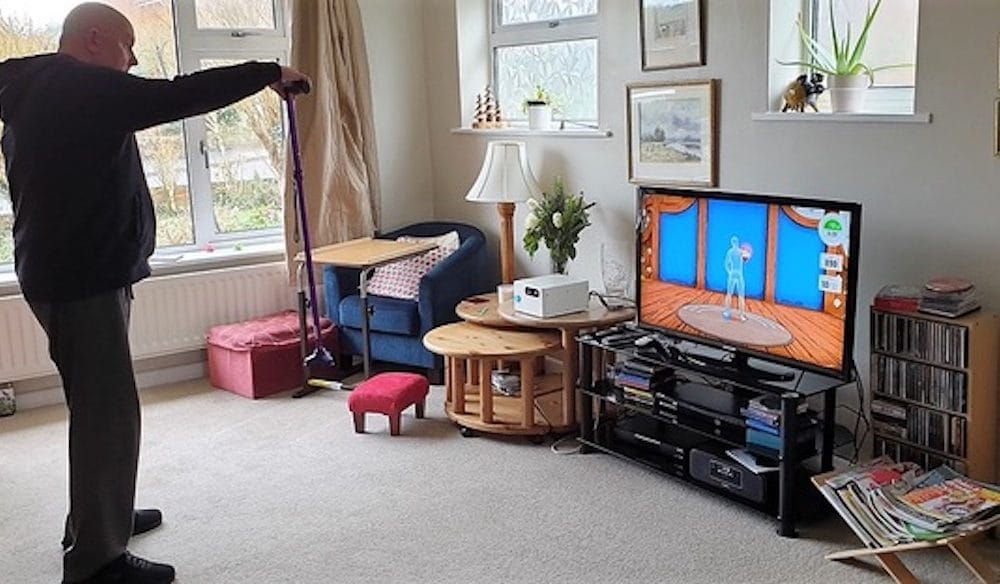 Neurophysiotherapy24 Feb
Neurophysio patients are receiving personalised virtual rehabilitation through the adoption of new technology.
Hobbs Rehabilitation is supporting chronic stroke patients by enabling them to use the EvolvRehab platform for at-home therapy, with exergames playing a central role in the rehab approach. The use of EvolvRehab will be subject to a year-long study - funded by the Seedcorn funding program of the NIHR Brain Injury MedTech Co-operative (MIC) based in Cambridge, with researchers from the University of Winchester - to measure the level of effectiveness, as well as acceptance by patients. Initial feedback from the first two stroke survivors to begin using the newly-launched Evolv RehabKit has been described as “extremely positive” with three-month programmes involving the use of prescribed exergames designed around their individual needs.


