



News ›
News
The latest news from across neurorehabilitation.
 Brain injury24 Feb
Lynda’s story provides an uplifting insight into how neurorehabilitation following a brain injury can have positive, long-lasting effects on an individual’s physical and mental wellbeing. This is even when there is a significant time period between the brain injury occurring and starting rehabilitation.
Lynda was an independent woman who had a job, family and friends. However, she had a history of battling with substance misuse and was at risk to the influence of others. The exposure to these negative influences resulted in her suffering a hypoxic brain injury following an overdose in 2010, from which she remained in a coma for three months. Lynda’s story highlights her dedication and the commitment of the specialist care team at Richardson Care in her rehabilitation journey. Stroke24 Feb
Dr Kate Allatt discusses why the topic of being intimate after having a stroke shouldn’t be shied away from - by survivors or medical professionals.
In 2010, whilst married to my former husband, I suffered a huge brainstem stroke and was diagnosed with Locked In Syndrome (LIS) at 39 years of age. Later, following tremendous effort, I’d recovered sufficiently to walk out of hospital, hug my young kids and even run again. Just when I thought I’d conquered my challenges I realised the physical and emotional challenges of sex were still to be resolved in putting my broken self back together. Research24 Feb
Deep brain stimulation could prevent epileptic seizures, a new study has found.
Research in mice has revealed that low-frequency stimulation of specific brain areas, using light rather than electric current, could completely stop epileptic activity. Traditionally, epileptic activity originating from one or more diseased brain regions in the temporal lobe is difficult to contain. Many patients with temporal lobe epilepsy often do not respond to treatment with anti-epileptic drugs, and the affected brain areas must therefore be surgically removed - although this only gives freedom from seizures to around a third of patients.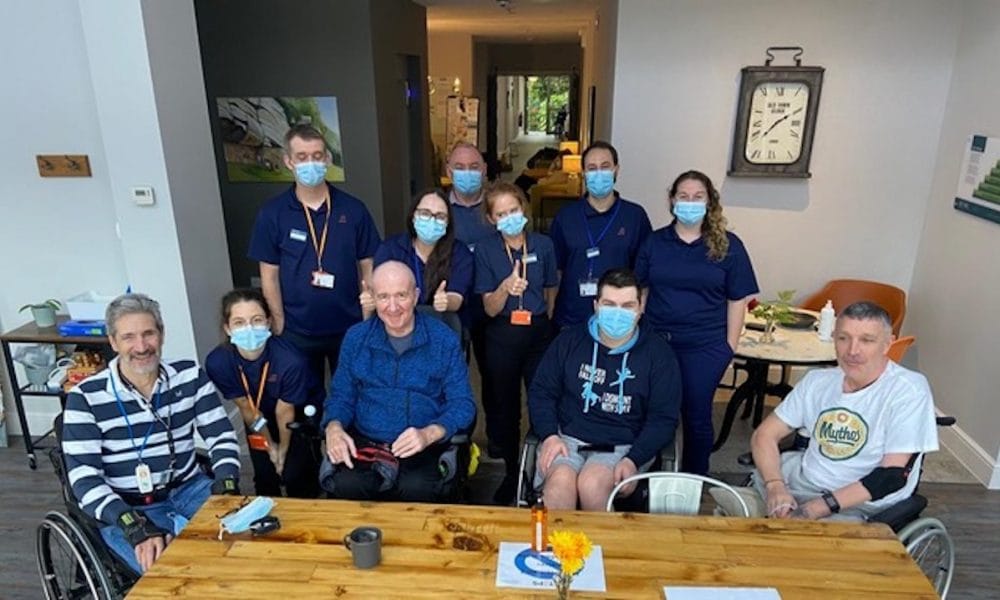 Care & services23 Feb
As the roadmap out of lockdown is revealed, many are daring to see the light at the end of a long and dark tunnel, after months of huge challenges for neurorehab centres. Here, Jules Leahy at STEPS reflects on many difficult months and discusses how optimism is returning.
“The early days of the pandemic were very scary for centres like ours. With little access to PPE, we had to resort to making our own out of bin bags when supplies just weren’t coming through, and sourcing our own was hugely expensive as it was so in demand. We also had to fight hard to avoid COVID getting into the centre, which could have caused a deadly outbreak among our clients, all of whom are very vulnerable. News23 Feb
Five genes have been identified which may play a critical role in determining whether a person will suffer from Lewy body dementia.
The findings of the study not only support the disease's ties to Parkinson's disease, but also suggest that people who have Lewy body dementia may share similar genetic profiles to those who have Alzheimer's disease. "Lewy body dementia is a devastating brain disorder for which we have no effective treatments,” says Sonja Scholz, investigator at the NIH’s National Institute of Neurological Disorders and Stroke (NINDS) and the senior author of the study. Patient stories22 Feb
Today marks World Encephalitis Day. Encephalitis is a condition which affects 500,000 people every year and causes inflammation of the brain, which can cause permanent brain injury.
Yet despite this, statistics show that 78 per cent of people do not know what encephalitis is. Here, to raise awareness of encephalitis and its impact, Bruno shares his story. “My encephalitis started suddenly from one day to the next. I was 16 at the time, and I was half way through my school lunch hour when it happened. All of a sudden and without any warning, I felt very dizzy and lost all sense of balance. I spent a good deal of the afternoon with friends in the school library sitting down not being able to move much. Research22 Feb
A gene linked to unusually long lifespans in humans protects brain stem cells from the harmful effects of stress, a new study has found.
Studies of humans who live longer than 100 years have shown that many share an unusual version of a gene called Forkhead box protein O3 (FOXO3). That discovery led Dr Jihye Paik, associate professor of pathology and laboratory medicine at Weill Cornell Medicine, and her colleagues to investigate how this gene contributes to brain health during ageing. In 2018, Dr Paik and her team showed that mice who lack the FOXO3 gene in their brain are unable to cope with stressful conditions in the brain, which leads to the progressive death of brain cells. News19 Feb
Two UK centres are to be given £3.7 million to fund new treatments for people living with progressive MS, with the ambition that their disability can be slowed, stopped or ultimately reversed.
The MS Society centres in Cambridge and Edinburgh will be working together over the next five years to develop pioneering treatments for those who currently have nothing to stop their disability from deteriorating. The two centres will be developing cutting-edge brain imaging techniques to test how effective drugs to repair myelin - the protective nerve coating which is damaged by MS - and protect nerves perform in clinical trials. News19 Feb
Star-shaped brain cells could play an important role in stuttering, new research has revealed.
The cells, called astrocytes, are actively involved in brain function, and a new study has revealed their role in stuttering. Stuttering, a childhood onset fluency disorder that leads to speech impairment, is associated with high levels of the neurotransmitter dopamine. "Our study suggests that treatment with the medication risperidone leads to increased activity of the striatum in persons who stutter," said Dr. Gerald A. Maguire, professor and chair of the Department of Psychiatry and Neuroscience at UCR School of Medicine, who led the study. Smarter rehab19 Feb
“Being able to stand, take steps and be at eye level with people was amazing. It was exciting and emotional.”
For patients who have lived with the effects of immobility for years - such as this patient, who has been a paraplegic for 18 years - the introduction of an exoskeleton to their lives can have truly life-changing consequences. “We’ve had clients who, through using the exoskeleton, can walk their children to school for the first time,” says Matt White, a specialist in neurorehabilitation and technology, and exoskeleton lead at PhysioFunction. “It’s a special moment, and psychologically it can be huge.


