



News ›
News
The latest news from across neurorehabilitation.
 Stroke12 Jan
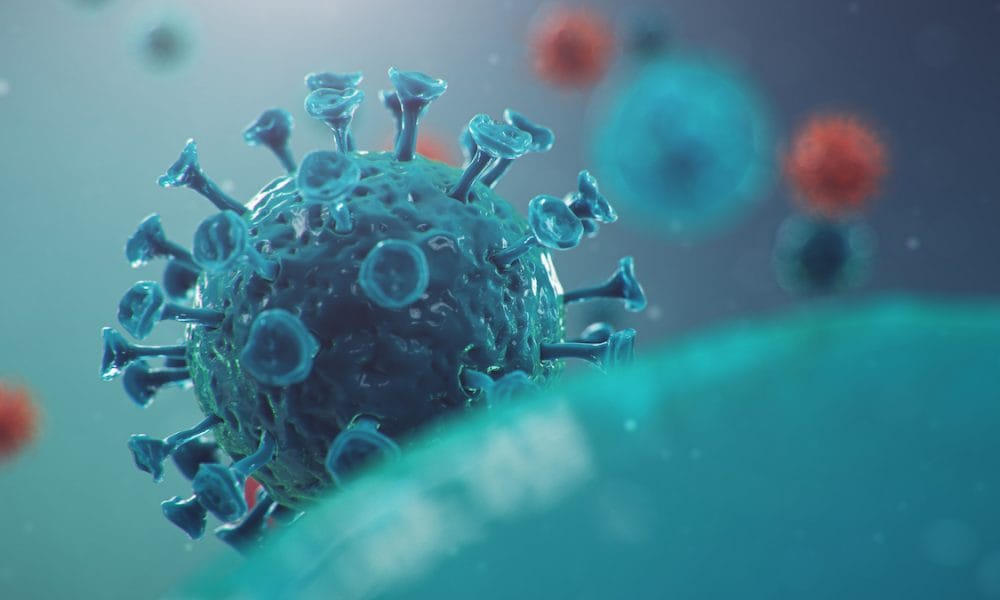
New funding has been assigned to help better understand the link between stroke and COVID-19.
Growing evidence indicates the strengthening of the link between patients contracting Coronavirus and also having a stroke. Initial global research has identified a number of patient groups who are more likely to have a stroke, including those with pre-existing conditions affecting their heart and blood vessels, those with severe COVID-19 symptoms, as well as people of Asian ethnicity. Indications also point to such people experiencing stroke in such situations being at least six years younger, on average, with symptoms being more significant. Case management11 Jan
Having been left with serious injuries in a cycling accident, Ian recovered from the physical impact but continued to suffer chronic pain. Here, he discusses how he has learnt to deal with it and get his life back on track.
“About two years ago, I was involved in quite a serious accident while I was out on my bike. I flew over handlebars and hit my head on the ground, leaving me unconscious. I was left with an array of injuries, including decompression of two of the disks in my spine, which needed an operation to resolve. But from being in the ambulance after my accident - the earliest point I can remember after coming off my bike - I was in enormous pain. Brain injury11 Jan
A condition that causes loss of vertigo perception and imbalance has been diagnosed in traumatic brain injury patients for the first time, which could yield breakthroughs in the development of new treatments and diagnostic tests.
Of 37 patients with acute traumatic brain injury (TBI) involved in the study, 15 were diagnosed with a newly - characterised neurologicaldiagnosis called vestibular agnosia - a condition in the brain which results in loss of vertigo perception and imbalance. The impact of such a condition is shown through statistics which reveal TBI patients with balance problems are twice as likely to be unemployed six months after their injury, compared to those without balance dysfunction.  Stroke11 Jan
Telerehab may have a greater effect on stroke patients than those who attend sessions in person, a new study has suggested.
Research has found that stroke patients who engage in rehabilitation via video at home may recover their motor skills better than those who have to attend outpatient facilities. The Chinese study, published in Neurology, also finds that the convenience of telerehab being done at home could be a significant factor in helping patients stick to their programmes through a greater ability to increase patient participation and compliance, alongside increased opportunities for patients to benefit from completing their rehab in a family and social environment. Care & services11 Jan
Specialist care provider Sue Ryder is making significant investment in neurological care as it continues to develop its offering.
The group has four specialist neurological care centres across England and Scotland, one of which is newly-built to increase provision in its area, and another doubling capacity in recent months to accommodate growing demand. In addition to ongoing investment in its centres, Sue Ryder is looking to increase support for outpatients with expansion of its Care at Home service being considered, building on the success of its outreach home care model in Scotland. Brain injury8 Jan
‘I lost my sense of smell through brain injury – I’m grateful COVID has shone a light on its impact’
Having been in a near-fatal car accident, Sally Smith has recovered physically, but a brain injury resulted in the permanent loss of smell. Here, she discusses how the once-tricky subject has now become much more accessible through its association with COVID-19.
I used to love the smell of Christmas. I honestly think that was my favourite part. The mulled wine, the spicy fragrances, the turkey dinner cooking - that really made Christmas for me. MND / ALS8 Jan
Pioneering treatments could be developed for people with motor neurone disease (MND) after a new study shed light on how the damage to nerve cells can be repaired by improving the energy levels in mitochondria.
Researchers have discovered that, in human stem cell models of MND, the axon - the long part of the motor neuron cell that connects to the muscle - is shorter than in healthy cells. Case management8 Jan
The Institute of Registered Case Managers (IRCM) is in the process of setting a host of stringent technical and professional standards to enable the organisation to be accredited by the Professional Standards Authority (PSA).
The IRCM will hold a register of case managers who demonstrate they comply with the standards. The creation of the IRCM is a highly significant move within case management, and aims to bring more transparency and clarity into the profession, giving greater confidence and protection to clients and fellow professionals alike. Having been in the planning stages for several years, the IRCM - which has been developed and supported jointly by BABICM, CMSUK and the VRA - is set to launch in the coming months. It is currently being presented to industry stakeholders, with a series of awareness-raising initiatives planned for case managers in the coming months. News8 Jan
Assessing the ability of unresponsive patients with severe brain injury to understand what is being said to them could yield important insights into how they might recover, according to new research. A team at the University of Birmingham has shown that responses to speech can be measured using electroencephalography, a non-invasive technique used to record [...]
 News7 Jan
Making sense of smell loss after brain injury An in-depth report on the smell-related problems that can occur after head injury. Enter keywords


