



News
The latest news from across neurorehabilitation.
 Therapy7 Jan
Artist and art therapist Carl Arroyo, from therapy provider Chroma, shares the story of brain injury survivor Ricky, whose interest in tattoo art began a path towards a life with more possibilities.
I’ve been an art therapist for more than a decade now, and it’s an incredible way of drawing people out and allowing them to express themselves.
I started working with Ricky (not his real name) in the Spring of 2020, about a year and a half after his injury. He already had a multidisciplinary team around him, and it was felt that he needed something else to support him in adjusting to his experience and his injuries.
To be honest, Ricky wasn’t particularly interested in art as a whole, but he had a specific desire to design some tattoos based on his experience of his injury.
 Tech & industry7 Jan
Merryn Dowson, of rehab goal-setting platform Goal Manager, on why the virtual conference should endure long after COVID-19’s limitations are gone.
Just in case you hadn’t noticed, the last year has been a little bit different from previous years and by ‘different’ I, of course, mean ‘online’.
Conferences have been no exception. Instead of arriving at a large hall, picking up the first of the day’s seven coffees and scanning the room for the best pens on offer, we are finishing off our morning routines and setting our out-of-office email only to sit in the same chair and log in to an online virtual conference.
In March we may have hoped that these conferences would actually happen in person and that the world would quickly get back on its axis but we soon realised that this would not be the case.
We were to access it all from our computers, perched wherever we can manage in our homes.
In August, I had my first taste of this unprecedented, socially- distanced, new-normal approach to conferences by logging on to that of the American Psychological Association (APA). News7 Jan
Reflective practice within healthcare settings is widely talked about, but not always so easy to implement in the workplace. NR Times speaks to one neurological centre about how it benefits patients and staff there.
Reflective practice and discussion in healthcare settings is a professional requirement for nurses, as laid out by the Royal College of Nursing revalidation requirements as part of their continuous professional development.
It allows professionals to take time to pause and reflect, communicate and plan, which undoubtedly leads to better outcomes for patients and staff.
 Tech & industry7 Jan
How new technology could revolutionise the way patients self-report their symptoms - improving outcomes and research capabilities in neuro-rehab and other fields.
‘Patient-centred’ has become a well-worn phrase in neuro-rehab in recent years. In fact, so often is it mentioned by care and therapy providers, that it is starting to mean different things to different people, running the risk of becoming meaningless.
Of course, in healthcare the patient should, indeed, be at the heart of everything. If self-report mechanisms are flawed, however, can we really say that this is the case? Tech & industry7 Jan
Soothing sounds and relaxing vibrations are incorporated into the innovative inmu sound cushion, activating the senses of people with brain injuries.
The human body responds to music. What feels like a healing sound to some can be unbearable noise to others. After suffering brain injuries or a stroke, music and sounds can put tremendous strain on patients. In such cases, even something as subtle as a birdsong can become intolerable.
 Interviews7 Jan
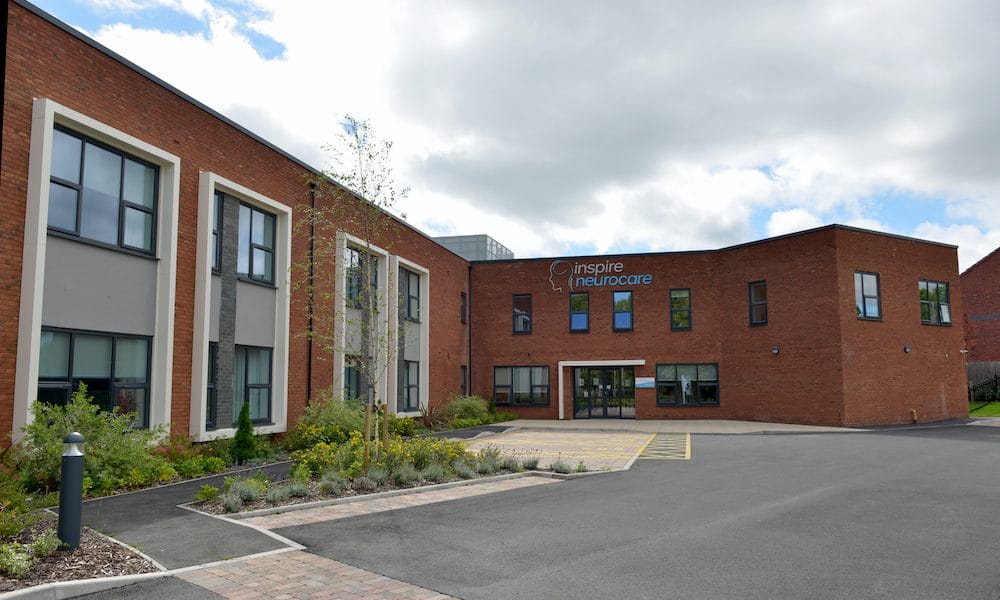
A neuro-rehab provider which opened its first facility in Worcester shortly before the first lockdown has succeeded against the odds – and now has plans to expand in 2021, as NR Times reports.
Inspire Neurocare provides support for people with a variety of neurological conditions, offering rehabilitation, respite and palliative care.
The firm opened its first specialist care centre in Worcester in February 2020, and this will be followed by further facilities in Basingstoke and Southampton in 2021/22. Inspire prides itself on a novel model of care that has “no limitations on the possibility of recovery,” all led by director of clinical excellence Michelle Kudhail.
A key element of the centre’s approach is the team’s commitment to understanding that every patient, and the circumstances that led them there, is different. Tech & industry7 Jan
Medicotech has a unique approach to neuro-rehab which puts the patient at its heart and provides a seamless experience for professionals.
With a vast range of neuro-rehab applications available, rehab centres and units often find themselves sourcing equipment from various providers.
Medicotech is addressing the often-disjointed nature of neuro-rehab this can cause, by providing a seamless approach.The company offers “the complete solution for rehabilitation”, with a piece of equipment suitable for every stage of the rehabilitation process, from the most acute stages right through to discharge.
Patients may start their rehabilitation journey with a recently-launched piece of equipment called the bemo, designed by THERA-Trainer. Tech & industry7 Jan
NR Times invited three experts for a virtual discussion on the changing role of technology in rehab after brain injury.
Neuro-rehab specialists Anna Wilkinson and Rebecca Bancroft, of physiotherapy provider More Rehab, are joined by Louise Jenkins, partner and serious injury specialist at Irwin Mitchell.
Anna Wilkinson (AW): Using tech gives us a different way of rehabilitating someone; it keeps patients attentive, keeps them concentrated and keeps them motivated to reach their goals.
 Brain injury7 Jan
The UK Acquired Brain Injury Forum (UKABIF) recently hosted a two-day virtual summit exploring the issues faced by the neuro-rehab community. The conference brought together academics, politicians and practitioners to discuss topics such as brain injury in sport, domestic abuse, training and education.
Two years after the launch of the All-Party Parliamentary Group (APPG) on Acquired Brain Injury's report, ‘Time for Change’, UKABIF hosted a virtual conference to update on the group’s progress since. The two-part ‘Time for Change’ summit took place online in November.
Around 200 delegates were welcomed to the virtual event which featured speakers from the USA’s National Institutes of Health, The Walton Centre in Liverpool, St George’s Hospital in London, University College London and the Defence and National Rehabilitation Centre. Smarter rehab7 Jan
NR Times reports on a new rehabilitation approach taking place in Cambridgeshire.
Despite a year of relentless change and upheaval for all involved in neuro-rehab, one provider in Cambridgeshire has been able to keep its ongoing development on track.
Askham Rehab, part of the Askham Village Community, is a recently-launched specialist rehabilitation service incorporating the latest in rehab robotics and sensor assisted technology.


