



News ›
News
The latest news from across neurorehabilitation.
 Opinion7 Jan
NR Times reports on a new rehabilitation approach taking place in Cambridgeshire.
Despite a year of relentless change and upheaval for all involved in neuro-rehab, one provider in Cambridgeshire has been able to keep its ongoing development on track.
In a former life in newspapers, it was at this time of year that the dreaded churn of annual reviews and previews came... Ups and downs of the months gone by and ill- informed soothsaying for the year ahead served only to plug the festive news glut. Pity the junior reporter seeking their highlights of 2020. This year feels less a series of chronological news events and more a mighty tempest that has shaken our entire reality off course.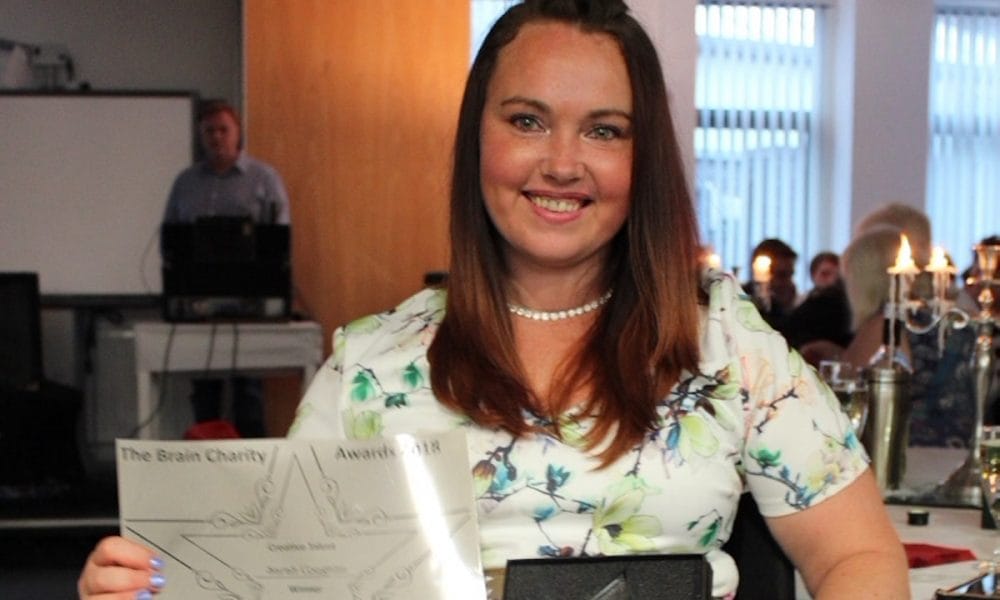 Patient stories6 Jan
Sarah Coughlin experienced the horror of her head facing backwards after sustaining a brain injury. Here she shares her recovery journey with NR Times.
“I was wondering why my windscreen had black lines across it - until I realised I was looking out of my back window.” Sarah Coughlin recalls the horrific moment she realised her head had turned 180 degrees to face backwards, due to brain trauma she had suffered after sustaining a head injury. In the immediate aftermath of the injury, Sarah recalls little seemed wrong aside from a persistent headache. Therapy5 Jan
A pioneering physiotherapy service for children and young people which engages them in rehab through horse riding has marked its 10th anniversary.
The Children’s Therapeutic Riding Service was the first of its kind in Scotland, and remains the largest hippotherapy service in the country. Hippotherapy is a specialist horseback form of physiotherapy, which can deliver life-changing consequences to children with disabilities, including brain injuries. The service, delivered free of charge, attracts young people from across Scotland to its base in Muirfield and has helped hundreds of families during its time in operation. Brain injury23 Dec
A team of New Jersey researchers have shown that gait training using robotic exoskeletons can improve motor function in adolescents and young adults with acquired brain injury.
Behind the study are Drs Kiran Karunakaran, Naphtaly Ehrenberg and Karen Nolan from the Center for Mobility and Rehabilitation Engineering Research at Kessler Foundation, and JenFu Cheng and Katherine Bentley from Children’s Specialized Hospital. Drs. Karunakaran, Nolan, Cheng, and Bentley are also affiliated with the Department of Physical Medicine and Rehabilitation at Rutgers New Jersey Medical School. Brain injury23 Dec
A “wind of change” in personal injury litigation is enabling the traditional way specialist claims into brain injuries and other major cases are handled to be revolutionised, new research has revealed.
The COVID-19 pandemic has forced major change in the way claims are handled, with much of it being done remotely out of necessity amidst ongoing restrictions on travel and meetings. However, new research has revealed that as a result of this, litigation has become more efficient, with remote case management conferences, joint settlement meetings and low value trials all set to become the ‘new normal’ post pandemic. Stroke23 Dec
People hospitalised with COVID-19 and neurological problems including stroke, have a higher risk of dying than other COVID-19 patients, a study suggests.
The newly published study looked at data from 4,711 COVID-19 patients who were admitted to hospital during the six-week period between March 1, 2020 and April 16, 2020.Of those patients, 581 (12 per cent) had neurological problems serious enough to warrant brain imaging. Care & services23 Dec
Visitors from across the world will join an array of global speakers at a major event in caring for young people with brain injuries.
The fourth National Paediatric Brain Injury Conference, organised by The Children’s Trust - which provides residential and community care for children with neurological injuries and disabilities - is to be held online due to the ongoing impact and implications of COVID-19. And while the pandemic will prevent the Connections and Collaborations being held in person, the decision to take it online means it can attract an audience far beyond its base in Tadworth, Surrey. The event, on February 4, brings together some of the neuro sector’s leading clinical professionals to explore some of the fundamental elements involved in a child’s recovery following an acquired brain injury. Care & services23 Dec
For Leanne, who has MS, the opportunity to gather with loved ones on Christmas Day is one she feels she must decline. Here, she shares her reasons for choosing to be lonely this Christmas.
Christmas is my favourite time of year, and ordinarily I’d be out celebrating, seeing friends and family, and planning something really fantastic to see in the new year. But like for so many other people, 2020 is going to be so different. I’ll be completely on my own. And while under normal circumstances that would be the most heartbreaking Christmas I could imagine, this year it is undoubtedly my best option. At least, that way, I’ll still be here to enjoy 2021 and the years beyond that. Tech & industry23 Dec
Technology group Fourier Intelligence has signed a global partnership with a Canadian institution which aims to advance research and development in rehab robotics.
Fourier has signed a Memorandum of Understanding (MOU) with the KITE Research Institute at the Toronto Rehabilitation Institute - University Health Network (UHN). The agreement will enable the expansion of KITE’s robotics research and education capabilities; including through the establishment of a “world-class” rehab robotics centre, underpinned by Fourier’s next-gen RehabHub platform and support from its network of researchers. KITE is a world leader in complex rehabilitation science and is dedicated to improving the lives of people living with the effects of disability, illness and ageing. Long COVID22 Dec
The Queen’s Nursing Institute has published a resource for community nurses caring for people living with Covid-19.
Commissioned by NHS England and NHS Improvement, the resource is called ‘Living with Covid-19 (Long Covid) and Beyond’. It provides information to support nurses working in community, care homes and primary care and also to the wider multi-disciplinary team including clinical knowledge, care responses and skills when caring for people during their recovery and rehabilitation. It is predicted that there will be a ‘new wave’ of physical, mental and emotional health challenges as individuals enter recovery from Covid-19 infection – and for some this is combined with issues resulting from the social and economic impact of lockdown, such as isolation and unemployment.


