News
The latest news from across neurorehabilitation.
 News23 Jul
Giving patients an injection of nanoparticles could stop the body’s immune system from overreacting to trauma, and has the potential to prevent paralysis caused by spinal cord injuries. This approach, billed as an EpiPen for trauma, could be used on injuries to the central nervous system, including the brain and spinal cord, a study shows. Demonstrated in mice by researchers at the University of Michigan, the nanoparticles enhance healing by reprogramming aggressive immune cells, with just their physical characteristics. No drugs are involved in the treatment, which is thought will help to avoid any unwanted side effects.
 News23 Jul
A study, by the University of Saskatchewan in Canada, found that children with severe epilepsy also experienced improvements in their quality of life after taking low doses of the medicinal cannabis oil. Researchers tested the effects of medicinal cannabis oil with 95 per cent CBD, which does not create a high, and 5 percent THC, the substance which can be intoxicating in large enough doses. Studying an evidence-based scientifically guided dosage regimen, the research team found no evidence of THC intoxication when using CBD-enriched whole plant extracts.
 News23 Jul
It suggests that 90 per cent of ABI patients who tried such therapy would like to continue attending sessions - while mood and goal achievement seem to improve as a result of the therapy. The study was conducted by arts therapy provider Chroma, at Exemplar Health Care’s 80-bed Willowbeck inpatient unit in Sheffield, UK. The centre caters for clients withcomplex needs, including those with an ABI (through accident or illness), people with an intellectual disability and individuals with mental health problems. Over 12 weeks, a qualified neurologic music therapist from Chroma was assigned to work with individuals and groups of service users.
 News22 Jul
For procedures in the brain, however, neurosurgeons more commonly thread instruments through arteries at the groin - a transfemoral approach. In the largest cohort study to date, researchers have found that surgery via the wrist – known as transradial - is safe and effective for a broad range of neuroendovascular procedures, and gives patients faster recovery with less procedural risk. The study was conducted in the US by the university, Jefferson. Neurological surgery professor and senior author Pascal Jabbour says: “Despite improved safety shown in large cardiology trials, transradial brain surgeries via the wrist are much less common. Neurosurgeons tend to prefer the transfemoral approach on which many of us were trained. But our research demonstrates that all kinds of neurological procedures can be done effectively and even more safely via the wrist.”
 News22 Jul
This heightened risk seems to peak in the first two years of use, reports a study due to be published in The American Journal of Medicine. The findings confirm concerns voiced by many health agencies about the potential risks associated with the treatment. The study analysed a large database of electronic medical records of patients enrolled in primary care practices in the UK and formed a cohort of 15,401 men, aged 45 years or older, with low testosterone levels (hypogonadism). Users of TRT had a 21 per cent greater risk of cardiovascular events compared with nonusers, corresponding to an additional 128 events.
 News22 Jul
The United Kingdom Acquired Brain Injury Forum (UKABIF) Film Award 2019, sponsored by Cygnet Health, is accepting entries until 20thSeptember. The judging panel is looking for a three-minute, impactful, “punchy” film that raises awareness of the benefits of neurorehabilitation after an ABI; with a specific focus on neurorehabilitation in hospital, the community, at school, in prison or in connection with sport. Entries are welcome from everyone with an interest, or experience in ABI, including rehabilitation multidisciplinary team members, doctors in primary and secondary care, case managers, personal injury lawyers, social care workers, voluntary organisations and care providers.
 Tech & industry20 Jul
‘Necessity is the mother of invention,’ so the old proverb goes. For Guillem Singla Buxarrais, that necessity stemmed from his uncle; who was struggling to recover from a stroke suffered in 2010. The Spanish inventor-turned-entrepreneur says: “I wanted to find a solution to motivate him, that was at least affordable to buy and was also fun; that was my criteria and I couldn’t find anything at the time.” Guillem was looking for an antidote to his uncle’s upper limb problems; a device to fire up his morale and get him exercising towards recovery. After a fruitless search, he set about creating something himself.
 News19 Jul
Chris Bryant MP, a frequent advocate of brain injury awareness and chair of the all-party parliamentary group on acquired brain injury, hosted the event in which MPs were screened using the Brain Injury Screening Index (BISI), a tool provided by national charity The Disabilities Trust. The charity conducted research into male and female prison populations and found nearly half of males (HM Prison Leeds, 2014) and nearly two-thirds of female prisoners (Making the Link, 2019) screened positive for a history of brain injury. The cognitive problems associated with brain injuries can significantly impact engagement in rehabilitation programmes and contribute to reoffending. Despite this, there is no regular testing for brain injury conducted in adult prisons in the UK.
 News19 Jul
The Children’s Trust event, ‘Building the future of childhood brain injury: where do we go from here?’, promises to take a visionary look at paediatric acquired brain injury and explore what the future may hold. Speakers at the conference, at the Royal Society of Medicine in London on 6 September, include Dr Charlie Fairhurst, consultant paediatric in neurodisability and head of children's neurosciences at Evelina London Children’s Hospital. Also speaking at the event is Professor Vicki Anderson, director of clinical sciences research at Murdoch Children's Research Institution in Melbourne, Australia.
 News19 Jul
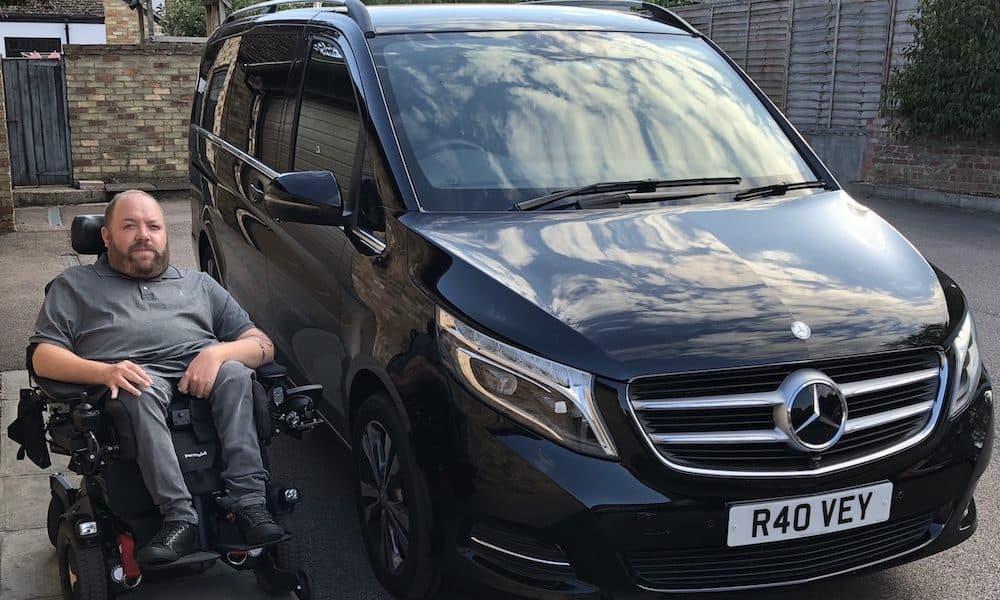
Ross is an accessibility manager at Lloyds Banking Group, a job involving regular travel across the UK. A reliable car is therefore vital.
He says: “Prior to taking delivery of my Mercedes V-Class from Lewis Reed one of the UK’s leading wheelchair accessible vehicle converters I owned two Chrysler Grand Voyagers. "When the time came to look at changing my vehicle, I did some research on the Mercedes V-Class which I felt was the only comparable vehicle to my ageing Chrysler.