



Profession ›
Clinicians & therapists
For doctors, nurses, therapists and psychologists.
 Care & services30 Jul
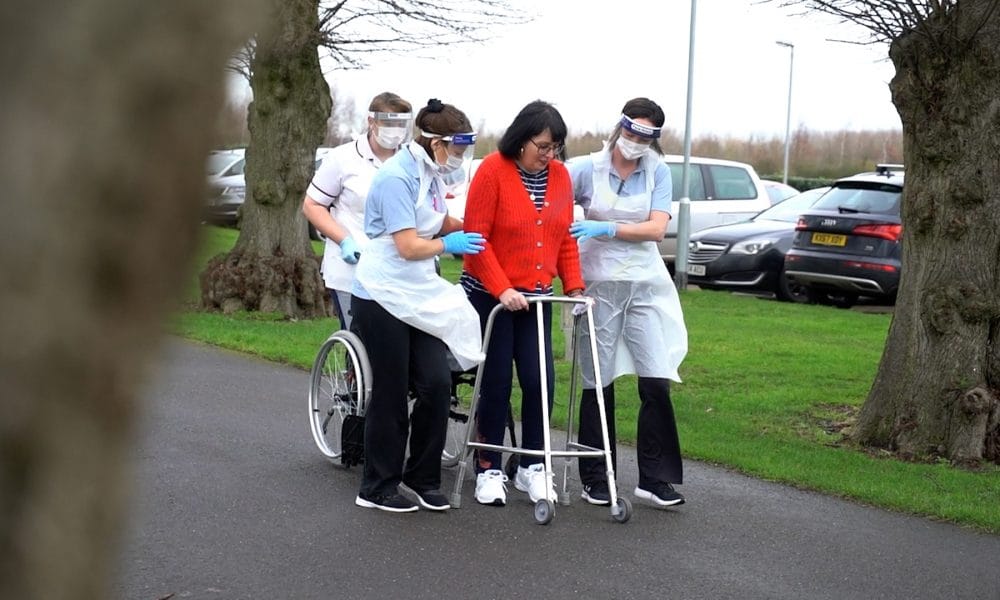
When Hayley Trotman walked out of Askham Rehab into her husband’s arms, having been able to move only a couple of her fingers four months earlier after being struck by Guillem-Barre Syndrome (GBS), her recovery marked a huge achievement.
As well as the remarkable progress made by Hayley, who had exceeded all expectations for her progress in that timeframe, her journey also showed what can be possible with specialist rehabilitation, even during the COVID-19 pandemic and its stringent restrictions. While for many patients around the UK and indeed the world, their rehabilitation was paused or delayed, at Askham, if anything, the team’s work with their residents intensified, ensuring that even during some of the most challenging conditions healthcare has ever faced, their recovery was allowed to continue. Long COVID28 Jul
Research is underway to better understand the impact of Long COVID and the cognitive impairment associated with the condition.
The CICERO (Cognitive Impairment in long Covid: PhEnotyping and RehabilitatiOn) project will help to determine which elements of brain function are most affected in people with Long COVID, using MRI scanning to identify affected brain networks. UCL researchers will then develop and test a new rehabilitation strategy to help people recover from the cognitive aspects of Long COVID and return to normal life and working ability. This will support production of a freely available COVID-19 Cognitive Recovery Guide on how best to offer the new rehabilitation approach depending on the patient’s symptoms. It has been backed by £1.2 million from NIHR. Brain injury15 Jul
Suicidal risk and understanding how best to respond was the subject of a recent webinar for professionals working with brain and spinal injured clients. Assessments including how to assess the different levels of risk, including looking out for red flags, primary drivers and secondary drivers, were all addressed to empower people to deal with what [...]
 Therapy14 Jul
What impact can the NeuroBall™ have on rehabilitation? Claire Everett, neurophysiotherapist at PhysioFunction, shares her insights into its benefits
What are the main benefits of NeuroBall™:- For your clients/patients?
- For your clinic?
 Neuropsychology14 Jul
Researchers have made significant advancements in correlating aberrations in specific brain circuits with neuropsychiatric conditions like depression.
However, it remains difficult to prove that damage to these circuits causes the symptoms themselves and that targeting them with therapeutics could help patients. By integrating brain lesion datasets with data on how two treatments - deep brain stimulation (DBS) and transcranial magnetic stimulation (TMS) - influence neuropsychiatric disorders, researchers from Brigham and Women's Hospital and collaborators developed a new brain mapping approach that may help clarify the cause of a variety of neuropsychiatric conditions and identify promising stimulation sites to target therapeutically. Therapy13 Jul
Good news for groundbreaking programme that fuses art with recovery.
 Neuropsychology8 Jul
Listening to music while running could be key to improving people’s performance when they feel mentally fatigued, a study has found.
The performance of runners who listened to a self-selected playlist after completing a demanding thinking task was at the same level as when they were not mentally fatigued, the research revealed. The study is the first to investigate the effect of listening to music playlists on endurance running capacity and performance when mentally fatigued. Researchers at the Moray House School of Education and Sport used two tests to study how listening to music affected the running performance of eighteen fitness enthusiasts. One test looked at the effects on interval running capacity – alternating between high intensity running and lower intensity jogging – with a group of nine physically active exercisers, and the other on a 5km time-trial with a group of nine trained runners. Brain injury2 Jul
A pioneering telerehabilitation initiative which enabled people recovering from acquired brain injury to continue their therapies during the pandemic has reported significant progress for participants during the programme.
The evaluation of Neuro-Rehabilitation OnLine (N-ROL) and the fact participants “significantly improved on the two planned quantitative outcome measures” provides further academic analysis to support the hugely positive anecdotal evidence about the impact of telerehabilitation, which has grown exponentially in its use during the past year. Brain injury30 Jun
Speaking at Calvert Reconnections’ recent Zoominar for case managers and solicitors, activity lead Rob White made a compelling case for rehabilitation in the great outdoors
“The use of outdoor activities makes our rehabilitation service unique,” said Rob. “Working with leading clinicians and academics, our service combines traditional multi-disciplinary clinical therapies with physical activity in the outdoors to support individuals in their recovery from brain injury.” Rob brings over 20 years’ worth of outdoor coaching experience to the Calvert Reconnections team. He has always been a strong advocate for using outdoor activities to facilitate personal development and this underpins his practice. In 2018, he qualified with an MSc in Psychology. He researched the influence of rock climbing on people’s mental wellbeing and this highlighted the transformative potential of the outdoors. Rob uses his knowledge when designing and delivering programmes, focusing on maximising wellbeing by using adventurous activities and the outdoor environment.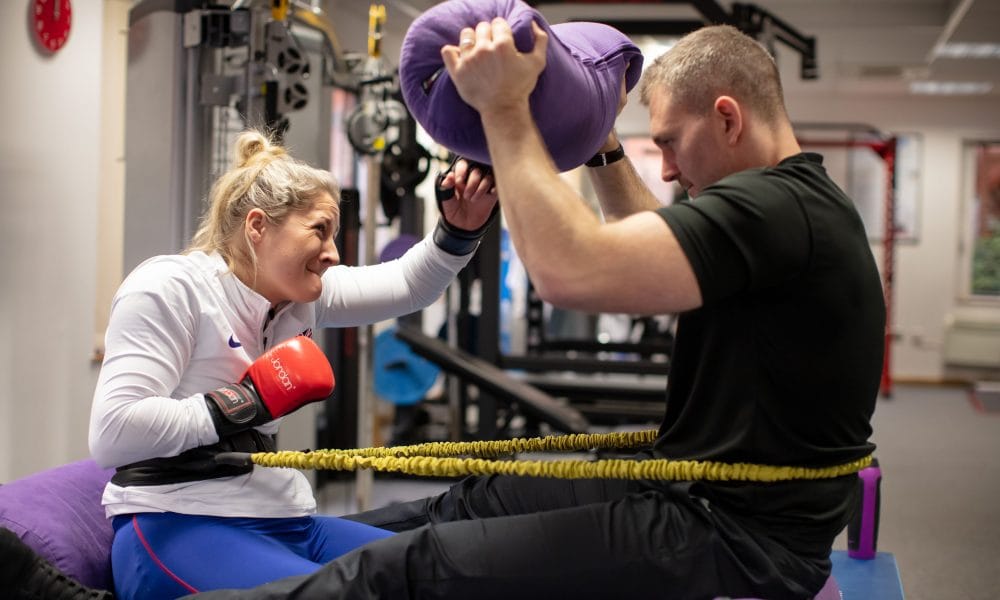 Neurophysiotherapy29 Jun
Strength and conditioning is a field of exercise science specialising in the optimisation of human performance.
Along with other closely related disciplines - such as physiotherapy, biomechanics and physiology - strength and conditioning is an established support service in sport but rarely applied within neurorehabilitation, despite holding evident value. Within sports, a strength and conditioning specialist works collaboratively with a multidisciplinary team that has been collectively tasked with optimising the physical resilience, development and performance of athletes. An integral part of their specific role within such a team is to maximise the technical training opportunities of athletes by ensuring they can withstand the unique physical demands placed upon them by their respective sport, training environment and competition format. This role is fulfilled by methodically appraising and addressing the physical abilities and limitations of athletes in alignment with specific outcomes associated with sporting success. In doing so, distinct movement patterns (eg running), physiological systems (eg cardiovascular) and architectural properties of muscles (eg cross sectional area), can be effectively and repeatedly targeted for adaptation and maintenance as required.


