Experts unveil ‘first-ever’ brain injury guidelines for first responders

Fifty-two experts have agreed 28 recommendations for recognising, diagnosing and managing brain injury in first responders, described as the first guidance of its kind.
The recommendations aim to improve recognition of traumatic brain injury (TBI), support safe recovery, maintain operational readiness, reduce stigma and provide care tailored to first responders.
They cover law enforcement officers, corrections personnel, firefighters and emergency medical technicians (EMTs), addressing injury prevention, workplace policies, diagnosis, treatment, mental health monitoring and return-to-duty procedures.
Researchers and clinicians at The Ohio State University assembled the group, which met last spring after months of discussions to reach agreement on six areas of brain injury management.
The authors argue that better outcomes require education, supportive injury reporting systems and workplace cultures that encourage personnel to seek appropriate care.
They say responsibility for managing brain injuries “must shift from an individual burden to an organisational responsibility.”
First responders face risks from violent incidents, falls and vehicle collisions. Demanding working conditions can also discourage them from reporting injuries.
After a concussion, symptoms can interfere with duties requiring split-second decisions. Driving at high speeds with emergency lights and sirens can provoke symptoms, while disrupted sleep from shift work can affect recovery.
A further blow to the head during recovery can also delay improvement.
Jaclyn Caccese, associate professor in the School of Health and Rehabilitation Sciences at Ohio State and lead author of the recommendations, said approaches developed for athletes and military personnel could help inform care for first responders.
She said: “We don’t have to start from scratch. There is a lot we can learn from sports and the military, but those approaches have to be adapted with first responders to reflect the realities of their work. That partnership is really important if we want the recommendations to be practical, trusted and ultimately useful.”
The guidance calls for non-punitive injury reporting, clearer referral pathways, clinician-guided care and return-to-duty procedures tailored to individual occupations.
It also recommends continued collaboration between researchers and first responder organisations.
Two recently published studies led by Caccese and colleagues have examined the extent of traumatic brain injury among emergency personnel.
A statewide survey of law enforcement and corrections officers in Ohio found that 64.1 per cent of respondents reported at least one TBI during their lifetime.
Some 28.3 per cent reported a duty-related brain injury, with nearly three-quarters of those injuries having never been diagnosed or treated.
A separate review of 23 studies found a lifetime TBI prevalence of 58.8 per cent among first responders.
The review also identified a high risk of brain injury among firefighters and a lack of research into head injuries among EMTs.
Further research will examine symptoms and recovery times among law enforcement personnel following head injuries.
The National Institute for Occupational Safety and Health has awarded Ohio State US$1.9m for a project adapting concussion assessment and repeated testing methods used in sport to the law enforcement environment.
Researchers will compare injured personnel with uninjured officers at several stages: 72 hours after injury, once symptoms have resolved, when they are cleared for unrestricted duties and six months later.
The project will investigate common causes of injury, recovery patterns and factors associated with persistent symptoms.
Caccese, the project’s principal investigator, said: “The idea is to look at what are the common mechanisms of injury, how long does it take officers on average to hit those milestones, and what do their trajectories look like?”
The next stage of the consensus initiative will involve working with first responder organisations to determine how the recommendations can be implemented across different agencies and occupations.
Caccese and colleagues are due to present the recommendations at the International Association of Chiefs of Police in late October.
The authors say the guidance provides a starting point for more consistent, evidence-informed care, with responsibility shared between first responders and their employers.
Further research and collaboration will be needed to determine how the recommendations can be put into practice.
The consensus work was supported by the Assistant Secretary of Defense for Health Affairs, endorsed by the Department of Defense through the Traumatic Brain Injury and Psychological Health Research Program, and supported by Ohio State’s School of Health and Rehabilitation Sciences and Center for Brain Injury Recovery & Discovery.
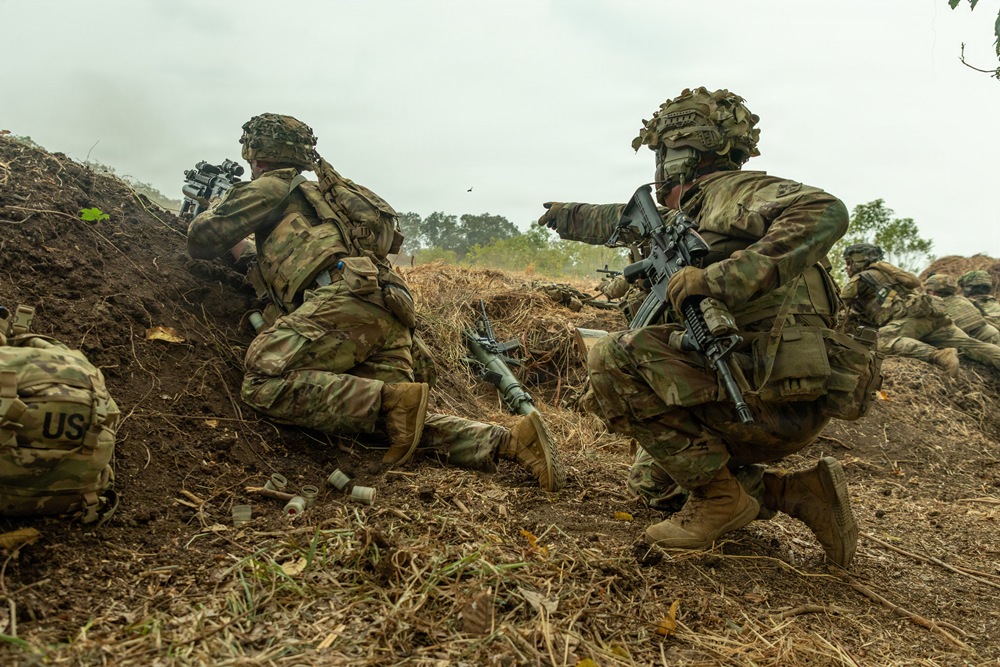 US military looks to improve detection of brain injuries caused by blasts