Oxford teams up with OpenAI on child brain injury project
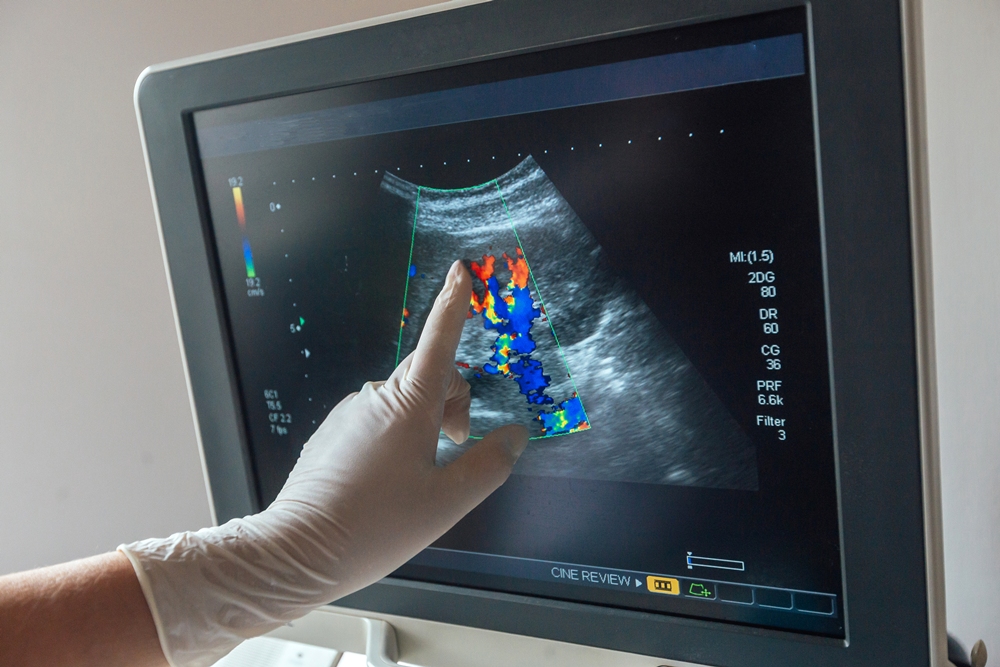
A new research programme will explore how AI could improve fetal brain assessment using ultrasound and help identify babies at risk of brain injury.
The Oxford Martin Programme on AI for Fetal Brain Imaging, supported by OpenAI’s NextGenAI Initiative, will bring together specialists in AI and fetal medicine, alongside research into how new technologies can be introduced effectively into clinical practice.
Researchers will aim to improve the reliability of assessments across different types of scanners, including lower-cost ultrasound equipment.
Led by professors Ana Namburete and Aris Papageorghiou, the programme will develop physics-aware generative AI, which takes into account how ultrasound images are produced.
The aim is to distinguish meaningful biological information from variations introduced by imaging equipment.
Researchers will also develop ways to help clinicians understand how reliable AI-supported assessments are, including identifying images that are unsuitable for analysis.
Papageorghiou said: “Ultrasound presents an extraordinary opportunity for AI: it is highly operator-dependent, generates vast amounts of imaging data and is used in millions of examinations worldwide.
“We have already demonstrated how AI can make ultrasound more accessible and consistent.
“This programme represents the next leap: moving beyond image acquisition and measurements, towards extracting meaningful information that could improve fetal brain assessment and ultimately infant outcomes.”
More than one million newborns worldwide are estimated to develop neonatal encephalopathy each year, a neurological condition that can affect a baby’s ability to breathe, feed and respond normally.
In the most severe cases, the condition can lead to long-term disability or death. Babies in low- and middle-income countries are disproportionately affected.
Neonatal encephalopathy can have several underlying causes and cannot be reliably predicted through ultrasound scans during pregnancy alone.
However, better assessment of fetal brain development could help healthcare teams identify signs of vulnerability and determine which babies may need closer monitoring, specialist assessment or additional care around birth.
Ultrasound is widely used in antenatal care, and lower-cost portable scanners are helping to make imaging more accessible. However, images of the same fetal brain can look different depending on the scanner used, making consistent interpretation difficult.
The programme aims to make advanced fetal brain assessments possible wherever ultrasound is available, including healthcare settings without access to sophisticated imaging equipment.
The University of Oxford is participating in NextGenAI, a consortium involving OpenAI and 15 research institutions focused on advancing research and education through AI.
Through the wider initiative, OpenAI is committing US$50m in research grants, computing funding and access to its application programming interface (API) to support students, educators and researchers.
 Beyond the headline figure: What brain injury compensation really needs to cover