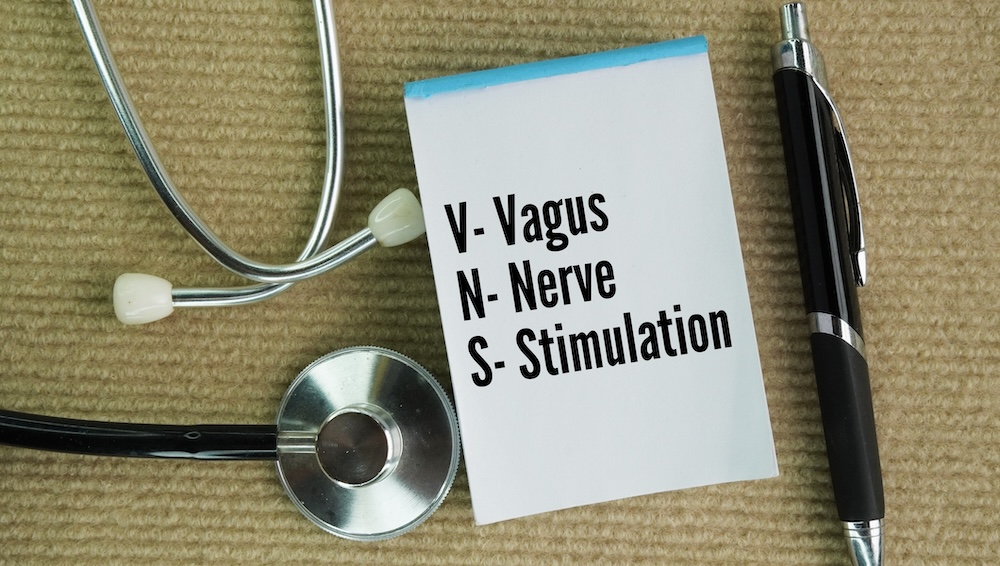
A trial is testing whether ear-based vagus nerve stimulation can improve hand function and potentially support myelin repair in people with MS.
The treatment delivers electrical pulses through the ear during rehabilitation exercises. Researchers are investigating whether it can improve movement by helping the brain adapt and reorganise connections.
The study will primarily assess safety and tolerability, alongside effects on motor function and disability in people with relapsing-remitting multiple sclerosis (MS).

The University of Colorado trial (NCT06641271) is enrolling participants by invitation at the Clinical Translational Research Center at CU Anschutz in Aurora, Colorado.
Around 70 adults with relapsing-remitting MS and difficulties moving their hands and arms are expected to take part.
During the first four weeks, participants will attend three clinic sessions a week, completing hand movement exercises for about 30 minutes per session.
Some will receive electrical stimulation through an earbud-like device, while others will receive sham stimulation for comparison.
Follow-up visits will take place at two, three and six months.
MS is an inflammatory disease affecting the brain and spinal cord that damages myelin, the fatty coating around nerve fibres that helps electrical signals travel efficiently.
Current treatments can slow disease progression by reducing inflammation, but none has been proven to restore lost myelin.
Vagus nerve stimulation (VNS) uses electrical pulses to stimulate a nerve connecting the brain to many internal organs and helping regulate automatic bodily functions.
Studies involving stroke survivors have found greater improvements in motor function when VNS was combined with physical therapy than with physical therapy alone.
Researchers suggest this may involve neuroplasticity, the brain’s ability to adapt by forming or reorganising connections.
Cristin Welle, a professor at the University of Colorado, and her team tested whether VNS could support recovery in animal models of MS.
They found that stimulation increased the number of new myelin-producing cells. Brain imaging also suggested regenerated myelin was returning to areas where it had previously been lost.
Welle said: “No one has really established a link between neuromodulation (such as VNS) and improved myelin before.”
In stroke rehabilitation, VNS usually involves surgically implanting a stimulation device in the chest. The MS trial will instead stimulate a small branch of the vagus nerve from the surface of the ear.
Researchers hope to develop an at-home system using the technique.
Although the animal findings suggest VNS may support myelin regeneration, whether the same effects occur in people with MS remains unknown.
Welle said: “From a big-picture perspective, what’s exciting to me about vagus nerve stimulation is that it’s kind of harnessing the body’s own ability to repair.
“Rather than creating an artificial condition, it’s just helping the body to use its own repair processes.”