Study links repeated military blast exposure to higher rates of anger and aggression in veterans
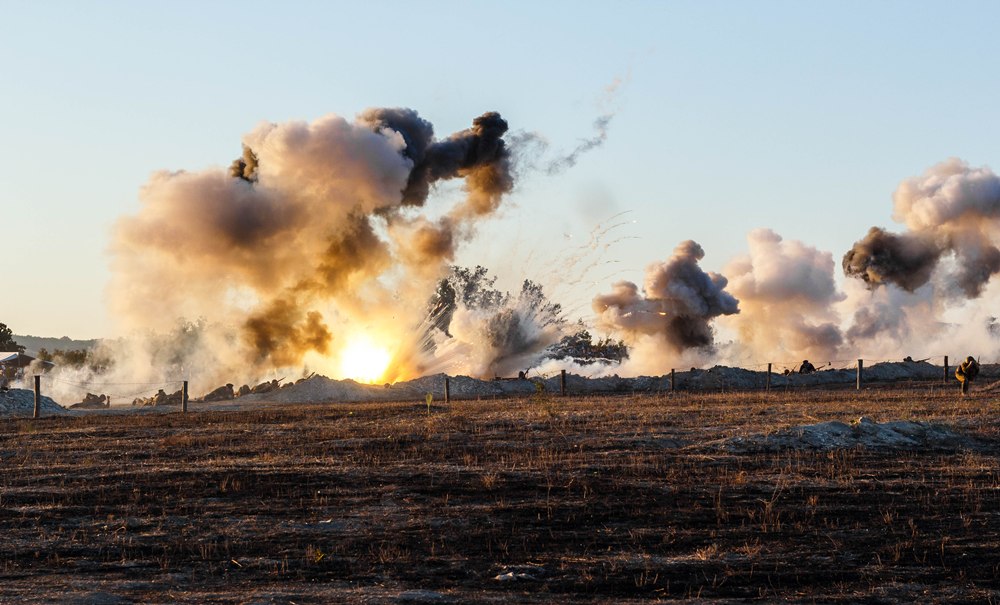
Veterans in roles with repeated blast exposure were significantly more likely to have anger, aggression and violence recorded than those in lower-risk roles in a recent study.
The findings add to evidence that repeated military occupational blast exposure (MOBE) may have lasting neurological and behavioural effects.
The link remained independent of combat exposure, traumatic brain injury (TBI) and post-traumatic stress disorder (PTSD).

The study compared 5,000 veterans who served in occupations considered at high risk of repeated blast exposure with 5,000 matched veterans from lower-risk occupations.
Researchers from the VA Salt Lake City Health Care System and the University of Utah analysed more than 3.6m clinical notes using a large language model to identify records of anger, aggression or violence.
The system was 96 per cent accurate when compared with manual review.
Overall, 17.2 per cent of veterans in high-risk blast occupations met the study criteria for these behaviours, compared with 12 per cent of matched controls.
After accounting for combat exposure, TBI, PTSD, sex and other factors, veterans in high-risk blast occupations remained 22 per cent more likely to have evidence of anger, aggression or violence in their medical records.
The relationship weakened when PTSD was included in the analysis but remained statistically significant.
“The lowest odds occurred when PTSD was included as a covariate,” the authors wrote.
“This is plausible because anger is a core symptom of PTSD, and the MOBE group had elevated rates of PTSD.”
Rather than identifying a single cause, the researchers said the findings pointed to a complicated interaction between multiple military exposures.
“Our findings suggest a complex picture where numerous factors interrelate with MOBE in statistically significant ways,” they wrote.
“Many covariates showed statistical significance in our models, underscoring how multiple military experiences and exposures shape [anger, aggression and violence] risk beyond occupational designation alone.”
Repeated blast exposure can occur during military training and weapons use, including artillery, breaching operations, heavy weapons, explosives and other combat-related activities.
Unlike traumatic brain injury, occupational blast exposure may accumulate over many years without causing an immediately recognised injury.
The authors suggested repeated blast exposure could represent a preventable military health risk.
“MOBE differs from TBI in that it is a more predictable and modifiable exposure,” they wrote.
“More granular information on exposures and appropriate mitigation may yield benefits. Preventive education on the risks of MOBE may also be beneficial.”
The US Department of Defense has begun expanding efforts to reduce blast exposure through revised safety protocols, improved protective equipment, exposure tracking and changes to training practices.
Researchers said future studies should move beyond identifying military occupations associated with blast exposure and develop more precise ways to measure cumulative blast dose, meaning total exposure, over a service member’s career.
“At their best, epidemiological investigations can indicate mechanisms or avenues for high-quality controlled studies and trials,” the authors wrote.
“This work clearly highlights the need for further efforts to robustly differentiate service members with minimal blast exposure from those with extensive, repetitive exposure histories.”
The biological mechanisms behind the link remain uncertain.
Previous research has linked repeated blast exposure with diffuse axonal injury, widespread damage to the brain’s nerve fibres, as well as neuroinflammation, which is inflammation within the nervous system, vascular injury and hearing damage.
The researchers also pointed to emerging evidence that inflammation and the gut-brain axis, the communication system linking the digestive system and brain, could contribute to long-term behavioural changes.
However, the study had several limitations.
Researchers estimated exposure from veterans’ military occupational specialties rather than measuring each person’s individual exposure history.
Anger and aggressive behaviour may also be underreported by veterans or incompletely documented by clinicians, potentially leading to conservative estimates.
The authors said the findings reinforced the need to better understand the long-term effects of repeated blast exposure throughout military service.
“Our findings suggest the long-term consequences of MOBE persist even independently of other military health-related concerns such as PTSD, combat exposure and TBI,” they concluded.