Less painful MS test speeds up diagnosis and reduces costs
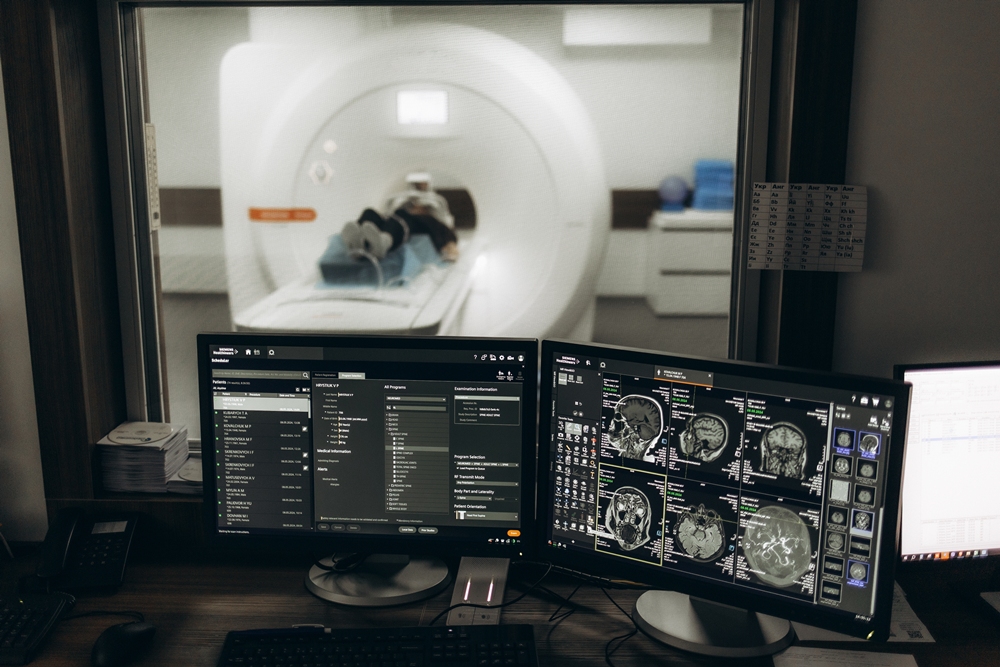
A new MRI test for MS has cut diagnosis times and allowed patients to avoid lumbar punctures, researchers report.
The scan adds around six minutes to a standard MRI and looks for a feature known as the central vein sign.
During a rollout of the test, the average time to diagnosis fell from 5.6 months to 2.9 months, saving patients an average of 83 days.

Professor Evangelou, professor of clinical neurology at the University of Nottingham, has researched the test for around 20 years.
He said: “This all began with a chance observation on the university’s powerful 7 Tesla research scanner, and the early work was supported by a small grant from Nottingham University Hospitals.
“I am delighted that a test developed in Nottingham has been embraced by the rest of the world, and we have been lucky to see it become part of the international diagnostic criteria for MS.
“Seeing it make a difference for patients here in Nottingham, where the story started, is particularly rewarding.
“The team now encourages other hospitals across the UK to start using the new MRI test too.”
Researchers at the University of Nottingham introduced the MRI test into the MS diagnostic process at an NHS trust in England, with scans scheduled before patients’ first clinic appointments.
MS affects around 150,000 people in the UK, according to the MS Society, and can be difficult to diagnose because symptoms and rates of progression vary between patients.
Previously, many people suspected of having MS underwent a standard MRI scan followed by a lumbar puncture.
Lumbar punctures often cause headaches and back pain and can also lead to complications.
MS is characterised by areas of damage, known as lesions or scars, in the brain or spinal cord. These lesions form around small veins.
The new approach uses a T2*-weighted MRI, which provides more detailed images and allows doctors to see whether veins run through the centre of lesions.
The central vein sign can help distinguish MS from other conditions in which lesions do not form around veins in the same way.
Researchers showed that the approach can be incorporated into the NHS diagnostic process for MS.
They estimated its use in Nottingham saved around £292 per patient.
The team said Nottingham already carries out relatively few lumbar punctures, meaning potential savings could be greater at hospitals where the procedure is used more often.
Dr Christopher Gilmartin, the project’s first author, said: “Spotting the central vein sign completely changes the MS diagnostic journey.
“By viewing lesions in far greater clarity, we can make an accurate diagnosis without invasive lumbar punctures, reducing unnecessary delays so people can start getting answers sooner.”