



Families & carers
Recognising and supporting the families and carers around every patient.
 Brain injury20 Sep
A national initiative has been launched to help increase the support, advice and resources for families affected by acquired brain injury (ABI).
 Brain injury8 Jun
As a specialist provider of mental health support, caring for some of the most clinically complex patients in the UK’s mental health system, the team of experts at St Andrew’s provide bespoke clinical and therapeutic approaches that enable vulnerable patients to recover. Here, NR Times meets senior social worker, Emma Wakeman
Can you tell us about your experience in mental health I’ve been at St Andrew’s for three and a half years and I’ve always worked in neuropsychiatry. I actually did a student placement here when I was training to be a social worker and just absolutely loved it. I loved the patients and the work so I applied for a job and got it.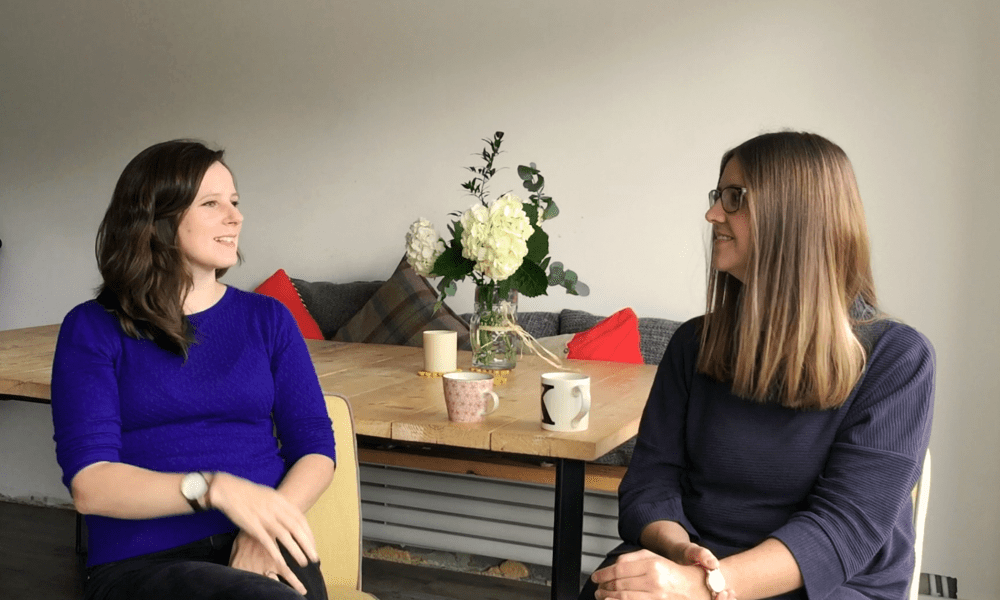 Neuropsychology11 May
Two neuropsychologists have joined forces to create an education programme for brain injury survivors, their loved ones and medical professionals alike, to help them better understand how to move forward with life after such traumatic events. The Brain Place has been created by Dr Kim Fletcher and Dr Amanda Mobley, who are building on the [...]
 Community neuro rehab17 Mar
Parents have been able to interact with their children in new ways through the introduction of music therapy into the home during lockdown, according to one business which has overseen remote sessions.
Prior to the pandemic, ELM Music Therapy worked widely in schools and with charities across the North East of Scotland, supporting children with neurological conditions and other disabilities with their development through harnessing the power of music. But as of March last year, ELM has taken all of its sessions online, also making use of YouTube to deliver content to the children it would ordinarily teach in person.Prior to the pandemic, ELM Music Therapy worked widely in schools and with charities across the North East of Scotland, supporting children with neurological conditions and other disabilities with their development through harnessing the power of music. But as of March last year, ELM has taken all of its sessions online, also making use of YouTube to deliver content to the children it would ordinarily teach in person. Therapy8 Feb
Families are being enabled to regain their voice in the care and rehabilitation of their loved ones through the creation of a new forum at a specialist Cambridgeshire community.
An ‘Ask the Therapist’ forum has been introduced by Askham Rehab, part of Askham Village Community, to help bridge the gap created by lockdown between relatives and therapists. Through monthly video calls, families of Askham residents with complex brain injuries can receive support and advice from the community’s multidisciplinary team, alongside updates on their loved one’s treatment and pathway. Families & carers28 Nov
With every day of the COVID-19 pandemic that passes, unpaid carers are saving the UK state £530 million in the care they provide, new data suggests.
The research, released for Carers Rights Day, estimates that the care provided by people looking after older, disabled and seriously ill relatives and friends during the pandemic stands at £135 billion so far, after just eight months. Previous research by the charity found that the majority (81%) of carers have been taking on more care since the start of the pandemic and nearly two thirds (63%) are worried about how they will continue to manage over winter. Brain injury14 Nov
A study has found that 68% of people believe they should ‘reach out’ to carers more often – with 60% of respondents only asking carers how they are ‘now and again’, ‘rarely’ or ‘almost never’; leaving carers at risk of feeling forgotten.
Furthermore, 72% of respondents worried that carers struggled with ‘loneliness’ thanks to the full-on nature of care leaving them little time for socialising. Throughout the pandemic, caregivers have been at the forefront of the fight, looking after the most vulnerable in society and putting their own lives on the line to do so. In light of this, a campaign called #ReachOutAndHelpOut has been launched to encourage support for carers as they continue to deliver essential care to those in need – amidst fears that carers’ wellbeing is often overlooked. Families & carers12 Nov
Researchers at the University of East Anglia and Norfolk and Suffolk NHS Foundation Trust (NSFT) are launching a new project to improve the lives of dementia carers in the UK.
They will work with carers and healthcare workers to co-develop and test a new ‘Carecoach’ support package – backed by £2 million in funding from the National Institute for Health Research (NIHR). The aim of the blended care initiative is to help dementia carers stay emotionally and physically well – which is crucial for both the carer and the person they support and care for. Multiple sclerosis8 Sep
A new online activity has been launched to help explain the relationship between multiple sclerosis (MS) and coronavirus to children.
The activity, designed by Digesting Science and aimed at families with six- to 12-year-olds, takes around 20 to 30 minutes, and covers the immune system and how white blood cells fight infections like coronavirus and whether treating MS makes you more vulnerable to coronavirus. Those wanting to try the activity will need some props, including pasta, paper or card, scissors, drinking glasses, a bowl, a blindfold, a pen and some tape. Digesting Science recently hosted a series of online events for young people with MS covering the disease and issues around Covid-19, emotion, diet and lifestyle, and cognitive changes in school.- Legal28 Jul
Karen Ledger (KL): When brain injury occurs, it's like a bomb going off in the family. Life will never be the same again for any of the members of that family. People will be shocked, bewildered and overwhelmed, and they then have to go through a complicated process of adjustment, and people reach that adjustment at different stages. The person with the brain injury will generally have a neuropsychologist assigned to support them. Most will pay attention to people's feelings and emotions, but the rest of the family may not have any psychological support. This situation doesn't get better of itself without professional input, it can get worse and people’s mental health can and often does spiral down. Louise Jenkins (LJ): It’s a particular challenge if you've got someone with little or no insight. They often won't recognise the need for or be willing to engage with neuropsychological treatment until much further down the line, by which stage, the family may have entered a more advanced stage of crisis and their whole family unit may be at risk of breakdown. There are complex emotions involved in the adjustment process following trauma which include shock, guilt and loss.


