‘Law can be a force for good – nowhere is this more apparent than in brain injury’

Mark Hollinghurst, head of the brain and serious injury department at law firm Switalskis Solicitors, discusses the importance of appointing a lawyer with specialism in handling brain injury claims to secure the best possible outcomes for clients
Please introduce us to Switalskis Solicitors
Switalskis is less than 30 years old, but has grown to a size which is believed to be the third largest out of all firms based solely in Yorkshire. It operates in 12 locations across the county.
The Firm started from a base of child care and criminal work, but has diversified considerably over the years, to include a wide variety of areas of work, including:-
Child abuse claims; Child care; Criminal law; Family law; Inquests; Medical negligence; Mental capacity and mental health; Professional and therapy abuse; Real estate; Residential conveyancing; Serious injury; Wills and probate.
The work of the firm tends to be in some of the more emotive areas of law. There is a great emphasis on understanding the individual client and client care, being just as important as the advice itself. The firm’s success owes a great deal to the empathy and compassion that we demonstrate to clients every day.
How long have you worked in the specialist field of brain injury?
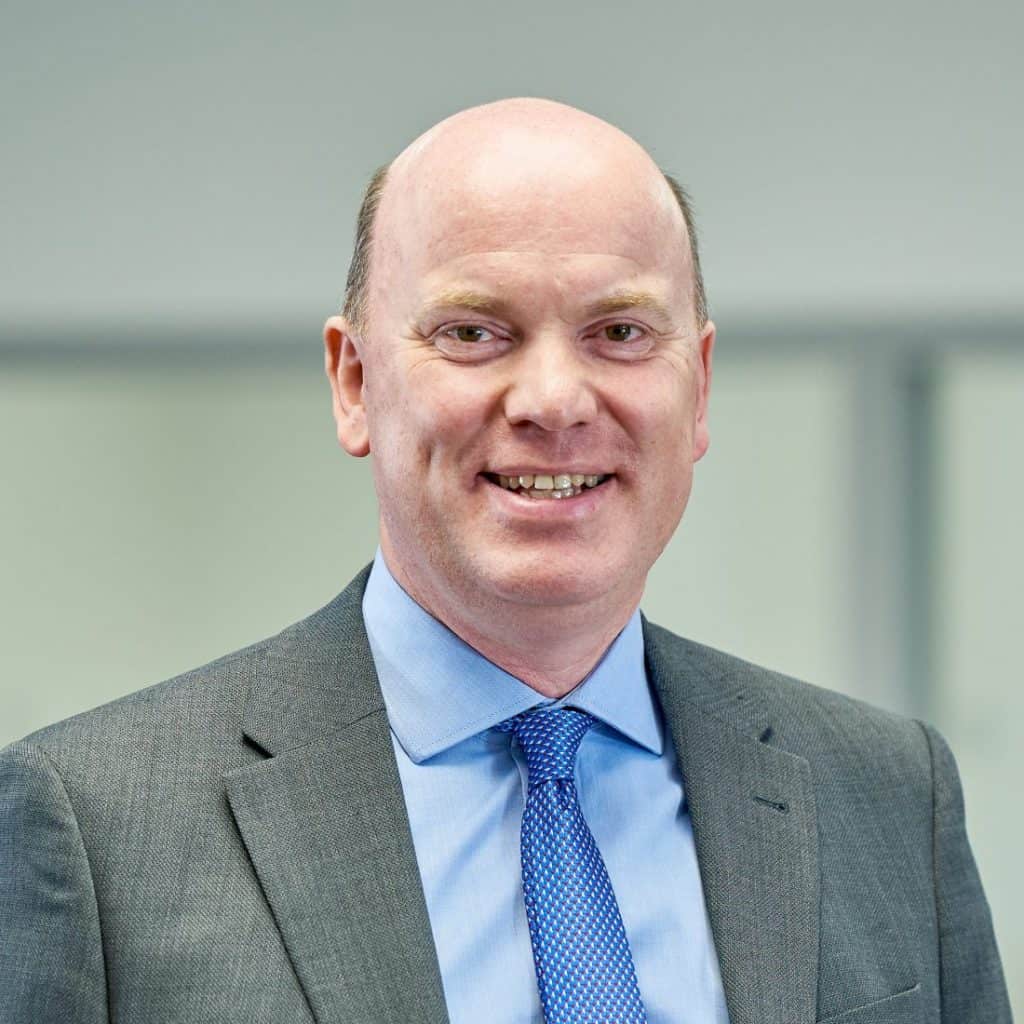
Mark Hollinghurst
I have done so for over 30 years.
I qualified as a solicitor in 1991. Even as a trainee solicitor, I was very much interested in the serious end of injury work, including brain injury. I started my career in the high-profile firm of Pannone & Partners, who were known at that time for being pioneers in specialising in serious injury work and multi-party/disaster litigation.
I have been working in the field of brain injury ever since.
What do you believe makes you stand out in this area?
My caseload of serious brain injury claims is for both adults and children and includes significant and multi-million pounds claims for those suffering from serious brain injury.
I have particular expertise in dealing with cases involving minimally conscious clients where there is often a cross-over with parallel Court of Protection proceedings, for example where there are issues about the client’s future residence. I fight for the most profoundly injured clients to return to an adapted home setting, if that is clinically appropriate.
I also specialise in claims for the Criminal Injuries Compensation Authority relating to serious brain injury, an area that many firms will not deal with.
I am consistently praised by Leading Counsel and Counsel for my excellent level of client care, attention to detail, commitment to securing early interim payments for rehabilitation.
My clients say that I am caring, approachable, empathetic and tenacious.
I have an absolute determination to secure excellent results for clients.
I am often approached to take over cases from larger firms in which the case was not being properly progressed or approached appropriately.
My inspiration is the amazing clients and their families who I work with, all survivors of life-changing events, and so brave in the way that they find a way to live life as positively as they can.
I love being part of that journey with them, and using the law to help them. I really enjoy putting together the many varied parts of a case to produce a coherent and strong case.
However, I would be unable to do this without the loyal and energetic team that is around me.
Beyond my day to work as a solicitor, I am the present chair of Headway Yorkshire East Coast, having founded this branch of Headway, the national brain injury charity.
I am also a former chair of the Yorkshire Acquired Brain Injury Forum.
Why would a client appoint you ahead of your competitors?
To let others speak for me, comments made by others have included:-
“Mark Hollinghurst is a very good lawyer and approaches his cases with care and thought. He has a pragmatic approach to litigation, seeking the sensible and workable outcome rather than becoming fixated upon being right – an admirable quality in a good solicitor.”
“He is nobody’s pushover and his calm manner and courteous style, even in the face of aggression from his opposite numbers, is a reflection of his quiet strength. I have no hesitation in saying that he is more than a safe pair of hands. He knows is stuff. He is doggedly determined – refusing to give up on cases many others had turned down.”
What is unique about a brain injury claim? Does it differ from a standard personal injury claim?
It is certainly different. I have seen experienced personal injury solicitors, unused to brain injury claims, not address the issues appropriately.
Brain injury is often referred to as a ‘hidden’ injury. The clients, unless they have suffered other serious injuries, often look as they did before, but in many ways are changed hugely. Brain injury can impact on many areas of cognitive ability and intellect, as well as causing difficulties with mood and behaviour.
There are many aspects to these difficulties, including in memory, concentration and attention, organisation and planning, word finding and communication. These are just examples. Many clients have significant problems with disinhibition, anger and mood. All this can be underlined by significant fatigue. This is a very difficult mix.
There can also be wide spread physical difficulties, including headaches, loss of libido and loss of sense of taste and smell.
A number of clients with serious brain injury lack the capacity to deal with their legal and financial/property affairs, meaning others need to make decisions on their behalf.
There can be spin off legal issues, including health and welfare issues which sometimes result in parallel Court of Protection proceedings.
It is critical to understand all of this and to be able to engage with clients with this level of understanding, and to take into account how to communicate with clients, so as not to add to their difficulties.
Relationships with clients and their families are often very close, being closely entwined with their lives over the course of the years that the  litigation is running.
I am a great believer that the law is a living breathing entity which can be a force for good, and nowhere is this more apparent than in brain injury cases. Such cases can literally help with the entire future life of clients.
Early rehabilitation is crucial for such clients. The earlier this can start the better. Brain injury claims have a very crucial part to play in putting together full private multi-disciplinary teams, overseen by a brain injury case manager, with input from various treating therapists, including neuropsychiatrists, neuropsychologists, neuro-rehabilitation consultants, physiotherapists, occupational therapists, speech and language therapists and personal trainers. Support workers and rehabilitation assistants can also play a critical role, allowing family members to relate to their brain injured relatives as family members, rather than purely as ‘carers’.
Serious brain injury turns family life upside down, and changes the roles of family members irrevocably. It is critical to understand this.
The rehabilitation cannot be seen as separate to the litigation. They are very closely intwined. Litigation needs to understand the rehabilitation, and the rehabilitation needs to be seen within the context of the litigation.
Those solicitors inexperienced of such claims tend to be very much remote from the rehabilitation, whereas an experienced brain injury solicitor will have a very close interest in that rehabilitation, and will pace obtaining expert evidence in accordance with that rehabilitation, feeding from the evidence produced by that rehabilitation.
It is critical to get the right sort of expert evidence in such claims. Solicitors inexperienced in this area tend to get a purely medical view initially, for example from a neurologist.
I believe that in fact it is critical to get a first and early report from a neuro-rehabilitation consultant, to lay the foundations of such claims. It is also critical to build on this evidence with evidence from, for example, a neuropsychologist and a neuropsychiatrist. Many personal injury practitioners would not be aware of such specialities, in particular neuropsychiatrists, who can often be central in explaining the full consequences of what has happened to the client.
A really good care expert is also central in drawing all the strands together.
In brain injury claims, there is often a wider range of expert evidence required, sometimes including a more unusual specialities such as experts reports from a physiotherapists, speech and language therapists, assistive technology experts, accommodation experts and Court of Protection experts. Many solicitors inexperienced in such claims may not have worked with such experts before. In some claims, the number of experts on each side can reach double figures.
It is crucial to be able to weave all this huge variety of evidence into a coherent story to show the client’s journey, why input has helped and what their long term needs are likely to be.
How important is it for someone to appoint a specialist solicitor to handle their claim?
This is extremely important in a brain injury claim, whether moderate or serious. As can been seen from what I’ve said above, there are many specialist aspects to such claims.
The Headway brain injury charity has a solicitors list, set out by geographical area. I am proud to be a representative of my firm on this list.